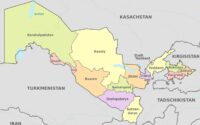
On May 29th, 2023, SpecialEurasia representatives met with an Uzbek delegation at the Eurispes to better understand the Central Asian republic’s strategic role and investment opportunities and possibilities of cooperation between Rome and Tashkent.
SpecialEurasia will participate in the Astana International Forum 2023, as part of our ongoing commitment to monitoring and evaluating emerging markets and investment prospects in strategic countries like Kazakhstan and the broader Central Asian region.
The inauguration of the Analytical Centre for China Studies in Bishkek marks a significant milestone in China-Kyrgyzstan cooperation, underscoring Beijing’s strategic approach towards the Central Asian republic.
The recent Iran-Turkmenistan deal on natural gas export emerges as a pivotal agreement, poised to both fortify Tehran’s energy strategy and bolster Ashgabat’s endeavours towards economic diversification by expanding its trade partners.
The recent counterterrorism operation conducted in the Lanao del Sur province of the Philippines has brought terrorism to the forefront in this Asian nation.
Dagestan and Tajikistan’s entente on developing cooperation confirms the North Caucasus’s role in promoting relations between Russia and foreign countries, especially those in the blizhnee zarubezhe (near abroad) where the Kremlin wants to confirm its presence and influence.
On May 30th, 2023, SpecialEurasia Managing Director, Silvia Boltuc, attended the event “Bahrain yesterday and today” organised by Laila Khrais on behalf of the Assadakah and Welcome Association Italy.
Egyptian business representatives promised $1.2 billion investments in Uzbekistan in different economic fields during the meeting with the Uzbek President
To acquire a competitive edge, entrepreneurs must have access to timely and relevant information about their rivals, industry trends, and market dynamics. In this context, Open Source Intelligence (OSINT) emerges as a valuable tool for competitive intelligence.
To counter a rising China, the U.S. should revise its definition of the Indian Ocean area of responsibility, and formulate a plan dedicated specifically to the Bay of Bengal and Myanmar.
The first China-Central Asia Summit and the second EU-Central Asia Economic Forum highlighted Beijing and Brussels’ interests and competition in the region.
The North Atlantic Treaty Organization (NATO) suffers from disproportionate financial burden-sharing., exacerbated by the fact the NATO has expanded its area of operations beyond the borders of NATO countries. A dedicated NATO bank could be the solution.
The KazanForum 2023 and Zelensky’s visit to Jeddah during the Arab League summit underlined how strategic is the Muslim world for Russia and Ukraine.
In this paper published in Geopolitical Report ISSN 2532-845X Vol. 2 Year 2023, the author examined the current status of Tehran-Tbilisi relations and assess possible future geopolitical scenarios concerning these two actors and the regional Caucasian dynamics.
The Kyrgyz special operation to arrest an armed group in Dmitrievka, which resulted in the elimination of a suspected terrorist who fought in Syria, highlighted that Kyrgyzstan is not immune to terrorism or jihadist propaganda.
The KazanForum 2023 and the “China-Central Asia” Summit definitely emphasise Kremlin and Beijing’s strategies in Eurasia and the Islamic world’s strategic areas in time of confrontation with the West.
The CIA video in the Russian language published on YouTube, which invites dissatisfied Russians to provide information to the U.S. Intelligence agency, confirms Washington’s strategy to create a network of assets inside the Russian Federation and put pressure on the Kremlin.
Il vertice Armenia-Azerbaigian che si è tenuto a Bruxelles permette di concentrare l’attenzione sulla questione dei confini nazionali armeni e azerbaigiani la cui soluzione dovrebbe portare alla stabilità e non creare ulteriori tensioni regionali.
In this paper published in Geopolitical Report ISSN 2532-845X Vol. 2 Year 2023, the author investigated the Iranian position on the second Karabakh war and Tehran’s attempts to stabilise the region and promote its economic and political partnerships.
On the surface, the Ukraine war appears to be a conflict between two primary actors, namely, the Russian Federation and the sovereign nation of Ukraine. On deeper analysis, however, it can be said that the Ukraine war is an example of great power competition.
Writing an Intelligence Analysis report might be a hard task. Using the BLUF framework can help the analyst in its duty to produce solid intelligence in daily activities.
The Taliban continue their effort to contrast and eliminate the Islamic State’s threat, confirming the Islamic Emirate necessity to stabilise the country to attract foreign investors and international consensus.
SpecialEurasia, in partnership with MInter Group SRL, Notizie Geopolitiche, and Mondo Internazionale ASP, published Geopolitical Report ISSN 2532-845X Volume 2 Year 2023 focused on Iranian strategy in the South Caucasus.
SpecialEurasia ha incontrato S.E. Mohammad Reza Sabouri, Ambasciatore dell’Iran in Italia, per discutere le dinamiche attuali interne e in politica estera della Repubblica Islamica dell’Iran.
SpecialEurasia met with the Ambassador of Sudan to Italy, H.E. Sayed Altayeb Ahmed, to discuss further the recent events that have shaped the Sudanese domestic politics and stability and try to assess future consequences and developments.
Iraq has the world’s third-largest proven conventional petroleum reserves after Saudi Arabia and Iran. Recent developments in the oil and gas field suggest that the Middle Eastern country might be one of the future European leading suppliers.
The upcoming Turkish elections might affect Ankara-Tehran relations if the opposition leader Kemal Kilicdaroglu will defeat the president Recep Tayyip Erdogan and, thus, change domestic and foreign policies.
Turkmenistan accomplished the mission to export its natural gas to Pakistan through Afghanistan, an economic goal that Ashgabat aimed to reach to diversify its exports and trade partners and increase the revenue.
SpecialEurasia met in Rome H.E. Julianne Smith, the US Ambassador to NATO to investigate the conflict in Ukraine, the Chinese threat, and global challenges such as terrorism, issues which the Atlantic Alliance will discuss at the NATO summit in Vilnius in July 2023.
Mongolian Foreign Affairs Minister’s upcoming visit to China emphasised the relations between Ulaanbaatar and Beijing and the Chinese strategy to increase its influence in the Asian country because of strategic position and significant natural resources.
Kazakhstan’s desire to increase exports to Iran might hugely impact geopolitical dynamics in Eurasia, considering Astana’s desire to diversify and enhance its trade and economic partners to decrease Russia and China’s influence and Tehran’s necessity to overcome Western sanctions.
The Kremlin might face a new wave of violent attacks or regional destabilisation due to the establishment of the Ingush Liberation Army, a military branch that the Ingush Independence Committee created to support an independent Ingushetia separated from the Russian Federation.
The construction of the Dushanbe-Kulma highway, thanks to the Chinese investment, might support the interconnection between the Gorno-Badakhshan Autonomous Region (GBAO) and the Xinjiang Uyghur Autonomous Region (XUAR) with the final goal of improving local economies and stabilising these two strategic regions.
CENTCOM’s killing of a senior Islamic State Syria leader stressed the US commitment to fighting the terrorist threats and emphasised the persistent instability in the Middle East related to jihadist and terrorist activities.
The creation of the Shavat-Dashoguz trade zone might strengthen Uzbek-Turkmen’s economic cooperation and bilateral relations and attract foreign investors interested in establishing their business in Central Asia by exploiting local government’s trade agreements and logistic projects.
Open Source Intelligence (OSINT) is a crucial aspect of modern-day geopolitics because it provides timely and accurate information to inform decision-making processes. By leveraging various open sources such as social media, news outlets, and other publicly available data, intelligence agencies can detect emerging trends and patterns in all aspects of life, including political, economic, social and technological domains.
Japan has one of the fastest-declining fertility rates and one of the highest rates of ageing in the world. The Japanese government is trying to reduce this problem through social, economic, and demographic policies.
Oil transactions between Saudi Arabia and China could be denominated in the Chinese yuan, a significant development in the evolving international economic and geopolitical landscape. If this move happens, it could have far-reaching implications for the US dollar’s status as the dominant global currency, as well as for US-Saudi relations and broader regional dynamics in the Middle East.
The recent ‘diplomatic crisis’ between Iran and Azerbaijan, which has involved the Iranian diplomatic staff in Baku, underlined the potential political and military escalation between the countries, whose consequences might hugely influence the security in the South Caucasus.
In the last months, the South Caucasus has again experienced regional turbulence. While there have been protests in Georgia over a controversial draft law that would have required some organisations receiving foreign funding to register as “foreign agents”, Armenia and Azerbaijan might be again on the edge of an escalation involving the CSTO and, therefore, Russia.
The South Caucasus and the Middle East have long been at the epicentre of geopolitical, ideological and ethnic tensions. While the Israel-Iran hybrid war is experiencing a new momentum, ongoing tensions between Armenia and Azerbaijan might open a second front in which both Tel Aviv and Tehran might be involved.
Increased Russian investments in Adygea confirm the Kremlin’s strategy to implement the North Caucasus’ socioeconomic development and transform the region into a logistics hub supporting the diversification of Russian exports.
Iran has been making great strides towards bolstering its economy and proving itself an attractive investment destination. The key factors driving the country’s economic growth are the Iran Special Economic Zones and the Iran Trade-Industrial Free Zones.
At SpecialEurasia, we consider fundamental our Monitoring & Risk Analysis map that underlines the Geopolitical Risk Level for each country linked to our monitoring articles, reports and special projects.
Recent negotiations between Saudi Arabia and Uzbekistan on investment cooperation confirmed Riyadh’s strategy in Central Asia based on financial support to local governments’ infrastructural projects and humanitarian aid.
In questa ricerca verrà analizzato il trinomio cambiamenti climatici, conseguenze sulla popolazione e terrorismo in Asia destinato, se la comunità internazionale non provvederà a fermare questo trend, ad essere presente nelle agende internazionali negli anni a venire.
The Gorno-Badakhshan Autonomous Oblast (GBAO) might be considered one of Central Asia’s most strategically important areas, attracting multiple global powers’ attention. Under Dushanbe’s control, the region has experimented with the confrontation between the central authority and the local population.
SpecialEurasia Managing Director, Silvia Boltuc, met in Astana the Chairman of the Spiritual Administration of Muslims of Kazakhstan, Supreme Mufti Nauryzbai kazhy Taganuly, to discuss the role of Islam in the country and the relations between the Kazakh Muslim umma (community) and other Muslim countries.
Geopolitical Report ISSN 2785-2598 Volume 29 Issue 8 Author: Guido Keller India and Turkmenistan discussed expanding cultural cooperation confirming New Delhi’s strategy in Central Asia and Ashgabat’s desire to diversify and enhance its collaboration and ties with regional actors.
Le elezioni parlamentari in Kazakhstan potrebbero dare stabilità al paese e completare il processo di riforme avviato lo scorso anno volto a garantire sicurezza interna, supporto al Governo e al presidente così come a rassicurare gli investitori sul mercato interno kazako.
SpecialEurasia discussed with Alexandr Sharov, General Director of the transport company LLC Neftekhimtrans, Group of companies Rusiranexpo, the current geopolitical significance of the INSTC and possible future developments and impact in the Eurasian strategic chessboard.
Upcoming parliamentary elections in Kazakhstan mark the last step for the country’s complete reformation based on modernisation and democratisation according to the new path promoted by Kazakh President Kassym-Jomart Tokayev.
CSTO Secretary General Imangali Tasmagambetov’s visits to Bishkek and Dushanbe marked the Russian-led military organisations’ attempt to play a prominent role in resolving the Kyrgyzstan-Tajikistan border dispute and, therefore, stabilising the region.
Russia-Uzbekistan-Kazakhstan’s ‘trilateral gas union’ might represent geopolitical leverage in favour of Moscow and Beijing because it might simultaneously satisfy the Chinese energy market’s needs and support the Russian and Chinese foreign policy in Central Asia.
Iran and Saudi Arabia, longtime regional rivals, have agreed to resume friendly diplomatic relations and reopen their embassies after Chinese-led negotiations in Beijing. The two governments announced the agreement via their respective state media agencies and China’s Xinhua News Agency.
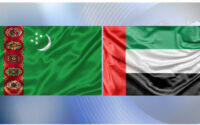
The United Arab Emirates (UAE) and Eurasian Economic Union (EAEU) member countries discussed the establishment of a free trade zone, which might become a significant step in strengthening Emirati financial and economic presence in the Eurasian geopolitical chessboard and support Russian financial strategy to contrast Western sanctions’ consequences.
SpecialEurasia published the document “Central Asia Weekly Intelligence Brief February 27th– March 2nd, 2023”, whose purpose is to highlight key geopolitical topics related to Central Asia affecting the international arena and organisations around the globe.
The presence of the Musul’manskij korpus “Kavkaz” in the Ukraine conflict stressed the significant role that volunteer battalions have in supporting Kyiv and fighting against the Russian Federation, which they consider an imminent threat to the Ukrainian territory and the Muslim umma.
Antony Blinken’s visit to Astana stressed Washington’s interests in Central Asia since the region has played a vital role in the Eurasian geopolitical chessboard, especially after the beginning of the Ukraine conflict.
On Tuesday, February 21st, 2023, SpecialEurasia, Mondo Internazionale, Opinio Juris – Law & Political Review and MInter Group srl organised the online webinar “A year of Ukraine conflict: insights, geopolitical analysis, possible future developments” to analyse the last year of fighting in Ukraine contextualising this event in the Eurasian geopolitical chessboard.
In Russia, the detention of five people connected with the terrorist organisation Hayat Tahrir al-Sham, and a person linked to Katiba al-Tawhid wal-Jihad confirmed FSB’s effort to guarantee regional security and avoid the link between local Russian citizens and terrorist organisations operating in the Middle East.
Following the allegations of Iran being involved in the Ukrainian conflict by delivering weapons to Russia, Tehran has been under severe international pressure and sanctions. Given its good relationship with Iran and its neutral foreign policy, Oman might emerge as a strategic regional mediator and help resolve critical issues such as the revival of the Iranian nuclear deal and the dispute between Iran and Saudi Arabia.
Il forum economico “Russia – Mondo islamico” che si svolgerà a Kazan nel maggio 2023 sottolinea l’importanza che il mondo musulmano ha nella politica estera russa, in special modo a seguito delle imposizioni delle sanzioni occidentali che hanno spinto Mosca a riversare i propri interessi su mercati alternativi.
In the context of the Ukraine conflict and the changing geopolitical scenario in Eurasia, Islamabad denied the ammunition supply to Ukraine to avoid any possible deterioration of the relations with the Russian Federation, which is actively involved in promoting the Pakistani energy and logistic markets.
Since Uzbekistan and Vietnam are expanding their economic cooperation and relations, Tashkent might promote its role in Central Asia as a regional interconnector. At the same time, Hanoi might support its foreign policy by establishing a strategic partnership with international and regional actors.
The meetings between Tajik representatives and officials from Qatar and the Islamic Development Bank highlighted Tajikistan’s strategy to attract foreign investments from the Arab-Muslim world and Doha’s desire to play a significant role in the local and regional market.
The recent meeting between the Turkmen ambassador to Italy and the Italian Trade Agency’s representatives highlighted business potentialities between the two countries, Rome’s desire to increase its presence in the Turkmen and Central Asia markets, and Ashgabat’s strategy to diversify its commercial partners.
La presenza di foreign fighters e battaglioni di volontari in Ucraina accresce il rischio geopolitico dello scacchiere strategico eurasiatico essendo questi attori non statali impegnati attualmente nel combattere le forze armate russe e al contempo collegati direttamente o indirettamente con membri della diaspora o della militanza armata-jihadista che negli ultimi anni hanno operato nello spazio post-sovietico e in Medio Oriente.
Considerando la posizione geostrategica che la Cambogia detiene nella regione del Sud-Est Asia e il rapporto economico che lega Phnom Penh a Pechino, la Repubblica Popolare Cinese ha sviluppato una strategia volta a rafforzare i legami e trasformare lo Stato cambogiano in un elemento fondamentale della sua politica estera regionale.
Geopolitical Report ISSN 2785-2598 Volume 27 Issue 4 – The recent meeting between Kazakh and U.S. representatives in Washington stressed Astana’s desire to balance its foreign policy between the West, Russia, and China, and the White House strategy to increase its presence in the Central Asian republic.
The agreement on creating a Free Trade Zone between Iran and the Eurasian Economic Union stressed the rising diplomatic and economic efforts that Tehran and Russia are sustaining to counter Western sanctions and find alternative solutions for their economies and import-export activities.
The recent Russia-Turkmenistan business forum attended by the Russian Prime Minister Mikhail Mishustin confirmed Kremlin’s strategy in Central Asia and Moscow’s desire to deepen economic and diplomatic cooperation with Ashgabat to avoid any further external interference by the European Union, China, or the United States.
The Kremlin’s project to evaluate the opportunity to implement Islamic banking in Russia might support the national economy, attract foreign investors from the Arab-Muslim world, and counter the consequences of Western sanctions imposed against Moscow due to the Ukraine conflict.
The Russian invasion of Ukraine has sparked economic sanctions, which are meant to cripple the economy while detracting from Russia’s ability to wage war. This paper will analyse the sanctions’ impact, the war on the Russian economy and possible future implications.
In a phone call, Tajik President Emomali Rahmon discussed bilateral relations with Kyrgyz President Sadyr Zhaparov and the delimitation of the common border necessary to resolve Tajikistan-Kyrgyzstan territorial disputes which in the past have erupted in border clashes.
The pandemic crisis, the interruption of the supply chain, and the war in Ukraine with soaring fuel prices and shortages of flour and corn have put a strain on Egypt’s economic stability. In 2022, the Egyptian government adopted measures which resulted in harsher conditions for companies and local citizens, which Cairo currently hopes to overcome with the support of the International Monetary Fund.
The Islamic State terrorist attack against the Foreign Affairs Ministry of Afghanistan in Kabul stressed the unstable situation in the country and the Taliban’s inability to face terrorism and jihadist groups. Although the Taliban claimed that they had upgraded the national security situation since they took power in August 2021, the number of violent attacks and bomb blast have increased.
Recent counterterrorism military drills in Tajikistan highlighted Dushanbe’s necessity to upgrade its readiness and expertise in facing terrorist threats inside the country and jihadist activities from neighbouring areas of Afghanistan.
In 2023, military escalations, domestic political turmoil, and economic crises might increase Iran and the Caucasus’ geopolitical risk and threaten regional security, whose consequences might broadly destabilise the Eurasian strategic chessboard.
In 2023, foreign actors’ interests, terrorism, authoritarianism, and economic slowdown might threaten Central Asia and AfPak’s security and stability and increase regional geopolitical risk.
This report stems from the research project titled “Malicious Use of Artificial Intelligence and Challenges to Psychological Security in Northeast Asia” (21-514-92001) and jointly funded by the Russian Foundation for Basic Research (RFBR) and the Vietnam Academy of Social Sciences (VASS).
Recent violent attacks in Iraq demonstrated that Islamic State continues to pose a severe threat to civilians and security forces, even though the government declared its ‘total defeat’ in 2017.
Since Tehrik-e-Taliban Pakistan (TTP) ended the ceasefire with the Pakistani Government, security has worsened in the country. Recent violent attacks in Pakistan and militants’ seizure of the Counter-Terrorism Department (CTD) compound in the Bannu district have also alarmed neighbouring countries and foreign investors who are worried about future Pakistani stability.
Geopolitical Report ISSN 2785-2598 Volume 26 Issue 3 – SpecialEurasia met with the Serbian university professor Marija Djoric to discuss the current security situation and terrorist threat in the Balkans.
Azerbaijan’s transport and gas supply blockade of the Nagorno-Karabakh/Artsakh might cause a regional humanitarian crisis and evolve into a military escalation capable of destabilising the South Caucasus.
Zhaparov’s official visit to Abu Dhabi confirms Kyrgyzstan’s interest in developing an economic partnership with the United Arab Emirates and the Emirati desire to enhance its presence and influence in the Central Asian republic.
Chinese President Xi Jinping is paying an official visit to Saudi Arabia to affirm Beijing’s influence in the Gulf and contrast the U.S. presence in the region.
The commercial and political partnership between Dagestan and Azerbaijan might support the increasing relations between Moscow and Baku and implement the Russian foreign policy in the South Caucasus and the Caspian Sea region.
The Russian State Duma’s official visit to Abkhazia confirms the Kremlin’s presence in the South Caucasus and the Abkhaz territory’s strategic role in Russia’s foreign policy. Moscow-Sukhum improving relations stress the Russian desire to confirm its influence in the Caucasus in a challenging time characterised by the Ukraine conflict and the confrontation with the West.
After the November 13th terrorist bombing attack in Turkey, Ankara started a military operation targeting Kurdish forces in Syria and Iraq. While Russia is concentrated on Ukraine and Iran is facing internal turmoil, Turkey is gaining ground in the Middle East.
Due to Malacca’s geopolitical centrality, China has strengthened economic-diplomatic dialogue and relations with Southeast Asian countries, especially Indonesia.
The beginning of the Ukraine conflict drew a line under the development of the geopolitical situation on the Eurasian continent over the past three decades since the beginning of the 1990s.
Serdar Berdimuhamedov’s recent visit to the United Arab Emirates confirms Turkmenistan’s interest in expanding ties with the Gulf monarchies and Abu Dhabi’s desire to increase its presence in Central Asia.
In the context of the Ukraine conflict and the Brussels- Moscow confrontation, the European Union attempts to expand its activity and presence in Central Asia by improving connectivity projects and cooperation.
Stavropol authorities’ desire to open trade offices abroad might underline Russia’s strategic economic goal in the Eurasian geopolitical chessboard, especially in Azerbaijan, Iran, China, and the United Arab Emirates.
Considering the South Caucasus’ current geopolitical scenario, we discussed with Vahagn Khachaturyan, President of the Republic of Armenia, the country’s prospects in the changing world and possible regional developments to assess local stability and security and evaluate Armenia’s potentialities.
The creation of the Turan Battalion confirmed that the Ukraine conflict had become the perfect battleground for international fighters and contractors united by the desire to fight against the Russian Federation and promote their ideologies and goals.
The mass demonstrations that swept Iran in the past months have subsided significantly, but the protest mood in the country does not fade away. This analysis investigated international interest in Iranian protests and national political parties.
The establishment of an IT Park in Ingushetia named after Adam Khamkhoev, killed in May 2022 in Ukraine, underlined local and central authorities’ desire to promote economic development and support Kremlin’s narrative related to heroism and national unity.