SpecialEurasia will attend the 31st World Congress of the International Federation of Journalists (IFJ) in Muscat (Oman) from May 31st, 2022, to June 3rd, 2022, to discuss media and press issues, freedom, and violence against journalists. This event will also be an opportunity to get acquainted with Omani politics and economics and to meet local representatives.
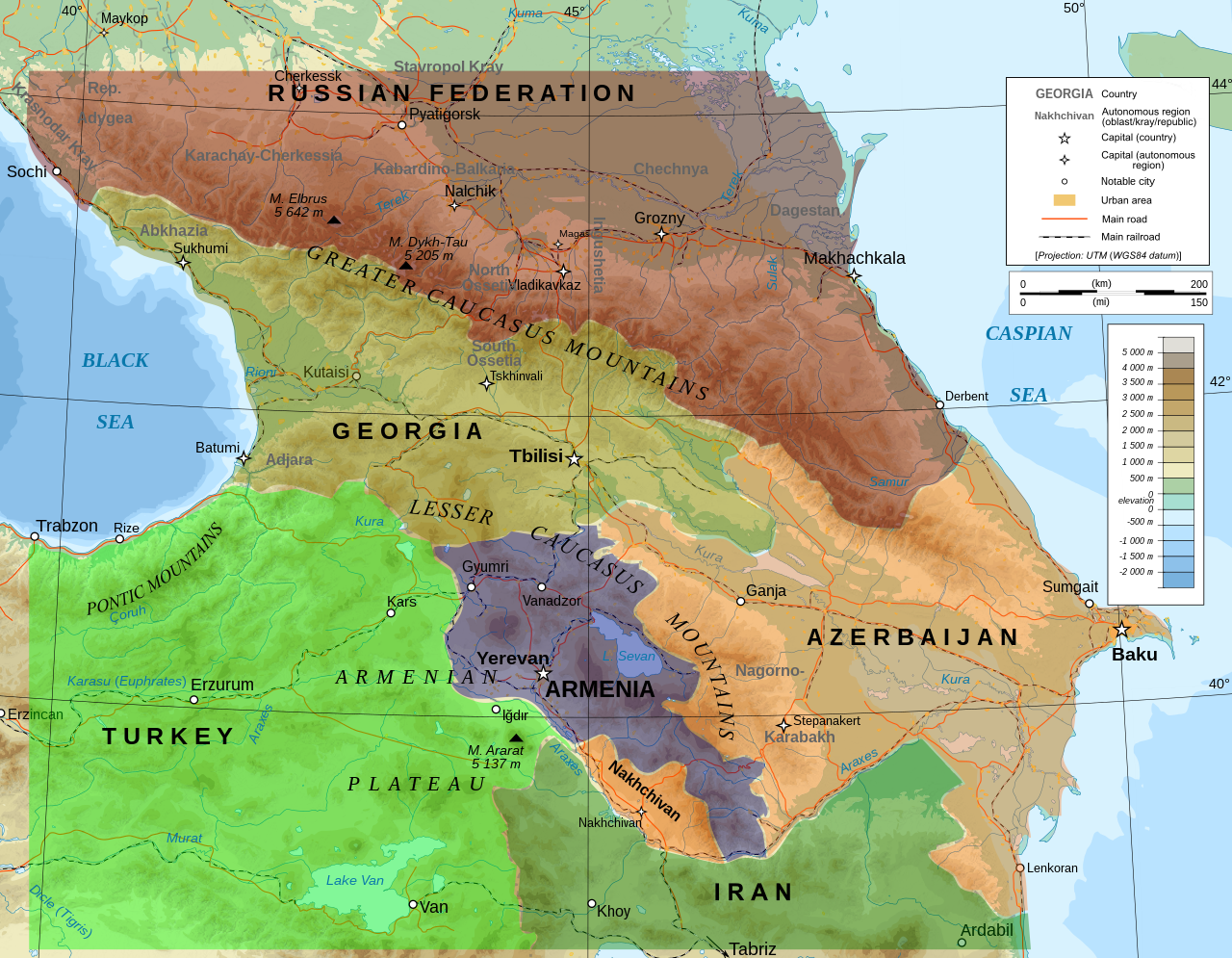
Against the backdrop of the Ukrainian conflict, several frozen conflicts of the post-Soviet space have witnessed new tensions. Two critical events promoted by Azerbaijan sparked protests in Armenia and might prompt a new escalation over Nagorno-Karabakh.
In the aftermath of the events in Ukraine and the sanctions imposed on Russia, European countries are straggling in search of alternative gas imports. Turkey started a military operation in northern Iraq to ensure gas supplies from Kurdish fields.
Kyrgyzstan and Italy recently celebrated the 30th anniversary of establishing diplomatic relations. Recent official meetings between Italian and Kyrgyz political and business representatives underlined Italy’s interest in deepening cooperation with central Asian markets.
Iran will play a primary role in the import-export activities in the Dagestani port of Makhachkala. The recent meeting between Dagestan and Iran’s representatives showed mutual interest in expanding trade cooperation and transit agreement.
The recent Commonwealth of Independent States (CIS) meeting underlined the Kremlin’s strategy to strengthen its influence in Eurasia through military cooperation and diplomacy. In the aftermath of the Ukrainian Crisis and with the increasing influence of China’s Belt and Road Initiative, Russia confirms its desire to be the principal player in Eurasia.
The Western sanctions against Russia caused by the Ukraine conflict have changed the Kremlin’s foreign policy, which currently seems to be more oriented toward the Eurasian market, as the recent Iran-Russia trade conference highlighted.
On April 6th, 2022, SpecialEurasia organised the webinar “Afghanistan: geopolitical interests, humanitarian crisis and security” to address the Italian public opinion on the current situation of the Afghan people after the U.S. troops’ withdrawal and the Taliban’s seize of power.
The Turkmenistan-India meeting highlighted the role that Afghanistan plays in Ashgabat and New Delhi’s foreign policy and regional strategy and the importance that the TAPI project play for Turkmen and Indian economies.
The Iranian nuclear deal might become the watershed in the Middle Eastern dynamics, leading to regional escalations and divisions and rising the geopolitical risk level.
The possible signing of the JCPOA might support Pakistan’s desire to play a strategic and logistic role in the Eurasian energy market linking transit corridors and pipelines.
The Ukrainian crisis, which was supposed to represent the collapse of the Russian economy and its leading role in Eurasia, is having unexpected implications. The sanctions imposed on Moscow’s energy supplies have caused oil prices to rise and created some opportunities for the Persian Gulf countries.
The Ukraine conflict and Western sanctions against Russia might highlight the Iranian role in the oil sector in the Eurasian chessboard, especially for the European Union interested in diversifying its energy import and decreasing the Russian grip.
As clashes in Kyiv and other Ukrainian cities escalate, Brussels is discussing additional manoeuvres to strike Russia, although Moscow might have adopted counter-measures based on alternative gas pipelines to export its natural gas to the Asian markets and support its economy.
Since the early morning hours, the Russian invasion of Ukraine has affected the financial markets, particularly the Russian economy, creating fears and scepticism among investors and the Russian citizens.
The recent meeting between the Japanese Ambassador in Iran and the head of the Ports and Navigation Department of the Hormozgan province to discuss investments underlined Japan’s interests in expanding maritime cooperation in the Persian Gulf exploiting the Iranian ports’ role.
The Iranian President Ibrahim Raisi arrived in Doha to attend the Gas Exporting Countries Forum (GECF) and probably sign several Memorandum of Understandings, most notably to realise a crucial underwater project that will connect Iran and Iraq.
The United Arab Emirates expressed their interests in increasing investments and trade with Iran whose geographical position in the Middle East and connections with the Caucasus and Central Asia plays a strategic role in international trade and relations.
The trial of Habib Farajollah Chaab, Iranian-Swedish ringleader of Al-Ahwaziah, revealed that Saudi Arabia financially supported the Arab separatist movement, which carried out attacks in Iran and several European countries.
The opening of the first Chinese consulate in Iran, in the port city of Bandar Abbas, will boost Beijing’s investments on the Iranian coast of the Gulf of Oman. Beijing aims to establish several Chinese companies in the Makran region and connect Iranian ports to its Belt and Road Initiative.
Geopolitical Report ISSN 2785-2598 Volume 15 Issue 5 – Iran and South Korea might improve their economic and financial relations if the Asian country will release frozen Iranian assets after having played a positive role in the recent nuclear talks in Vienna.
SpecialEurasia organizza un webinar dal titolo “Geopolitica e conflitti nel Caucaso: sfide attuali e sviluppi futuri” il cui obiettivo è quello di analizzare l’attuale situazione della regione caucasica focalizzando l’attenzione sulle problematiche e le opportunità che questa area di primaria importanza strategica offre.
Nel quadro del Webinar “Sicurezza e minaccia terroristica nello scacchiere geopolitico euroasiatico” la Dott.ssa Silvia Boltuc ha fornito una panoramica dello scacchiere geopolitico dell’Eurasia e sottolineato i principali fattori di destabilizzazione regionale.
We have monitored terrorist and violent attacks in Afghanistan in 2021 and produced an interactive map to assess which regions are affected mainly by terrorist organisations and analyse how terrorism has evolved or changed since the Taliban’s rise to power.
After the US troops’ withdrawal from Afghanistan, the United States is expected to redefine its position in Central Asia to contrast the Kremlin’s Eurasian Economic Union and Collective Security Treaty Organisation, Beijing’s Belt and Road Initiative and Shanghai Cooperation Organisation and the Iranian regional strategy.
L’incontro avvenuto a Mosca con Konstantin Kolpakov da parte del nostro team ha permesso di mettere in risalto il ruolo che possono avere i giovani diplomatici nella politica estera russa e nel monitoraggio e comprensione dei fenomeni che maggiormente influenzano lo scacchiere geopolitico internazionale.
The recent telephone talk between Putin and Raisi highlighted Russia-Iran cooperation on geopolitical, security, and economic issues in Eurasia and Moscow-Tehran’s desire to strengthen their partnership and collaboration on Afghanistan, Syria, Nagorno-Karabakh.
SpecialEurasia organizza un webinar dal titolo “Sicurezza e minaccia terroristica nello scacchiere geopolitico euroasiatico” il cui obiettivo è quello di analizzare il problema del terrorismo e della propaganda jihadista in una regione strategicamente importante come quella euroasiatica.
The recent CIS meeting underlined the Kremlin’s strategy to strengthen its influence in Eurasia through military cooperation and diplomacy. In an era characterised by confrontation with the United States and the rise of China’s Belt and Road Initiative, Russia confirms its desire to be the principal player in Eurasia.
After the US-NATO troops withdrawal from Afghanistan and the Taliban takeover of power by force, once again the international community is confronted with the humanitarian and political crisis in Afghanistan. Despite the imposition of an Islamic Emirate and implementation of radical Islamist sharīʿa inside Afghanistan, several regional powers have pondered on the idea of officially […]
The meeting on Afghanistan organised in Tehran confirms the Iranian desire to have a major role in Afghan and regional dynamics and stressed how several Asian countries are strongly promoting greater regional cooperation that in the future might contrast Western local interests and presence.
Since India seeks to strengthen its position and influence in Central Asia to counter China and Pakistan and Tajikistan needs to diversify its international partners, New Delhi – Dushanbe economic and diplomatic partnership might have a geopolitical effect on regional dynamics.
Turkmenistan seeks regional and international partners to strengthen the national economic performance and attract investors in infrastructural projects. Recent meetings between Turkmen and Russian official representatives and companies underline the Kremlin’s strategy to increase its presence in the country and Ashgabat’s necessity to diversify its commercial partners.
Islamabad strategy in the Eurasian geopolitical chessboard aims at strengthening cooperation with Iran and Azerbaijan on the Caspian Sea to create a transit corridor that might boost Pakistani import-export and commercial trade in the region.
The growing tensions between Iran and Azerbaijan (backed by Turkey) might destabilise the Caucasus and create problems for the transit corridors which cross the region. In this context, to counter the Azerbaijani project of the Zangezur transit corridor, Tehran might establish a new transportation route with Armenia.
Since the Republic of Uzbekistan aims at becoming the energy epicentre of Central Asia by establishing a series of energy production infrastructure and, consequently, attracting foreign direct investments (FDIs) in the country, Germany has shown its interests as confirmed by the recent 1,1 billion euro agreement between German banks and Uzbekneftegaz to expand the capacity of the Shurtan Gas Chemical Complex.
The meeting between the Iranian Foreign Affairs Minister Amir Abdollahian and his Russian counterpart Sergey Lavrov highlights that Iran seeks to strengthen its cooperation with Russia to support its new foreign policy based on regional cooperation and commercial trade.
Il giorno 7 ottobre 2021 a San Marino il partito politico Libera organizzerà un evento volto ad analizzare e promuovere le relazioni tra il Titano e il Cremlino a seguito della recente visita in Russia del Segretario di Stato agli Esteri della Repubblica di San Marino Luca Beccari e del suo incontro con il Ministro […]
Il 21 settembre ha preso il via la 76° sessione dell’Assemblea generale delle Nazioni Unite. I rappresentanti degli Stati che hanno preso parte all’evento, tra cui Iran e Kirghizistan, ne hanno approfittato per svolgere una serie di incontri a margine e attuare le loro strategie regionali attraverso accordi bilaterali e memorandum d’intesa.
Turkmenistan and Uzbekistan are strengthening their cooperation and partnership in different fields, confirming Tashkent’s desire to exploit the Turkmen soil as a transport corridor to the Caspian Sea and the European market.
The Russian elections started today among the rumours and allegations that international media have reported on the legitimacy of the Russian electoral process. SpecialEurasia had the opportunity to visit some polling stations in Kronshtadt to evaluate the transparency of the Russian elections.
The recent visit of Nikolai Patrushev to India underlines prospects of cooperation between Moscow and New Delhi on regional security and geopolitics, particularly after the U.S. troops withdrawal from Afghanistan and the Taliban rise to power.
Due to the U.S. sanctions, Iran has shifted its foreign policy looking for regional actors with whom to reach a new partnership. Therefore, in the last years, we have witnessed an increase in cooperation between Tehran and Moscow in different fields.
The complete NATO troops withdrawal from Afghanistan and the rise of the Taliban mark the beginning of a new geopolitical game in the region, which involves China, Russia, Pakistan, Iran, India and Turkey. At the same time, the United States seems to have increased their strategic interest in the Asia-Pacific to counter Chinese sea power and in the Middle East to confront Iran.
Anche se l’Ucraina guarda alla democrazia dell’Unione Europea, attualmente il paese è ancora caratterizzato da un sistema oligarchico e da una leadership politica che ha fatto del nazionalismo e del militarismo elementi portanti della propria politica e comunicazione strategica interna.
Il porto di Chabahar in Iran ha attratto l’attenzione di attori regionali e internazionali grazie alla sua capacità di influenzare le dinamiche geopolitiche e del commercio della regione eurasiatica (Parte 3)
Questo report si propone di analizzare l’importanza e il ruolo del porto di Chabahar per India, Afghanistan e Pakistan, attori direttamente coinvolti da questa infrastruttura insieme alla Repubblica Islamica dell’Iran (Parte 2)
The eventuality that Iran has supported the creation of a Shiite militant organisation in Afghanistan has caused diplomatic tensions among Tehran and Kabul and highlighted how fragile the country’s situation might be after the NATO troops withdrawal.
The Indian Foreign Affairs Minister’s recent visit to Moscow highlights that Russia-India relations intensify because New Delhi has become one of the Kremlin’s essential trading partners and a valuable ally in Afghanistan and the Indo-Pacific.
Il porto iraniano di Chabahar, situato nel Golfo dell’Oman, è un progetto nato dalla collaborazione trilaterale fra Iran, Afghanistan ed India che potrebbe portare benefici per Teheran in materia di commercio e sviluppo economico (Parte 1).
Tehran’s attempt to become a member of the Eurasian Economic Union aims to enhance its trade partners and contrast the economic problems caused by the U.S. sanctions.
Iran and the United Arab Emirates will expand their commercial trade, although Tehran’s foreign policy is a source of permanent concern to Abu Dhabi and the Gulf states.
The upcoming Iranian presidential election is among the 2021 most important geopolitical events because the future Iranian president might influence the Iran-United States negotiations on the Nuclear Deal, Tehran’s foreign policy and domestic economy strategy.
Iran e Tagikistan hanno intensificato le loro relazioni e la cooperazione nelle ultime settimane come parte della strategia di Teheran di aumentare la sua presenza e il suo ruolo nella repubblica dell’Asia centrale.
Since U.S. President Joe Biden confirmed the NATO troop withdrawal from Afghanistan, several regional and international actors have demonstrated their commitment to support the Afghan transition peace process and exploit the possible geopolitical vacuum left by Washington.
L’Armenia si appresta a organizzare le nuove elezioni volute a seguito del conflitto del Nagorno-Karabakh del 2020 in un periodo storico per il paese caucasico caratterizzato da una lenta ripresa economica e una crisi politica interna che fanno da contraltare ai progetti governativi nazionali che mirano a realizzare infrastrutture nel settore energetico per coprire la domanda interna e diversificare le importazioni di energia dai Paesi alleati.
Il recente accordo tra Iran e Pakistan per il controllo e la messa in sicurezza dell’area di frontiera evidenzia un possibile avvicinamento di Teheran e Islamabad in ottica geopolitica con possibili ripercussioni nella vicina regione dell’Asia Centrale,in special modo a seguito del ritiro delle truppe statunitensi dall’Afghanistan e dell’ampliamento degli investimenti cinesi in supporto alla Belt and Road Initiative.
Since the United States signed the Doha Peace Agreement with the Taliban group, numerous analyses and reports have been written on the future of Afghanistan. Now with the latest announcement made by the US President Joe Biden on the US and NATO complete troop withdrawal from Afghanistan starting on May 1st, 2021 and ending by […]
Negli ultimi anni si è assistito ad una intensificazione dei legami di cooperazione fra Russia ed Iran, complici le sanzioni imposte alla Repubblica Islamica dagli Stati Uniti ed i difficili rapporti fra Mosca e Washington, che hanno finito per avvicinare ulteriormente le potenze regionali che condividono scenari ed interessi comuni.
La Federazione Russa considera l’Iraq uno dei suoi principali alleati in Medio Oriente. Il recente incontro tra i rappresentanti della compagnia Tatneft e le autorità irachene così come il crescente coinvolgimento russo nel mercato economico nazionale dell’Iraq evidenziano il ruolo che il Tatarstan potrebbe svolgere nel perseguire la strategia di Mosca in Medio Oriente.
L’oleodotto di Goreh-Jask è un tassello importante nel programma nazionale iraniano di sviluppo economico che non solo favorirà la crescita del paese, ma fornirà a Teheran una leva geopolitica in grado di controllare maggiormente lo Stretto di Hormuz e contrastare la strategia statunitense nella regione.
Nel novembre 2020 la Bielorussia inaugurò la nuova centrale nucleare di Astravyets, costruita in collaborazione con la Russia. Il presidente bielorusso Lukashenko, presente all’inaugurazione, dichiarò che questo per la Bielorussia rappresentava un momento storico, poiché il paese stava diventando ufficialmente una potenza nucleare. Nonostante i timori sollevati dagli Stati Baltici per la sicurezza, la centrale […]
Il presidente del Tagikistan Emomali Rahmon ha incontrato il ministro degli Interni iraniano Abdurrizo Rahmonia Fazil per discutere progetti congiunti nel settore sicurezza, evento che sottolinea l’interesse di Teheran nel promuovere la propria strategia in Asia centrale.
Il recente incontro tra i rappresentanti del Governo turkmeno e i talebani sembra aver dato nuove speranze per la realizzazione del progetto del gasdotto TAPI, infrastruttura che all’interno dello scacchiere geopolitico euroasiatico vede scontrarsi gli interessi di attori internazionali (Stati Uniti, Russia, Cina) e regionali.
L’Ucraina sta affrontando una carenza di energia a causa di problemi tecnici verificatisi il 2 e il 3 febbraio alle centrali termiche di Zaporozhye e Kurakhovskaya. Questo evento sottolinea l’attuale situazione di rischio del sistema di trasmissione energetico ucraino e la necessità di Kiev di migliorare la produzione e la distribuzione di energia interna.
Il Tagikistan prevede di aumentare le forniture di elettricità ai paesi vicini, in particolare all’Afghanistan, costruendo linee elettriche ad alta tensione. Questo progetto sottolinea il piano del governo tagiko di trasformare il paese in un hub energetico in una regione strategica come l’Asia centrale.
The recent EU-China Comprehensive Agreement on Investment can mark the beginning of a new phase for Brussels-Washington relations, cause consequences on the geopolitical Eurasian chessboard, and give birth to the renewed French-German leadership/confrontation in Europe.
After a long meeting, the leaders of Azerbaijan and Armenia, supervised by Russia, agreed on the ceasefire, which should precede the peace negotiation between Baku and Yerevan on the Nagorno-Karabakh conflict. Although Azerbaijan is claiming its victory in the conflict, the Russian Federation is the real winner in Nagorno-Karabakh.
L’Agenzia degli Stati Uniti per lo Sviluppo Internazionale (USAID) e la Banca Europea per la Ricostruzione e lo Sviluppo (EBRD) hanno confermato il loro impegno nel supportare il settore energetico del Tagikistan focalizzando l’attenzione sulle energie rinnovabili e sul rendere le forniture energetiche accessibili a tutta la popolazione.
Turkey continues its technical military partnership with the Russian Federation because of Ankara’s will of upgrading its defence system and capabilities and make the country less dependent from NATO. The second Turkish purchase of the Russian S-400 might change the balance inside the North Atlantic Alliance and make Moscow and Ankara closer in the international arena.
L’Ucraina del presidente Zelensky continua a guardare in direzione occidentale auspicando di divenire membro dell’Unione Europea e della NATO, ma si vede costretta a gestire una situazione difficile interna aggravata dalla crisi sanitaria del COVID-19 e dall’acutizzarsi di vecchi problemi come la corruzione, il potere degli oligarchi e lo stallo in merito al conflitto con la Russia.
Iran and Russia are strengthening their bilateral cooperation in the field of scientific research focusing their attention on the Caspian Sea since the region plays a strategic role in the international arena and energy market.
Gli scontri militari tra Armenia ed Azerbaigian lungo la linea di confine registrati il 12 luglio 2020 riportano l’attenzione sul conflitto ‘congelato’ mai risolto o mal gestito del Nagorno-Karabkh che minaccia la stabilità del Caucaso meridionale e gli interessi degli attori regionali e internazionali.
Because Afghanistan matters in geopolitics and its stability might be considered as one of the main goals of the international community, we decided to meet H.E. Helena Malikyar, the Ambassador of Afghanistan to Italy to discuss issues related to the security, stability, economic development and future challenges in Afghanistan.
The Lebanese Prime Minister Hassan Diab announced the country’s inability to pay the foreign debt as a consequence of the domestic political crisis and the national financial default. Lebanon is becoming an unstable country where foreign powers and actors can exploit people’s hunger and domestic chaos to promote their agenda.
The German Minister of Internal Affairs called the event that occurred in Hanau an act of terrorism perpetrated by a man related to the far-right movements. Recent events have underlined the rise of Islamophobia and xenophobia in Germany, especially against Turks, Kurds and Arab migrants.
Saudi Arabia may refuse to cooperate with the Russian Federation in terms of coordinating oil production volumes due to Covid-2019 which is demonstrating how a virus might impact not only the national security but also the economy and the international trade market with serious repercussion in the case of Russia because the country strongly depends on energy export.
The European Parliament approved the EU – Vietnam free trade agreement as a sign of Brussels’ major involvement in the ASEAN market. This trade agreement demonstrates that Brussels is building its way to becoming one of the main geopolitical actors in the ASEAN.
The Special Inspector General for Afghanistan Reconstruction (SIGAR) recently published a quarterly report which highlights that over the last quarter of 2019, the number of Taliban attacks in Afghanistan increased by 17% compared to the same period in 2018. The high level of attacks conducted by the Taliban might seriously threaten the dialogue on the peace agreement started by the United States.
The recent crisis between Russia and Belarus due to the oil supply has shocked the geopolitical dynamics of the Eurasian chessboard and opened new opportunities for the European Union and China in case Moscow and Minsk will not find an agreement in a short time.
L’Ucraina orientale a causa delle dinamiche locali e dei forti interessi internazionali, potrebbe divenire il prossimo teatro di scontro nello scacchiere geopolitico euroasiatico.
La morte del leader dello Stato Islamico Abu Bakr al-Baghdadi in Siria a causa di un raid a guida statunitense può considerarsi uno dei tanti eventi nella lotta al terrorismo, ma non la vittoria su quello che è un fenomeno di portata mondiale che si è insinuato nelle crisi regionali grazie agli errori di politica estera ed interna degli attori internazionali.