
La Strategia Marittima Iraniana nel Golfo Persico tra Esigenze Nazionali e Tattiche Non Convenzionali
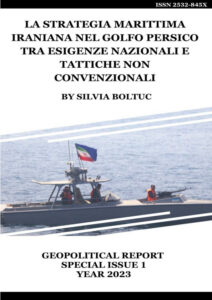
Title: La Strategia Marittima Iraniana nel Golfo Persico tra Esigenze Nazionali e Tattiche Non Convenzionali
Publication: Geopolitical Report ISSN 2532-845X
Authors: Silvia Boltuc
Citation: Silvia Boltuc, “La Strategia Marittima Iraniana nel Golfo Persico tra Esigenze Nazionali e Tattiche Non Convenzionali”, Geopolitical Report ISSN 2532-845X, Special Issue 1, 2023.
Abstract in English
Recent events in the Strait of Hormuz, which encompassed a confrontation between the Iranian Navy and the U.S. Navy, in conjunction with the ongo-ing conflict in the Middle East between Hamas and Israel, resulting in re-ciprocal allegations, underscore the imperative for a comprehensive analy-sis of the strategies employed by the maritime forces associated with the Iranian Revolutionary Guards and the U.S. military presence in the region. The primary objective of this paper is to furnish historical context pertain-ing to the establishment of a secondary Iranian naval force, alongside the enduring maritime heritage of the monarchy. It also delves into the under-lying motivations for the establishment of a maritime entity intended to serve the nascent Islamic Republic of Iran. Furthermore, it delves into the unorthodox strategies that Tehran has honed to protect its offshore assets along the Gulf coastline while simultaneously utilizing them as a geopoliti-cal means of deterrence, safeguarding the nation against the perceived, per-sistent threat of potential Western incursions.
Keywords: Iran, Persian Gulf, IRGCN, Navy, Strait of Hormuz
Abstract in Italiano
I recenti eventi nell’area dello Stretto di Hormuz che hanno visto lo scontro della Marina militare iraniana con la Marina statunitense, nonché il conflitto in Medio Oriente fra Hamas ed Israele che ha innescato uno scambio di accuse fra le due potenze lasciando presagire una ulteriore escalation nel Golfo Persico e nel Golfo dell’Oman, hanno sottolineato l’urgenza di analizzare le strategie poste in essere dal corpo marittimo legato alle Guardie Rivoluzionarie iraniane e la postura statunitense dispiegata in tali acque. L’intento di questo paper è fornire alcuni cenni storici sulla creazione di una seconda Marina militare iraniana accanto a quella storica eredità della monarchia, le motivazioni dietro la decisione di istituire un corpo marittimo che servisse la neonata Repubblica Islamica dell’Iran e le strategie non convenzionali che Teheran ha affinato per poter rispondere alla necessità di proteggere i suoi asset offshore lungo la costa che affaccia nel Golfo e, contemporaneamente, avere una leva geopolitica di deterrenza per difendere il Paese da un costante percepito rischio di imminente attacco dall’Occidente.
Parole chiave: Iran, Golfo Persico, IRGCN, Marina militare, strategia
Author bio
Silvia Boltuc, SpecialEurasia Managing Director, is an international affairs specialist, business consultant and political analyst who has supported private and public institutions in decision-making by providing reports, risk assessments, and consultancy. She manages the project Persian Files ISSN 2975-0598. She is also the Director of the Energy & Engineering Department of CeSEM – Centro Studi Eurasia Mediterraneo and an editor/analyst at the Italian media agencies Notizie Geopolitiche, Opinio Juris, and European Affairs Magazine. Previously, she worked as an Associate Director at ASRIE Analytica. She co-authored the book “Conflitto in Ucraina: rischio geopolitico, propaganda jihadista e minaccia per l’Europa” (Enigma Edizioni 2022).