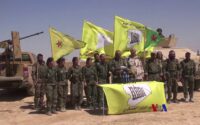
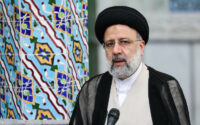
This report aims to provide a historical background on Mojahedin-e Khalq’s activities, supported by a dialogue with Javad Hasheminejad, the Secretary General of Habilian Association and the son of a political figure killed by MEK because of his leading role in the Islamic Revolution in Mashhad in the early ‘80s.
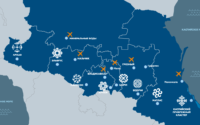
The Anzali Industrial-Trade Zone, situated in the northern region of Iran, is poised to emerge as a pivotal logistic and industrial nexus, facilitating seamless connections between the Iranian market and neighbouring countries, as well as members of the Eurasian Economic Union, the Commonwealth of Independent States, and the Shanghai Cooperation Organisation.
In October 2022, during SpecialEurasia’s official visit to Yerevan, we discussed with the representatives of the Armenian National Interest Fund (ANIF) the country’s investment opportunities and economic situation. After a year of monitoring the Armenian economic performance and investment market, in this report, we would like to stress ANIF’s role in promoting FDIs connected to the Armenian economic market and establishing a linking with United Arab Emirates.
SpecialEurasia ha pubblicato Geopolitical Report Special Issue 1/2023 ISSN 2532-845X dal titolo “La Strategia Marittima Iraniana nel Golfo Persico tra Esigenze Nazionali e Tattiche Non Convenzionali” il cui obiettivo è quello di analizzare il comparto marittimo militare iraniano e le implicazioni geopolitiche della strategia di Teheran nell’area del Golfo.
In the wake of meeting between Iran’s First Vice President, Mohammad Mokhber, and the Prime Minister of Kyrgyzstan, Akylbek Japarov, this analysis delves into the evolving landscape of Central Asia-Iran relations. The discussion, which encompassed the construction of a power plant, a refinery, and a prospective railway corridor connecting the two nations, underscores the collaborative prospects emerging within the geopolitical scenario of the region.
The diplomatic meeting held in Tehran stressed that Iran has emerged as a key actor in supporting the peace process regarding confrontation over Nagorno-Karabakh in the South Caucasus. It also indicated a possible shift of geopoltical influence from Europe towards East regarding the region.
The Hamas military offensive against Israel underscored a critical lapse in Tel Aviv’s intelligence infrastructure and exposed vulnerabilities, thereby heightening the regional geopolitical risk.
In August 2023, SpecialEurasia undertook a visit to Abkhazia, engaging in discussions with Viacheslav Chirikba, Director at the Centre for Strategic Studies under the President of Abkhazia, to delve into both the regional geopolitical dynamics and the intricacies of the local socioeconomic landscape.
The recent arrest of individuals implicated in orchestrating a series of violent assaults within the borders of the Islamic Republic of Iran underscores the profound and persistent terrorist menace facing the national Shi’a community.
Erdogan’s planned visit to Nakhchivan following Baku’s military offensive in Nagorno-Karabakh has raised significant concerns regarding the territorial integrity of Armenia since Azerbaijan and Turkey may actively seek to establish the conditions for a potential military intervention in Armenia’s Syunik Province, with the ultimate aim of securing the Zangezur Corridor.
The Azerbaijani military incursion into the Republic of Nagorno-Karabakh/Artsakh has brought to light Italy’s precarious foreign policy in the South Caucasus. Driven by a web of Rome’s imperatives and constraints, the Italian government finds itself torn between justifying Azerbaijan’s regional strategy and acknowledging the resulting humanitarian crisis and civilian casualties.
The recent military operation conducted by Azerbaijan against the defence forces in the Republic of Nagorno-Karabakh/Artsakh attests to the prevailing instability within the South Caucasus region. This development has sounded alarm bells amongst both international and regional stakeholders, who are now confronted with the prospect of a renewed conflict in this highly sensitive geopolitical theatre.
The strategic positioning of the Khorasan region is pivotal for the facilitation of trade and cultural interchange with adjacent nations. In this regard, implementing Special Economic Zones (SEZs) might strengthen the relations between Afghanistan and Iran.
The collaborative efforts in the tourism sector and Chinese investments in Iranian free economic zones and infrastructure are fortifying the economic ties between Beijing and Tehran
The recent meeting between the Iranian ambassador in Rome and the managers of selected Italian companies underscores a significant potential for economic cooperation between the two parties. Tehran’s keen interest in attracting foreign investors and companies, particularly those from Italy, is palpable.
Iran and Saudi Arabia have taken significant steps towards improving their diplomatic relations by appointing respective ambassadors to Tehran and Riyadh. This development marks a historic milestone in the restoration of relations between the two countries.
The conference held in Baku on the Jewish community of the Caucasus underscored the positive state of relations between Azerbaijan and Israel. Notably, it shed light on Baku’s strategic use of cultural diplomacy to foster stronger ties with Tel Aviv and garner support from the global Jewish community.
The “Business Springboard” competition, which has been organised by Visa, demonstrates the significant interest foreign entities hold for the SMEs sector in Kazakhstan. It unequivocally signifies their commitment to solidifying their footprint in the local market and forging enduring relationships with the burgeoning community of small and medium enterprises.
The complex landscape of Iran’s struggle with Kurdish nationalism unfolds as the Iranian leadership confronts secessionist groups along its borders. Amidst international interests and internal challenges, the fight against terrorism, potential destabilisation, and regional alliances shape Tehran’s multifaceted approach to counter these issues.
In an ever-evolving geopolitical landscape, the perception of a waning United States influence in the Middle East has gained momentum. This shift has sparked debates about the extent of the US disengagement and the emerging roles of other global players, particularly China.
Iran’s membership in BRICS could shape novel prospects for Tehran’s foreign policy and economic strategy, solidifying the growing geopolitical paradigm of a multipolar world, where nations like Russia, China, Iran, and India endeavor to provide a counterbalance to Western influence.
The Republic of Artsakh, also known as Nagorno-Karabakh, has found itself embroiled in a dire humanitarian crisis because of the Azerbaijan blockade imposed since December 2022.
Turkey-Iran relations have always been discontinuous, characterised by cooperation on the diplomatic level, alternating with opposite geopolitical needs and foreign strategies. Nowadays, especially in the Middle East and the Caucasus, Pan-Turkism and strategic needs drive Ankara-Tehran relations.
SpecialEurasia met in Sukhum Irakli Tuzhba, Deputy Minister of the Foreign Affairs of the Republic of Abkhazia, to delve into Abkhaz domestic and foreign politics and investigate future developments of the country.
The developing geopolitical dynamics in the Middle East, particularly concerning Iran’ strategy and cooperation with Syria in the defence and military weapons sectors, have sparked significant shifts on the regional chessboard.
In a strategic move amid shifting geopolitical dynamics, Kyrgyzstan and Iran are attempting to expand their trade and economic ties, driven by Bishkek’s pursuit of alternative transit routes and access to Iranian oil products, and Tehran’s strategic outreach towards the Central Asian republics considering Western sanctions and recent developments in the Eurasian region.
The inaugural “Central Asia + GCC” Summit held in Saudi Arabia marks a significant milestone in fostering interregional cooperation between the Gulf countries and Central Asia.
After our visits to Astana, SpecialEurasia published a report on the future prospects of Kazakhstan, which analysed the country’s domestic and foreign policy as well as the local society and culture.
Uzbekistan recently held its presidential elections, and the re-election of Shavkat Mirziyoyev has significant importance for the country. Mirziyoyev’s victory ensures stronger governance, allowing Uzbekistan to continue its process of reforms, economic diversification, and foreign policy initiatives.
Iran’s admittance to the Shanghai Cooperation Organization (SCO) as a full member is a noteworthy step that has greatly impacted the geopolitical arena of the region.
Iran’s Foreign Minister, Hossein Amir-Abdollahian, recently embarked on a three-day diplomatic tour of key Arab nations in the Persian Gulf. With a focus on economic collaboration, his visit to Qatar, the United Arab Emirates, Kuwait, and Oman marked a significant step towards enhancing relations with Iran’s southern Arab neighbours.
Qatar’s recent diplomatic foray into Central Asia by the Emir Sheikh Tamim bin Hamad Al Thani marked a significant step in the nation’s regional foreign policy.
At SpecialEurasia we had a profound realisation regarding the significance of relying on an analytical framework in geopolitical analysis rather than attempting to consume an overwhelming amount of news in the realm of geopolitical forecasting.
During the Astana International Forum, SpecialEurasia met with Roman Vassilenko, Deputy Minister of Foreign Affairs of the Republic of Kazakhstan, to discuss Kazakh foreign politics and regional dynamics.
SpecialEurasia will participate in the Astana International Forum 2023, as part of our ongoing commitment to monitoring and evaluating emerging markets and investment prospects in strategic countries like Kazakhstan and the broader Central Asian region.
The recent Iran-Turkmenistan deal on natural gas export emerges as a pivotal agreement, poised to both fortify Tehran’s energy strategy and bolster Ashgabat’s endeavours towards economic diversification by expanding its trade partners.
On May 30th, 2023, SpecialEurasia Managing Director, Silvia Boltuc, attended the event “Bahrain yesterday and today” organised by Laila Khrais on behalf of the Assadakah and Welcome Association Italy.
Egyptian business representatives promised $1.2 billion investments in Uzbekistan in different economic fields during the meeting with the Uzbek President
The KazanForum 2023 and Zelensky’s visit to Jeddah during the Arab League summit underlined how strategic is the Muslim world for Russia and Ukraine.
In this paper published in Geopolitical Report ISSN 2532-845X Vol. 2 Year 2023, the author examined the current status of Tehran-Tbilisi relations and assess possible future geopolitical scenarios concerning these two actors and the regional Caucasian dynamics.
SpecialEurasia, in partnership with MInter Group SRL, Notizie Geopolitiche, and Mondo Internazionale ASP, published Geopolitical Report ISSN 2532-845X Volume 2 Year 2023 focused on Iranian strategy in the South Caucasus.
SpecialEurasia ha incontrato S.E. Mohammad Reza Sabouri, Ambasciatore dell’Iran in Italia, per discutere le dinamiche attuali interne e in politica estera della Repubblica Islamica dell’Iran.
SpecialEurasia met with the Ambassador of Sudan to Italy, H.E. Sayed Altayeb Ahmed, to discuss further the recent events that have shaped the Sudanese domestic politics and stability and try to assess future consequences and developments.
Iraq has the world’s third-largest proven conventional petroleum reserves after Saudi Arabia and Iran. Recent developments in the oil and gas field suggest that the Middle Eastern country might be one of the future European leading suppliers.
The upcoming Turkish elections might affect Ankara-Tehran relations if the opposition leader Kemal Kilicdaroglu will defeat the president Recep Tayyip Erdogan and, thus, change domestic and foreign policies.
SpecialEurasia met in Rome H.E. Julianne Smith, the US Ambassador to NATO to investigate the conflict in Ukraine, the Chinese threat, and global challenges such as terrorism, issues which the Atlantic Alliance will discuss at the NATO summit in Vilnius in July 2023.
Kazakhstan’s desire to increase exports to Iran might hugely impact geopolitical dynamics in Eurasia, considering Astana’s desire to diversify and enhance its trade and economic partners to decrease Russia and China’s influence and Tehran’s necessity to overcome Western sanctions.
The creation of the Shavat-Dashoguz trade zone might strengthen Uzbek-Turkmen’s economic cooperation and bilateral relations and attract foreign investors interested in establishing their business in Central Asia by exploiting local government’s trade agreements and logistic projects.
The recent ‘diplomatic crisis’ between Iran and Azerbaijan, which has involved the Iranian diplomatic staff in Baku, underlined the potential political and military escalation between the countries, whose consequences might hugely influence the security in the South Caucasus.
In the last months, the South Caucasus has again experienced regional turbulence. While there have been protests in Georgia over a controversial draft law that would have required some organisations receiving foreign funding to register as “foreign agents”, Armenia and Azerbaijan might be again on the edge of an escalation involving the CSTO and, therefore, Russia.
The South Caucasus and the Middle East have long been at the epicentre of geopolitical, ideological and ethnic tensions. While the Israel-Iran hybrid war is experiencing a new momentum, ongoing tensions between Armenia and Azerbaijan might open a second front in which both Tel Aviv and Tehran might be involved.
Iran has been making great strides towards bolstering its economy and proving itself an attractive investment destination. The key factors driving the country’s economic growth are the Iran Special Economic Zones and the Iran Trade-Industrial Free Zones.
Questo paper ha come obiettivo quello di analizzare le recenti dinamiche mediorientali e la strategia degli Stati Uniti ed Israele volta a contenere e contrastare la politica estera dell’Iran nella regione.
Obiettivo di questo paper è quello di valutare il rischio geopolitico dell’Asia centrale prendendo in esame le dinamiche geopolitiche regionali e le problematiche che potrebbero comportare destabilizzazione e mancanza di sicurezza.
SpecialEurasia Managing Director, Silvia Boltuc, met in Astana the Chairman of the Spiritual Administration of Muslims of Kazakhstan, Supreme Mufti Nauryzbai kazhy Taganuly, to discuss the role of Islam in the country and the relations between the Kazakh Muslim umma (community) and other Muslim countries.
Le elezioni parlamentari in Kazakhstan potrebbero dare stabilità al paese e completare il processo di riforme avviato lo scorso anno volto a garantire sicurezza interna, supporto al Governo e al presidente così come a rassicurare gli investitori sul mercato interno kazako.
SpecialEurasia discussed with Alexandr Sharov, General Director of the transport company LLC Neftekhimtrans, Group of companies Rusiranexpo, the current geopolitical significance of the INSTC and possible future developments and impact in the Eurasian strategic chessboard.
Upcoming parliamentary elections in Kazakhstan mark the last step for the country’s complete reformation based on modernisation and democratisation according to the new path promoted by Kazakh President Kassym-Jomart Tokayev.
CSTO Secretary General Imangali Tasmagambetov’s visits to Bishkek and Dushanbe marked the Russian-led military organisations’ attempt to play a prominent role in resolving the Kyrgyzstan-Tajikistan border dispute and, therefore, stabilising the region.
Considerando l’importante ruolo nello scacchiere geopolitico internazionale, SpecialEurasia ha preso parte all’evento di premiazione dell’ambasciatrice della Mauritania in Italia S.E. Zeineb Ely Salem per approfondire la conoscenza del paese e dell’importanza della diplomazia femminile nel nord Africa arabo.
Antony Blinken’s visit to Astana stressed Washington’s interests in Central Asia since the region has played a vital role in the Eurasian geopolitical chessboard, especially after the beginning of the Ukraine conflict.
Following the allegations of Iran being involved in the Ukrainian conflict by delivering weapons to Russia, Tehran has been under severe international pressure and sanctions. Given its good relationship with Iran and its neutral foreign policy, Oman might emerge as a strategic regional mediator and help resolve critical issues such as the revival of the Iranian nuclear deal and the dispute between Iran and Saudi Arabia.
The meetings between Tajik representatives and officials from Qatar and the Islamic Development Bank highlighted Tajikistan’s strategy to attract foreign investments from the Arab-Muslim world and Doha’s desire to play a significant role in the local and regional market.
The agreement on creating a Free Trade Zone between Iran and the Eurasian Economic Union stressed the rising diplomatic and economic efforts that Tehran and Russia are sustaining to counter Western sanctions and find alternative solutions for their economies and import-export activities.
The recent Russia-Turkmenistan business forum attended by the Russian Prime Minister Mikhail Mishustin confirmed Kremlin’s strategy in Central Asia and Moscow’s desire to deepen economic and diplomatic cooperation with Ashgabat to avoid any further external interference by the European Union, China, or the United States.
In 2023, military escalations, domestic political turmoil, and economic crises might increase Iran and the Caucasus’ geopolitical risk and threaten regional security, whose consequences might broadly destabilise the Eurasian strategic chessboard.
Recent violent attacks in Iraq demonstrated that Islamic State continues to pose a severe threat to civilians and security forces, even though the government declared its ‘total defeat’ in 2017.
Azerbaijan’s transport and gas supply blockade of the Nagorno-Karabakh/Artsakh might cause a regional humanitarian crisis and evolve into a military escalation capable of destabilising the South Caucasus.
Chinese President Xi Jinping is paying an official visit to Saudi Arabia to affirm Beijing’s influence in the Gulf and contrast the U.S. presence in the region.
After the November 13th terrorist bombing attack in Turkey, Ankara started a military operation targeting Kurdish forces in Syria and Iraq. While Russia is concentrated on Ukraine and Iran is facing internal turmoil, Turkey is gaining ground in the Middle East.
In the context of the Ukraine conflict and the Brussels- Moscow confrontation, the European Union attempts to expand its activity and presence in Central Asia by improving connectivity projects and cooperation.
Considering the South Caucasus’ current geopolitical scenario, we discussed with Vahagn Khachaturyan, President of the Republic of Armenia, the country’s prospects in the changing world and possible regional developments to assess local stability and security and evaluate Armenia’s potentialities.
Iran and Dagestan have increased their trade exchange through the Makhachkala Commercial Port, where the Kremlin has invested financial funds to transform this infrastructure into a logistic hub in the Caspian Sea, which might undermine the role of the close port of Baku in Azerbaijan.
SpecialEurasia met with Sergey Ghazaryan, Permanent Representative of the Republic of Artsakh in Armenia, with whom we discussed how recent regional geopolitical dynamics in the Caucasus had influenced the current situation in Nagorno-Karabakh.
SpecialEurasia met with Paruyr Hovhannisyan, Deputy Minister of Foreign Affairs of the Republic of Armenia, with whom we discussed Yerevan’s regional and foreign policy and Armenia’s strategy to protect its sovereignty and citizens.
SpecialEurasia met with Hripsime Grigorianand Artur Hovhannisyan, members of the National Assembly of the Republic of Armenia, to investigate the Government’s domestic politics and assess the national situation.
SpecialEurasia met Vahan Kerobyan, the Minister of Economy of the Republic of Armenia, to investigate current Armenian economic trends and performance, the main drivers’ sectors, investment opportunities and fiscal policy.
During SpecialEurasia’s official mission to Yerevan, our team met with Armenian female entrepreneurs who founded the brand Udivila, which promotes Armenian culture and attempts to carve out a slide of a market where Armenia has not yet been present.
Tokayev’s suggestion to create an organisation in the framework of the CIS to promote the Russian language might be interpreted as Kazakhstan’s attempt to normalise relations with Russia, which were downgraded due to the Ukraine conflict and the Western sanctions.
Due to the Ukraine conflict and the following Western sanctions, Russia and Belarus have increased their economic and trade cooperation by increasing joint projects in different fields.
SpecialEurasia attended the International Round Table “Caspian Economic Forum-2022” together with experts and scholars from Caspian Sea countries, NGOs, and representatives of the Chamber of Trade and Industry of the Astrakhan region, mass media and state authorities, to discuss current geopolitical and economic dynamics in the region and forecast future trends.
In October 2022, representatives of Kazakhstan, Turkmenistan, Azerbaijan, Iran, and Russia will attend the second Caspian Economic Forum hosted in Moscow to discuss future energy cooperation and projects.
The Russian Federation’s humanitarian help to Pakistan might strengthen the political and economic relations between Moscow and Islamabad and support the Russian desire to expand its influence and presence in Central and South-East Asia.
Iran signed a memorandum of commitment for its permanent membership in the Shanghai Cooperation Organisation, enhancing its role in the Eurasian chessboard and strengthening the Moscow-Beijing-Tehran axis.
The Azerbaijani army’s aggression against Armenia raises concerns about the stability of the South Caucasus, an area which plays a fundamental role in the EU Energy Security Strategy.
Ilham Aliyev’s visit to Italy confirmed Baku’s interest in strengthening commercial and business partnerships with Rome and attracting Italian investments in the reconstruction process in the Nagorno-Karabakh territories, which are now under Azerbaijani control.
Over the years, the Islamic Republic of Iran has consolidated its relations with the countries of Central Asia, exploiting either the Persian common ethnic-cultural element or proposing itself as a logistic hub for the energy sector and trade corridors.
The killing of al-Qaeda’s leader Ayman al-Zawahiri in Kabul by a U.S. drone strike confirmed Washington’s interests in the region and the Taliban’s policy to host terrorist organisations’ high-ranking leaders in the country, which has become a “safe heaven” for different jihadist groups.
The forthcoming first Arab – China summit scheduled in Saudi Arabia confirms Beijing’s interests in the Gulf Arab monarchies and the Middle East and Riyadh’s strategy of diversifying its political and commercial partners and decreasing its dependence on the United States.
The recent phone conversation between the President of Russia and the Crown Prince of Saudi Arabia might be interpreted as the Kremlin’s move to counter the recent U.S. President Joe Biden’s official visit to Riyadh.
The discovery of a massive deposit of rare earth elements in Turkey might change the geopolitical dynamics in the Eurasian chessboard since Ankara might challenge China, which has had the leading role in the market until now. Furthermore, this finding might change the domestic political scenario in Turkey and quiet doubts and disappointment about the country’s economic performance.
SpecialEurasia attended the Virtual Symposium on Lifting the Siege on the city of Taiz and efforts toward building peace organised by the Embassy of Yemen in Italy to focus the attention of media, politicians and experts on the Yemen civil war and the harsh conditions the local population is experiencing.
On June 24th, 2022, SpecialEurasia, in cooperation with Criminalità e Giustizia, CISINT, Cesintel, IPA, ADR 360 and CCMN, organised an online webinar to present the book “Conflict in Ukraine: geopolitical risk, jihadist propaganda and threat for Europe”.
SpecialEurasia ha pubblicato il report “Gli interessi dell’Iran nel Caucaso” scritto da Silvia Boltuc con l’obiettivo di analizzare le relazioni diplomatiche, culturali ed economiche tra Teheran e gli attori della regione caucasica e comprendere quali potrebbero essere gli sviluppi futuri alla luce delle complessità e dinamiche regionali.
The ongoing political crisis is not the only issue affecting Iraq. Fight against terrorism, extreme drought, frequent sandstorms, demonstrations against rampant corruption, and a dispute with Iraqi Kurdistan to manage the hydrocarbon fields in the north are challenging the central Government of Baghdad.
On June 15th, 2022, the 18th international meeting of Astana Peace Talks kicked off in Nur Sultan, the capital of Kazakhstan. As guarantor countries, delegations from Russia, Turkey and Iran (which launched the Astana peace process in January 2017) will meet the Syrian government and opposition forces during the two-day talks.
Il libro “Conflitto in Ucraina: rischio geopolitico, propaganda jihadista e minaccia per l’Europa” pubblicato da Enigma Edizioni è nato da un progetto di SpecialEurasia con l’obiettivo di analizzare il rischio geopolitico derivante dalla propaganda jihadista e dalla presenza dei foreign fighters nel conflitto ucraino e le possibili ripercussioni per il continente europeo.
SpecialEurasia investigated contemporary Bahrein, its energy market and media situation with Rashid Al-Hamer, the Secretary-General of the Bahrain Journalists Association, and Sara Najeeb, board member and Head of the Media Committee of the Bahrain Journalists Association.
Kurdistan is experiencing severe internal complications due to the relationship with the central government in Baghdad and the recent Turkish military operation in the region in which Ankara planned to eliminate PKK members defined by Turkish authorities as “terrorists”.