Tag: Persian Files ISSN 2975-0598

  • “Maritime Security Belt 2025” Naval Exercise: Developing Security Architecture Of The Indian Ocean

    The seventh annual trilateral naval exercise “Maritime Security Belt 2025” started on March 10th, 2025, near Chabahar, Iran, encompassing anti-piracy, search-and-rescue, and naval combat exercises. The presence of Russia, China hosted by Iran in the strategically significant Gulf of Oman underscores their shared interest in countering Western influence and safeguarding themselves against an increasingly assertive Western bloc.

  • Navigating Sanctions: Orenburg and Iran’s Economic Partnership

    The report analyses recent economic and diplomatic activities involving the Orenburg Region of Russia and Iran, focusing on the deepening ties and joint cooperation opportunities. On February 21st-24th, 2025, a delegation representing Russia’s Oregon region, headed by Vice-Governor Ignat Petukhov, took part in the international EURASIA EXPO-2025 exhibition in Tehran.

  • Beyond Sanctions: Iran’s Complex Quest for Economic Stabilisation

    This report examines Iran’s ongoing efforts to stabilise its economy in the face of severe currency fluctuations, inflation, and external economic pressures

  • Renewed Maximum Pressure: The US Returns to Confrontation with Iran

    Persian Files ISSN 2975-0598 Volume 30 Issue 2 Author: Silvia Boltuc Executive Summary On February 4th, 2025, President Donald J. Trump signed a National Security Presidential Memorandum (NSPM) restoring maximum pressure on the government of the Islamic Republic of Iran.

  • Crypto Under Control: The Geopolitical Drivers of Iran’s New Regulation

    This report assesses the key developments in Iran’s cryptocurrency policies, their implications for domestic and international actors, and the potential risks associated with these changes.

  • Water, Security, and Cooperation: Iran and Afghanistan Address the Helmand River Dispute

    This report examines the geopolitical dynamics between Iran and Afghanistan, focusing on shared challenges and opportunities in the areas of water management, security, and migration. The ongoing dispute over the Helmand River’s water allocation represents a critical element of their relationship.

  • Iran and Tajikistan Forged a Strategic Alliance with 22 New Agreements

    In January 2025, Iran and Tajikistan significantly deepened their bilateral ties by signing 22 memorandums of understanding (MoUs) during high-level meetings in Dushanbe. These agreements span multiple sectors, including trade, energy, infrastructure, cultural exchange, and security. This development represents a pivotal moment in their diplomatic relationship, marked by the restoration of trust and mutual interest after years of strained ties.

  • Geopolitics and Risk Assessment of the Sirjan Special Economic Zone in Iran

    The Sirjan Special Economic Zone (SEZ) is a strategic hub for industrial, commercial, and transit activities in Iran. Established in the 1990s, it offers significant legal and economic advantages aimed at attracting domestic and foreign investment. Located near key transportation infrastructure, it provides a logistical nexus for trade between the Middle East, Central Asia, and South Asia.

  • Putin-Pezeshkian’s Meeting in Moscow: Analysis of Russia-Iran’s Strategic Partnership

    This report, based on local and international sources and SpecialEurasia’ previous investigations, analyse Putin-Pezeshkian’s meeting and the impact of an increasing Russia-Iran’s cooperation in the Eurasian geopolitical chessboard.

  • Iran and Belarus Discussed Expanding Their Relations

    Belarus and Iran continue to solidify their bilateral relations, aiming for a durable and multifaceted partnership. Recent high-level engagements, including discussions in Minsk between Belarusian Prime Minister Roman Golovchenko and Iranian Minister of Industry, Mines, and Trade Seyed Mohammad Atabak, underscore the shared commitment to enhancing cooperation.

  • Iranian Oil Refining Capacity and Pricing Strategies in 2025

    Iran has launched significant initiatives to enhance its oil refining capacity and optimise its global export strategy. This includes plans to modernise existing refineries, construct new facilities, and expand export destinations, with a focus on Asian, African, and Latin American markets.

  • Assessing Tehran-Bishkek’s Trade Via Iran’s Southern Ports

    Recent agreements to develop a Eurasian logistics hub in Iran’s southern ports underscore Bishkek’s need for maritime access, while Tehran positions itself as a regional economic hub to mitigate sanctions and increase its influence in Central Asia.

  • Analysis of Over Four Decades of Terrorist Attacks in Iran and Their Impact on the Iranian Society

    This report aims to analyse the evolution of terrorism in Iran, highlighting its peak in the 1980s with over 17,000 fatalities and its subsequent decline because of improved security measures, citizen cooperation, and post-war reconstruction efforts.

  • Iran-Afghanistan Relations: Emerging Dynamics and Challenges

    The dynamics of Iran-Afghanistan relations have shifted significantly since the Taliban regained power in Afghanistan in 2021. Although Iran has refrained from formally recognising the Taliban government, it has engaged pragmatically, establishing cooperative frameworks for trade, transit, and other bilateral engagements.

  • Iran-Japan Relations: Potential Cooperation Amidst Regional Challenges

    This report provides an analytical review of the developing relationship between Iran and Japan, focusing on areas of mutual interest and the strategic and diplomatic challenges that may affect this cooperation. The analysis also highlights complexities arising from Japan’s alignment with the United States and ongoing tensions in the Middle East.

  • Iran’s Expanding Trade with the Eurasian Economic Union

    This report primarily aims to evaluate the growth of trade between Iran and the Eurasian Economic Union (EAEU), particularly focusing on non-oil exports.

  • Iran Attacked Israel: A Preliminary Risk Assessment Report

    On Tuesday, October 1st, 2024, Iran launched approximately 180 missiles at Israel in response to the reported assassination of Hezbollah leader Hassan Nasrallah and Hamas’ political leader Ismail Haniyeh. SpecialEurasia published this preliminary report based on local and international public available information (PAI) and previous analyses and provided possible future risk scenarios.

  • South Caucasus: Iran Opened a Trade Centre in Armenia

    This report assesses the opening of the Iran Trade Centre in Yerevan, Armenia, on October 1st, 2024. The centre represents Tehran’s largest permanent trade facility abroad, aimed at facilitating economic engagement with the Armenian and Eurasian Economic Union (EAEU) markets.

  • 34th Conference on Islamic Banking in Iran: Economic Report

    This report covers the 34th conference on Islamic banking held at the Central Bank of Iran (CBI) in Tehran. The event gathered key financial leaders and government officials to discuss reforms in banking laws, the role of banks in supporting domestic production, and related economic issues.

  • Iranian President’s Official Visit to Iraq: Why Matters?

    Iranian President Masoud Pezeshkian’s first official visit to Iraq resulted in the signing of 14 cooperation agreements across various sectors, reinforcing Tehran’s strategic and economic ties with Baghdad. This report highlights Iraq’s significance in Tehran’s regional strategy and its influence on Baghdad’s political, economic, and security future.

  • Strategic Assessment of Khorramshahr Port Operations

    This report provides an analytical overview of Khorramshahr Port’s operations. It assesses the port’s recent performance, key developments, and future outlook.

  • Analysis of Iran’s 2024 Presidential Election and Masoud Pezeshkian’s Victory

    The 14th Presidential Election in Iran is over. Reformist lawmaker Masoud Pezeshkian wins Iran’s Election with 16.3 million votes. The participation of Iranian people in this election was 49.8%. His rival, Saeed Jalili, won 13.5 million votes.

  • A Guide to Navigate Iran’s 2024 Presidential Elections

    The death of President Raisi and his delegation in a helicopter crash on May 19th, 2024, near the village of Uzi in East Azerbaijan, has significantly altered Iran’s political landscape. This tragic event precipitated snap presidential elections, originally scheduled for 2025, now set for June 28th, 2024

  • Bahrain Opens to Iran: Last Stage of Shifting Gulf Dynamics

    In a surprising turn of events, Bahrain’s King Hamad bin Isa Al Khalifa signalled a potential thaw in relations with Iran during his recent visit to Russia. This development follows the recent rapprochement between Saudi Arabia and Iran, suggesting a broader trend of regional reconciliation.

  • Preliminary Report: Helicopter Incident Involving Iranian President Ebrahim Raisi

    A helicopter carrying Iranian President Ebrahim Raisi and Foreign Minister Hossein Amir Abdollahian crashed in mountainous terrain amid heavy fog while returning from a visit to Iran’s border with Azerbaijan. The incident, which places the lives of both officials at serious risk, has prompted extensive rescue efforts hindered by adverse weather conditions.

  • Persian Files ISSN 2975-0598 Report “Discovering the Geopolitics of the Islamic Republic of Iran”

    his merged document represents the culmination of months of intensive work and investigation of the project Persian Files ISSN 2975-0598, serving as an alternative guide for comprehending Iran. By offering an in-depth exploration of various facets of the nation, we aim to provide our audience with a comprehensive and insightful resource that goes beyond the conventional narratives surrounding Iran.

  • Opening of Eurasian Economic Union (EAEU) Trading Houses in Iran: An Intelligence Assesment Report

    The recent suggestion to open an Eurasian Economic Union Trading House in Iran underlined the organisation’s commitment to increase trade and cooperation with the Islamic Republic and the positive and increasing relations between Moscow and Tehran on different issues related to the Eurasian geopolitical chessboard.

  • Geopolitics of Iran’s Space Strategy

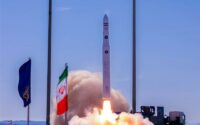
    The recent satellite launches at the Imam Khomeini Space Centre in Iran’s Semnan Province serve as evidence of Tehran’s progress in its 10-year space vision plan, aimed at fulfilling both civilian and military requirements.

  • Iran’s Strikes Against Jaish al-Adl in Pakistan

    Iran’s recent military strikes on Jaish al-Adl bases in Pakistan, following earlier actions in northern Iraq and Syria, have escalated tensions in the region. The strikes resulted in casualties, including the death of two children, prompting strong condemnation from Pakistan.

  • Iran: Implications of Recent Kerman’s Attacks and the Islamic State Regional Resurgence

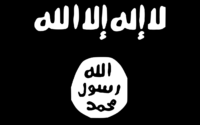
    The terrorist attack organised by the Islamic State in the Iranian city of Kerman highlighted the terrorist group’s resurgence and increasing threat in the Middle East, especially against the Shia community.

  • Terrorist Attack in Iran: A Preliminary Analysis

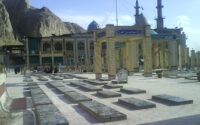
    Two bomb explosions near the tomb of Iranian General Qasem Soleimani have resulted in at least 103 fatalities and numerous injuries in Kerman. The incident occurred on the fourth anniversary of Soleimani’s US drone strike assassination.

  • EAEU-Iran: Towards the Creation of a Full-Fledged Free Trade Zone

    The recent signing of the Free Trade Agreement (FTA) between the Eurasian Economic Union (EAEU) and the Islamic Republic of Iran represents a significant milestone in Iran’s regional economic integration. Tehran’s substantial concessions in regulatory and tariff domains, coupled with its imminent BRICS membership, underscore a strategic move towards deeper engagement with Eurasian markets.

  • Iran And Egypt Towards the Restoration of Bilateral Relations

    The recent telephonic exchange between Iranian President Ibrahim Raisi and Egyptian President Abdel Fattah al-Sisi marks a significant moment that underscores the potential emergence of a new chapter in the relations between Iran and Egypt.

  • Iran’s Backing of Palestine: a Historical and Ideological Convergence

    Since 1979, Iran has been the primary advocate of the Palestinian cause. This alignment originates from an ideological convergence between the principles of the Iranian Revolution and the Palestinian struggle for freedom. Starting from current events, this report aims to explore the reasons behind Tehran’s unwavering support.

  • Iran-Turkmenistan: How Cultural Ties Can Boost Trade and Political Cooperation

    In early December, Ashgabat hosted the Intergovernmental Turkmen-Turkish Commission on Economic Cooperation with Turkish delegates, readdressing the potential gas delivery from Turkmenistan to Turkey through Iran. Iran-Turkmenistan’s centuries-old relations provide the basis for a long-lasting and profitable collaboration between these two countries.

  • Exploring Iran-Afghanistan collaboration: Kabul’s Pursuit of Trade Diversification

    The prospect of enhanced Iran-Afghanistan cooperation holds a dual promise: not only does it offer a pathway to augment trade and boost revenues for two nations grappling with economic challenges and Western sanctions, but it also serves as a strategic move to counterbalance the escalating economic influence of China within the Afghan market.

  • Iran and the IRISL Group’s Crucial Role in the International North-South Transport Corridor (INSTC)

    Since the strategic role that the International North-South Transport Corridor (INSTC) plays in the Eurasian geopolitical chessboard, Iran has adopted a strategy aimed at exploiting the benefit of this logistic project and promoting national companies such as the IRISL Group.

  • SpecialEurasia’s Strategic Dialogues: Oman, Iraq, and the Future of the Middle East

    SpecialEurasia has been actively involved in the geopolitical analysis and consulting about the Middle East, aiding the decision-making processes of both private entities and public institutions. Indeed, recently, our team met with delegates from the Arab League, including the Ambassadors of Oman and Iraq, to discuss regional dynamics.

  • Exploring Iran-China Cooperation: A Ground Report on the Persian Gulf Bridge

    The construction of the Persian Gulf Bridge between Qeshm and the Iranian mainland stands out as a pivotal project showcasing the growing collaboration between Tehran and Beijing. This on-site report aims to uncover the current status of exchanges between China and Iran, focusing on the potential advantages and outcomes linked to the construction of the Persian Gulf bridge.

  • Mojahedin-e Khalq, Security and Terrorism in Iran: A Dialogue with Javad Hasheminejad

    This report aims to provide a historical background on Mojahedin-e Khalq’s activities, supported by a dialogue with Javad Hasheminejad,  the Secretary General of Habilian Association and the son of a political figure killed by MEK because of  his leading role in the Islamic Revolution in Mashhad in the early ‘80s.

  • Geopolitics of the Anzali Trade-Industrial Zone in Iran

    The Anzali Industrial-Trade Zone, situated in the northern region of Iran, is poised to emerge as a pivotal logistic and industrial nexus, facilitating seamless connections between the Iranian market and neighbouring countries, as well as members of the Eurasian Economic Union, the Commonwealth of Independent States, and the Shanghai Cooperation Organisation.

  • La Strategia Marittima Iraniana nel Golfo Persico tra Esigenze Nazionali e Tattiche Non Convenzionali

    SpecialEurasia ha pubblicato Geopolitical Report Special Issue 1/2023 ISSN 2532-845X dal titolo “La Strategia Marittima Iraniana nel Golfo Persico tra Esigenze Nazionali e Tattiche Non Convenzionali” il cui obiettivo è quello di analizzare il comparto marittimo militare iraniano e le implicazioni geopolitiche della strategia di Teheran nell’area del Golfo.

  • Central Asia: Iran’s increasing ties with post-Soviet republics

    In the wake of meeting between Iran’s First Vice President, Mohammad Mokhber, and the Prime Minister of Kyrgyzstan, Akylbek Japarov, this analysis delves into the evolving landscape of Central Asia-Iran relations. The discussion, which encompassed the construction of a power plant, a refinery, and a prospective railway corridor connecting the two nations, underscores the collaborative prospects emerging within the geopolitical scenario of the region.

  • Armenia-Azerbaijan: Iran’s Rising Mediation Role in the South Caucasus

    The diplomatic meeting held in Tehran stressed that Iran has emerged as a key actor in supporting the peace process regarding confrontation over Nagorno-Karabakh in the South Caucasus. It also indicated a possible shift of geopoltical influence from Europe towards East regarding the region.

  • Strategic Significance of the new Azerbaijan-Iran Railway Project: Shaping South Caucasus Geopolitics

    Azerbaijan-Iran recent bilateral agreement to initiate a collaborative rail project signifies a pivotal development in the geopolitical landscape of the South Caucasus. This strategic infrastructure venture holds the potential to bring about a measure of stability to the region.

  • Examining The Relations Between Iran and Azerbaijan. Is There a Possibility of War Between Two Countries?

    The recent Azerbaijani military offensive against Nagorno-Karabakh, culminating in the capitulation of Stepanakert, coupled with the subsequent meeting between Ilham Aliyev and Recep Tayyip Erdogan in Nakhchivan, has engendered heightened concerns within the international community, notably within Iran.

  • SpecialEurasia Launched the Publication and Research Project “Persian Files ISSN 2975-0598”

    SpecialEurasia is thrilled to announce the launch of our latest publication Persian FilesISSN 2975-0598 dedicated to unraveling the intricate dynamics of the Persian Gulf region, with a primary focus on the Islamic Republic of Iran.

  • The Islamic State Threatened the Shi’a Community in the Islamic Republic of Iran

    The recent arrest of individuals implicated in orchestrating a series of violent assaults within the borders of the Islamic Republic of Iran underscores the profound and persistent terrorist menace facing the national Shi’a community.

  • SEZs might booster Iranian Khorasan trade with Afghanistan

    The strategic positioning of the Khorasan region is pivotal for the facilitation of trade and cultural interchange with adjacent nations. In this regard, implementing Special Economic Zones (SEZs) might strengthen the relations between Afghanistan and Iran.

  • China and Iran Explore New Cooperation Opportunities in Tourism and Free Economic Zones

    The collaborative efforts in the tourism sector and Chinese investments in Iranian free economic zones and infrastructure are fortifying the economic ties between Beijing and Tehran

  • Iran Opens the Country to Italian Companies: Why Does It Matter?

    The recent meeting between the Iranian ambassador in Rome and the managers of selected Italian companies underscores a significant potential for economic cooperation between the two parties. Tehran’s keen interest in attracting foreign investors and companies, particularly those from Italy, is palpable.

  • From Rivalry to Cooperation: Charting the Future of Iran-Saudi Relations

    Iran and Saudi Arabia have taken significant steps towards improving their diplomatic relations by appointing respective ambassadors to Tehran and Riyadh. This development marks a historic milestone in the restoration of relations between the two countries.

  • Interplay of Security Dynamics: Iran’s Response to Kurdish Secessionism and External Alliances

    The complex landscape of Iran’s struggle with Kurdish nationalism unfolds as the Iranian leadership confronts secessionist groups along its borders. Amidst international interests and internal challenges, the fight against terrorism, potential destabilisation, and regional alliances shape Tehran’s multifaceted approach to counter these issues.

  • BRICS expansion and Iranian membership: what prospects for Tehran?

    Iran’s membership in BRICS could shape novel prospects for Tehran’s foreign policy and economic strategy, solidifying the growing geopolitical paradigm of a multipolar world, where nations like Russia, China, Iran, and India endeavor to provide a counterbalance to Western influence.

  • Exploring Iran’s Latest Natural Gas Import Deal with Turkmenistan

    The recent Iran-Turkmenistan deal on natural gas export emerges as a pivotal agreement, poised to both fortify Tehran’s energy strategy and bolster Ashgabat’s endeavours towards economic diversification by expanding its trade partners.

  • Geopolitica dell’Iran: SpecialEurasia incontra S.E. Mohammad Reza Sabouri, Ambasciatore dell’Iran in Italia

    SpecialEurasia ha incontrato S.E. Mohammad Reza Sabouri, Ambasciatore dell’Iran in Italia, per discutere le dinamiche attuali interne e in politica estera della Repubblica Islamica dell’Iran.

  • Iran: Special Economic Zones and Trade-Industrial Free Zones Map

    Iran has been making great strides towards bolstering its economy and proving itself an attractive investment destination. The key factors driving the country’s economic growth are the Iran Special Economic Zones and the Iran Trade-Industrial Free Zones.

  • Riyadh-Tehran reconciliation sponsored by Beijing, what next?

    Iran and Saudi Arabia, longtime regional rivals, have agreed to resume friendly diplomatic relations and reopen their embassies after Chinese-led negotiations in Beijing. The two governments announced the agreement via their respective state media agencies and China’s Xinhua News Agency.

  • Iran and the Eurasian Economic Union signed an agreement on a Free Trade Zone

    The agreement on creating a Free Trade Zone between Iran and the Eurasian Economic Union stressed the rising diplomatic and economic efforts that Tehran and Russia are sustaining to counter Western sanctions and find alternative solutions for their economies and import-export activities.

  • Protests in Iran: popular demand or enemy provocations?

    The mass demonstrations that swept Iran in the past months have subsided significantly, but the protest mood in the country does not fade away. This analysis investigated international interest in Iranian protests and national political parties.

  • Russian economy is shifting toward Eurasian markets through Iran

    The Western sanctions against Russia caused by the Ukraine conflict have changed the Kremlin’s foreign policy, which currently seems to be more oriented toward the Eurasian market, as the recent Iran-Russia trade conference highlighted.

  • Russia and Iran intensify trade and economic ties

    While the Western world is increasingly moving away from Russian exports, Moscow and Tehran are taking measures to intensify trade and economic cooperation, as evidenced by intensive negotiations between the parties.

  • Japanese interests in Iranian ports and the Persian Gulf

    The recent meeting between the Japanese Ambassador in Iran and the head of the Ports and Navigation Department of the Hormozgan province to discuss investments underlined Japan’s interests in expanding maritime cooperation in the Persian Gulf exploiting the Iranian ports’ role. 

  • Iran promotes gas projects in Qatar

    The Iranian President Ibrahim Raisi arrived in Doha to attend the Gas Exporting Countries Forum (GECF) and probably sign several Memorandum of Understandings, most notably to realise a crucial underwater project that will connect Iran and Iraq.

  • The United Arab Emirates (UAE) boost trade partnership and investments in Iran

    The United Arab Emirates expressed their interests in increasing investments and trade with Iran whose geographical position in the Middle East and connections with the Caucasus and Central Asia plays a strategic role in international trade and relations.

  • In Lebanon politicians and activists established the “National Council to End the Iranian Occupation”

    The establishment of the National Council to End the Iranian Occupation in Lebanon, a significant development within the country’s political landscape, shed the light on sentiments held by a portion of the population towards Iran and its influential ally, Hezbollah.

  • Taliban reported a meeting with Ahmad Massoud and Ismail Khan in Tehran

    The Foreign Affairs Minister of the Taliban interim Government Amir Khan Muttaqi said that he had met with the head of the National Resistance Front Ahmad Massoud and the leader of the Herat militia Mohammad Ismail Khan in Tehran.

  • Geopolitical del porto iraniano di Chabahar (Parte 3)

    Il porto di Chabahar in Iran ha attratto l’attenzione di attori regionali e internazionali grazie alla sua capacità di influenzare le dinamiche geopolitiche e del commercio della regione eurasiatica (Parte 3)

  • Geopolitica del porto iraniano di Chabahar (Parte 2)

    Questo report si propone di analizzare l’importanza e il ruolo del porto di Chabahar per India, Afghanistan e Pakistan, attori direttamente coinvolti da questa infrastruttura insieme alla Repubblica Islamica dell’Iran (Parte 2)

  • Geopolitica del porto iraniano di Chabahar (Parte 1)

    Il porto iraniano di Chabahar, situato nel Golfo dell’Oman, è un progetto nato dalla collaborazione trilaterale fra Iran, Afghanistan ed India che potrebbe portare benefici per Teheran in materia di commercio e sviluppo economico (Parte 1).

  • Why we should monitor the Iranian presidential election

    The upcoming Iranian presidential election is among the 2021 most important geopolitical events because the future Iranian president might influence the Iran-United States negotiations on the Nuclear Deal, Tehran’s foreign policy and domestic economy strategy.

  • Iran e Tagikistan rafforzano la cooperazione nei settori energia e sicurezza

    Iran e Tagikistan hanno intensificato le loro relazioni e la cooperazione nelle ultime settimane come parte della strategia di Teheran di aumentare la sua presenza e il suo ruolo nella repubblica dell’Asia centrale.

  • Iran e Tagikistan discutono la cooperazione nel settore sicurezza

    Il presidente del Tagikistan Emomali Rahmon ha incontrato il ministro degli Interni iraniano Abdurrizo Rahmonia Fazil per discutere progetti congiunti nel settore sicurezza, evento che sottolinea l’interesse di Teheran nel promuovere la propria strategia in Asia centrale. 

  • Russia enhances scientific cooperation with Iran

    Iran and Russia are strengthening their bilateral cooperation in the field of scientific research focusing their attention on the Caspian Sea since the region plays a strategic role in the international arena and energy market.

Geopoolitical Intelligence Analysis Course 11 April 2026_SpecialEurasia
Online Course Terrorism Analysis SpecialEurasia February 2026