
The Russian strategy in the Middle East. An interview with Alexander Hoffmann
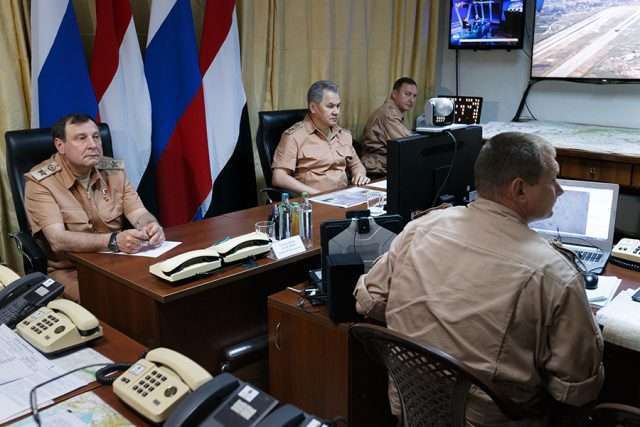
Since the so-called Arab Spring and concurrently with the U.S. slow disengagement from the Middle East, the Russian Federation has become a significant geopolitical actor in the Arab-Muslim world. Understanding Russian foreign policy with key Middle Eastern geopolitical actors and the Russian state companies’ activities is fundamental to forecasting possible future trends in the area.
The Kremlin’s support for the Syrian regime of Bashar al-Assad, the Russian military presence in the Middle East and North Africa thanks to the private military companies (PMCs), Moscow’s plan to contrast terrorist groups such as the Islamic State and Russian oil & gas state companies’ activities in the region might be considered pillars of the Russian Federation’s strategy in the Arab-Muslim world. Considering the emerging Russian role in the region, we discussed Kremlin’s strategy in the Middle East with Alexander Alexandrovich Hoffmann, a Russian expert and consultant in the Middle East.
What are the main guidelines and goals of the Russian strategy in the Middle East?
“The main reference point of the Russian foreign policy initiative in the Middle East is balanced interaction between the regional powers: Turkey, Israel, Saudi Arabia, the United Arab Emirates and Iran. The Kremlin’s goal is to strengthen geopolitical influence in a region where there was a fairly widespread Soviet presence in the past. Diplomatic, military, economic (energy) ways.“
Considering the Muslim presence in the Russian Federation, how might the Kremlin balance its foreign policy in the Arab-Muslim world?
“The political leaders of the Muslim regions of Russia – Tatarstan and Chechnya – have shown themselves successfully in the Middle East. Ramzan Kadyrov is the most frequent guest in the Gulf countries among the Russian political leadership. This is a diplomatic result.“
Media and international experts have often underlined Russia-Iran cooperation in the Middle East. As some analysts have highlighted, could we consider Moscow and Tehran strategic allies or ‘frenemies’?
“Russia and Iran are tactical allies, whose potential can become the basis for a strategic alliance at the global level – opposition to post-Atlantism. Not together, but within the framework of a broad coalition with common existential interests.“
Which countries do you believe Iran and Russia are strengthening their military and economic cooperation in the Middle East?
“Between Moscow and Tehran, a delineation of interests has been drawn in Syria, most likely now in Lebanon. In Iraq and Yemen, both sides do not yet have a common strategic understanding. We should not forget about Afghanistan as well – the military-political cohesion within the SCO is strengthening.“.
Recently we have monitored Tatneft and Tatarstan activities in Iraq (The Middle Eastern expansion of Tatneft; Il ruolo del Tatarstan nella politica estera russa in Iraq). How might the Russian Federation exploit Tatarstan in its Middle Eastern foreign policy?
“As already mentioned, the head of Tatarstan Rustam Minnikhanov is active in the Middle East, more broadly in Muslim countries. It is logical that the leader of the Muslim region will become an actor in Russia’s relations with the Islamic ummah. On the external front, everything is strictly in accordance with the Kremlin and in accordance with the federal line, strengthening its confessional homogeneity with its Middle Eastern partners. It’s the same with the largest companies in the oil and gas sector. Strictly pragmatic.“.
Do you have any updates and insights about the Russian activities in Syria and the situation on the ground?
“Now the key issue in Syria is the reconquest of three zones: beyond the Euphrates, the northern territories controlled by Turkey and the North Atlantic presence around At-Tanf. Russia is trading with Turkey in Syria as part of a larger game where the stakes are ever higher. A number of steps have been taken to coordinate positions with Israel. Damascus’s relations with the rest of the Arab countries within the Arab League are being thawed. The Emirates, as expected, are the most active in this direction.“.
Author: Giuliano Bifolchi.