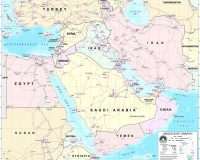
This report examines the emerging U.S. plan to establish a military airbase in Syria, as reported by multiple sources, and assesses the strategic objectives and associated risks of such a deployment.
The formation of the Islamic Resistance Front in Syria (Ouli al-Ba’s) marks the emergence of a new actor within the Syrian conflict, positioning itself as a nationalist and religiously inspired “resistance” front opposing Israeli, Turkish, and Western presence in southern Syria.
This report examines the nature and objectives of the Israel David’s Corridor and its implications for Middle Eastern security and regional geopolitical dynamics.
This report examines how gas transit through Turkey, Azerbaijan, and Syria currently aids Damascus’ energy needs and economic growth, Baku’s export diversification efforts, and Ankara’s Middle East ambitions.
Renewed fighting between Druze and Bedouin groups in Suwayda province has caused a major humanitarian and economic crisis in Southern Syria.
This report analyses the recent tensions between the jihadist group Ajnad al-Kavkaz and Syria’s interim administration under Ahmed al-Sharaa. In a recent statement published online, Ajnad al-Kavkaz criticised targeted repression by the current Syrian authorities.
This report examines the resurgence of the Islamic State’s propaganda against Syrian President Ahmed al-Sharaa in the latest issue of al-Naba, a response to his attempts to engage with the United States, Saudi Arabia, and Israel. . The report details internal security threats, geopolitical shifts, and the dangers of jihadist insurgency.
This report evaluates recent Central Asian fighters’ jihadist mobilisation efforts in Syria and the dissemination of related propaganda targeting Russian Muslims. Drawing on open-source information, including Telegram content in Russian, the report outlines the security risks posed to Syria, Russia, and Central Asia.
This report examines Iran’s evolving strategic posture in Afghanistan following the erosion of its influence in Syria. The loss of key proxy leaders, Israel’s war in Gaza, and Syria’s collapse as a reliable geographical link force Tehran to seek alternative arenas. The aim of this report is to assess whether Afghanistan could emerge as Iran’s next strategic frontier following Syria’s decline.
The Islamic State has issued a new propaganda video denouncing the Syrian transitional leadership under Ahmed al-Sharaa, also known by his nom de guerre Abu Muhammad al-Jolani, to be apostate and illegitimate under Islamic law. This report analyse the video’s narrative and its impact on Syrian and regional security.
The developments in the Middle East over the past year have been rapid and surprising. One of these surprises is the friendship between two former rivals. The Syrian transitional president, Ahmed al-Sharaa, held a meeting with the commander of the Syrian Democratic Forces (SDF), Mazloum Abdi.
This report assesses the security risks in Syria following recent sectarian violence in Latakia and Tartus, where factions linked to the transitional government reportedly targeted Alawite civilians. Local sources report hundreds killed in what they describe as mass executions.
Following the collapse of Bashar al-Assad’s regime, Turkey has solidified its strategic position in Syria through a series of agreements with the new transitional government led by Ahmed al-Sharaa.
Sayfiddin Tajibayev’s appointment to a senior position in the Syrian Ministry of Defence highlights a serious security risk to Tajikistan and Central Asia. This development could catalyse the movement of more extremists from Central Asia to Syria, facilitating the establishment of new foreign fighter networks and training centres.
SpecialEurasia had an exclusive conversation with Alexander Hoffmann, a Military Adviser from the Russian Federation. His analysis sheds light on the Kremlin’s military, diplomatic, and strategic recalibrations, offering a comprehensive perspective on Russia’s current and future approach in Syria and the broader Middle East.
This report synthesises international and local data, together with previous SpecialEurasia assessments, to analyse the consequences of Assad’s downfall in Syria and the potential contribution of Central Asian foreign fighters.
The Islamic State has utilised the recent collapse of the Assad regime and the rise of Hayat Tahrir al-Sham (HTS) to intensify its ideological campaign. Through its latest issue of al-Naba (issue 473), released in recent days, the group has disseminated a narrative portraying these events as betrayals of Islamic principles and evidence of external manipulation.
The Assad regime’s sudden collapse in Syria marks a profound and far-reaching geopolitical shift. The rapid Syrian opposition military gains, spearheaded by Hayat Tahrir al-Sham (HTS), have significantly altered regional political and military conditions.
This intel brief, based on local and international sources and SpecialEurasia’s previous monitoring reports, examines the regional and Syrian dynamics, integrating recent developments in Daraa and As-Suwayda to analyse the risks and strategic considerations.
This report assesses the implications of the Hayat Tahrir al-Sham (HTS) offensive in Aleppo, the potential death of its leader Abu Mohammad al-Julani, and the broader geopolitical impact on regional stability and key state actors.
In this report, we will first discuss the current situation of the Northwest Syria, then we will introduce and provide brief information about the terrorist group Hayat Tahrir al-Sham, which operates locally. In the end, we analyse the future of this region.
The Kurdish issue has long overshadowed the Middle East region and reflects the region’s complex ethnic conflicts. This report aims to examine the future prospects of Kurds in Northeastern Syria after a review of its geopolitics and demographics.
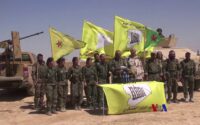
Tensions between Turkey and the Syrian Democratic Forces (SDF) have escalated following the killing of two Turkish soldiers and 17 mercenaries by SDF operations. The SDF has conducted a series of targeted military operations against Turkish military forces and mercenaries, resulting in casualties on both sides.
This report underlines that Syria, in collaboration with its allies, Russia and Iran, must address this persistent threat to prevent further destabilisation and potential spillover into neighbouring Iraq. Additionally, a comprehensive strategy that combines economic recovery, improved security, and counter-radicalisation efforts is necessary to mitigate the ongoing influence of the Islamic State in Syria.
The developing geopolitical dynamics in the Middle East, particularly concerning Iran’ strategy and cooperation with Syria in the defence and military weapons sectors, have sparked significant shifts on the regional chessboard.
CENTCOM’s killing of a senior Islamic State Syria leader stressed the US commitment to fighting the terrorist threats and emphasised the persistent instability in the Middle East related to jihadist and terrorist activities.
On June 15th, 2022, the 18th international meeting of Astana Peace Talks kicked off in Nur Sultan, the capital of Kazakhstan. As guarantor countries, delegations from Russia, Turkey and Iran (which launched the Astana peace process in January 2017) will meet the Syrian government and opposition forces during the two-day talks.
During the 31st World Congress of IFJ, we discussed with Iraqi, Syrian and Yemenite representatives the situation in their countries, focusing on society, media and the impact of regional and international geopolitics.
The Syrian and UAE delegations meeting underlined Dubai’s diplomatic efforts to play a decisive role in the Middle Eastern geopolitics and international arena.
La presenza dei gruppi jihadisti nord caucasici fedeli ad al-Qaeda oppure di militanti nord caucasici attivi tra le fila di Daesh che combattono nella guerra civile siriana contro le forze di Bashar al-Assad rappresenta una minaccia futura per la Russia ed in generale per l’Europa e la Turchia le quali potrebbero essere prese di mira da attentati terroristici contro strutture civili e militari.