The report analyses recent economic and security developments between Tajikistan and Pakistan, highlighting the implications of their expanding bilateral relations.
Kazakhstan’s 2024 military modernisation initiatives significantly enhance its defence capabilities, reflecting concerns over internal stability and regional security. The country’s efforts include advanced procurements and comprehensive upgrades, which could alter Central Asia’s military balance.
This report covers the recent counter-terrorism operations in Kazakhstan, resulting in the arrest of five individuals involved in terrorism-related activities. The operations underscore the ongoing threat within the country and the effectiveness of the government’s response.
This report evaluates the state of water security and energy cooperation in Central Asia. It underscores the importance of these issues within the region’s foreign policy agendas, given the growing environmental challenges and socio-economic demands.
This report assesses security developments and counter-terrorism strategy in Tajikistan, focusing on the first half of 2024. It highlights the security implications of rising extremist activities compounded by internal challenges such as political repression, ethnic tensions, and economic instability.
The potential for economic cooperation between Uzbekistan and African countries is significant, with key sectors such as agriculture, mining, and industrial goods offering substantial opportunities for growth in bilateral trade. This report examines Tashkent’s key African partners and highlights the investment prospects arising from the economic collaboration between Uzbekistan and Africa.
Tajikistan presents a moderate risk profile for investors because of its political stability under authoritarian rule, weak economic development, and significant security challenges. Although the country has substantial natural resources and strategic ties with Russia and China, pervasive corruption, poor infrastructure, and proximity to conflict zones undermine its investment attractiveness.
In response to the US strategy of political-military containment in the Asia-Pacific region, the People’s Republic of China (PRC) has recognised the strategic importance of the China-Mongolia-Russia Economic Corridor (a component of the Belt and Road Initiative) in enhancing the energy-industrial infrastructure and expanding the Chinese economic and cultural influence in Central Asia.
Kyrgyzstan faced a significant terrorism risk stemming from the activities of radical groups linked to international terrorist organisations, such as the Islamic State. Recent counter-terrorism operation near Bishkek highlighted both the active recruitment efforts targeting Kyrgyz youth and the nation’s challenges in addressing these threats effectively.
Russia is gearing up to host the SPIEF 2024, a pivotal annual event that unites Russia’s business partners and provides a platform for bilateral agreements while addressing current global issues. Kazakhstan will participate in the event, aiming to strengthen its established partnerships with Moscow and Beijing and to forge new connections with the growing economies of Asia.
In the latest Geopolitical Report Podcast, we explored the recent high-level meeting between Italian and Central Asian republics’ foreign affairs ministers held in Rome.
This report explores the historical background influencing the current discussions between Kazakhstan and Japan. It then examines the potential economic benefits that could arise from this dialogue and explores the exciting possibilities that lie ahead for both nations.
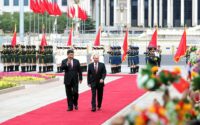
This episode of the Geopolitical Report Podcast examines the evolving relationship between China and Tajikistan, focusing particularly on Beijing’s growing economic influence in the Central Asian republic. The analysis stems from a recent meeting between Tajik President Emomali Rahmon and Chinese Foreign Minister Wang Yi.
In response to a recent terrorist attack in Moscow and a shifting threat landscape, Central Asian security leaders met to prioritise countering online radicalisation. This report assesses the current security environment in Central Asia, highlighting emergent threats and critical areas requiring regional cooperation.
In our latest episode of the Geopolitical Report Podcast, we delved into the burgeoning economic and trade cooperation between Uzbekistan and the People’s Republic of China and its repercussions on the geopolitical landscape of Central Asia.
The last meeting in Fergana between the heads of the security services of Kyrgyzstan, Tajikistan, and Uzbekistan accentuated the countries’ desire to cooperate in regional security to face cross-border challenges, such as terrorism and extremism.
This intelligence brief provides timely information on recent events in Afghanistan, including the attack on a mosque in Herat province and developments in transit and trade infrastructure, as well as potential cooperation in the mining sector between Kazakhstan and Afghanistan.
Recent developments show significant shifts in transportation and trade routes linking Europe, Asia, and the Persian Gulf. Russia’s investment in transport corridors through Iran and the Arctic, alongside developments in the Turkmenbashi port, signifies a strategic move to reshape regional trade dynamics.
In our recent Geopolitical Report Podcast, we delved into Azerbaijan’s ongoing economic diversification efforts and Baku’s foreign policy initiatives in the Caspian Sea region and Central Asia with Simona Scotti, a Senior Researcher at the Topchubashov Centre of Baku
President Emomali Rahmon’s recent official visit to Italy signifies a significant step forward in Tajikistan’s diplomatic relations, underlining the nation’s strategic engagement with Italy across various domains, including political, economic, trade, cultural, humanitarian, and security spheres.
The visit of David Cameron, the British Foreign Minister, to Central Asia, marks a significant development in relations between the UK and the region. With a focus on the geopolitical implications, this report examines Cameron’s visit and offers insights into the potential risks and opportunities it presents for both the UK and the Central Asian states.
Since the collapse of the Soviet Union, Islam has played a new role in the nation-building process in the Central Asian Republic of Uzbekistan. The region is witnessing a rising popularity of radical Salafi Islamism, marked by its fervent pursuit of overthrowing secular governments.
In the most recent episode of the Geopolitical Report Podcast, Max Taylor, serving as the Intelligence Manager at Intelligence Fusion, offered invaluable insights into the prevailing circumstances within Central Asia and the AfPak region.
Russia and Tajikistan are currently engaged in joint counterterrorism exercises, which have become even more crucial because of the rise in terrorist activities in Afghanistan. This partnership between Moscow and Dushanbe highlights their commitment to enhancing military and defence cooperation.
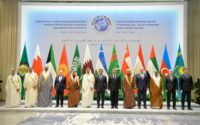
The high-level meeting in Tashkent between Central Asian and Gulf Cooperation Council (GCC) countries presents an opportunity to strengthen regional cooperation amidst developing geopolitical challenges.
This PESTEL analysis delves into the key factors influencing Kazakhstan’s environment, providing insights for decision-makers seeking to navigate the complexities and capitalise on opportunities in the region.
Kyrgyzstan presents a nuanced landscape for prospective investors, marked by a blend of promising prospects and enduring challenges. Its rich reservoir of metal resources, burgeoning tourism sector, and strategic positioning along the historic Silk Road attract potential investment ventures.
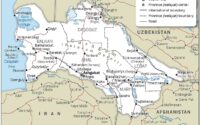
Turkmenistan, at the crossroads of civilisations, embodies a rich tapestry of history, geopolitics, and natural resources. This comprehensive SWOT analysis delves into Turkmenistan’s geopolitical scenario, strengths, weaknesses, opportunities, and threats, offering insights into the nation’s complex dynamics and future prospects.
The recent publication of the first issue of The Voice of Khurasan in the Tajik language (Sadoi Khurasan) underlined the Islamic State Wilayat Khurasan’s strategy to interest Tajik speakers in Central Asia and increase the pressure against Dushanbe’s government.
In this podcast episode, we analysed the threat posed by the Islamic State Vilayat Khorasan (IS-Khorasan) and its connection with Central Asian citizens . The podcast delves into various aspects of IS-Khorasan’s activities, including its involvement in terrorist attacks, recruitment strategies, and propaganda dissemination.
The landscape of foreign direct investment (FDI) in Kyrgyzstan highlights the China-Russia competition in the Central Asian republic with China emerging as the principal investor, surpassing Russia and Kazakhstan.
Turkmenistan shows substantially promising potential to hold similar and even more diverse reserves of all the critical raw materials needed to power the energy transition, which can bring prosperity to the Central Asian nation and put it at the epicentre of the green energy system.
The inauguration of the Hairatan-Mazar-e-Sharif railway line, celebrated at the Uzbekistan-Afghanistan border, represents a significant advancement in regional infrastructure. However, concerns persist regarding the Taliban’s ability to ensure stability amidst heightened security threats since their takeover in August 2021.
Central Asia stands at a geopolitical crossroads, grappling with several challenges that pose significant threats to its security and stability. This report dissects the multifaceted security threats and geopolitical risks facing Central Asia, analysing the roles of key players and proposing strategies to safeguard national interests.
The recent meeting between representatives of Turkmenistan and the United Arab Emirates (UAE) underscored the positive trajectory of their bilateral relations, encompassing political, trade-economic, and cultural-humanitarian domains.
Despite Uzbekistan’s efforts to encourage local investments and provide fiscal incentives for economic development at the local and regional level, Karakalpakstan remains a significant area of concern for Tashkent’s domestic policy.
President Kassym-Jomart Tokayev’s official visit to Italy marks a pivotal moment in bilateral relations, emphasising shared interests in energy diversification, technology, and infrastructure. The visit resulted in significant progress, with seven intergovernmental agreements, and 16 commercial memoranda signed. Key projects, including a joint venture between Eni and KazMunayGas for a hybrid power plant, underscore the expanding economic ties.
In 2023, the World Bank reported positive economic growth in Uzbekistan. However, the broader macro region, which encompasses Central Asia and Europe, presents intriguing dynamics. Despite the economic upturn, the Central Asian republic continues to grapple with pressing domestic challenges.
The trilateral cooperation in the energy field between Turkmenistan, Iran, and Iraq might significantly impact the Eurasian geopolitical chessboard and transform these countries as natural gas exporters and alternative key actors in the Middle East and Central Asia.
Although Tajik President Emomali Rahmon announced to the nation a prosperous future, Tajikistan still faces essential problems related to domestic stability, the threat coming from neighbouring Afghanistan, the government’s management of Gorno-Badakhshan, and the economic performance.
Our primary aim is to facilitate informed decision-making and proactively anticipate potential challenges in Central Asia. We achieve this by thoroughly assessing and closely monitoring the region’s significant geopolitical dynamics. Through this report, we present a nuanced perspective on the factors that demand continuous scrutiny, fostering a proactive approach to navigate the complex geopolitical currents shaping Central Asia in the coming year.
Terrorists affiliated with the Islamic State might exploit the Ukrainian refugee crisis to infiltrate Germany and the European Union, posing a significant threat to national security. German security officials have reported an increase in individuals from Central Asia, particularly Tajikistan, masquerading as Ukrainian refugees, utilising false documents and fictitious narratives to evade stringent checks.
Despite its recognition, Diyanet has been embroiled in scandals in Europe, particularly related to illegal intelligence activities and financial transactions. Its active involvement in the post-Soviet space, notably in Central Asia and Russia, reflects its role as a tool of Turkish “soft power” and an avenue for cultural and humanitarian dialogue.
The evolution of EU policy towards Central Asian countries, transitioning from aid-driven reforms to a strategic focus on energy security and cross-country cooperation, has entered a new phase in 2022.Geopolitical considerations increasingly influenced the European Union’s engagement, particularly in countering Russian and Chinese influence.
In questa ricerca pubblicata in Geopolitical Report ISSN 2532-845X Volume 4 Year 2023, Carlo Parissi si è posto come obiettivo quello di illustrare la storia delle relazioni bilaterali tra Afghanistan e Turkmenistan, i loro rapporti economici, gli sforzi congiunti in campo energetico e alcune problematiche derivanti dalla situazione afghana.
Kyrgyzstan’s economic landscape is deeply intertwined with Russia, reflecting substantial joint ventures and investments. The recent shift in language policy, diminishing the use of the Russian language, signals a departure in cultural ties. Simultaneously, Kyrgyzstan is strategically engaging with China in energy and infrastructure projects, while Turkish influence extends through education, culture, and military cooperation.
SpecialEurasian, in collaboration with CeSEM – Centro Studi Eurasia Mediterraneo, published the English and Italian version of Geopolitical Report 2532-845X Special Issue 2 Year 2023 titled “Kazakhstan’s Role in the Shanghai Cooperation Organisation and Its Contribution to Stabilise Central Asia”.
The report elucidates the potential that emerges from implementing this format for Greece-Central Asia relations, highlighting the mutual benefits and exploring the various topics and projects that can be undertaken within this framework.
Both Saudi Arabia and Qatar have demonstrated their interests in investing in Uzbekistan’s economy and infrastructural projects in different fields. Doha and Riyadh’s investments in the Uzbek market confirms how Central Asia has become attractive for Gulf Arab monarchies since the region plays a strategic role in connecting Europe and Asia.
The Russian ambassador in Dushanbe recently underscored a notable upswing in collaborative efforts between Russia and Tajikistan, specifically in the realms of security and countering drug trafficking, confirming Moscow’s strategy to strengthen its influence in the Central Asian republic.
In the wake of meeting between Iran’s First Vice President, Mohammad Mokhber, and the Prime Minister of Kyrgyzstan, Akylbek Japarov, this analysis delves into the evolving landscape of Central Asia-Iran relations. The discussion, which encompassed the construction of a power plant, a refinery, and a prospective railway corridor connecting the two nations, underscores the collaborative prospects emerging within the geopolitical scenario of the region.
The opening of trading houses between Dagestan and Uzbekistan confirmed Makhachkala’s role in promoting its business in Central Asia and, therefore, supporting the Russian presence in this strategic market. Since the beginning of the Ukraine conflict, the North Caucasus has played a significant role in promoting the Kremlin’s economic and political presence in Russia’s blizhnee zarubezhe.
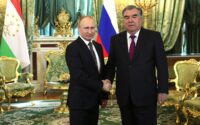
Emomali Rahmon’s meeting with Vladimir Putin reaffirmed the enduring strategic alliance between Moscow and Dushanbe, underscoring Russia’s deliberate emphasis on fortifying collaborative efforts with Tajikistan, particularly in matters pertaining to defence and security, along with education and societal domains.
The recent meeting between Uzbekistan and Qatar’s representatives in Doha underscores Tashkent’s policy shift towards broadening its trade and commercial partnerships and Qatar’s strategy to enhance its economic presence in Central Asia.
The Germany – Central Asia summit held in Berlin serves as a tangible testament to the European Union’s concerted efforts to forge closer ties with the Central Asian republics while strategically safeguarding against the growing influences of Russia and China.
Russia’s concerted efforts in Kyrgyzstan, focused on supporting local educational and humanitarian initiatives, represent a significant augmentation of its soft power and cultural influence in the region. The cornerstone of this strategy lies in the establishment of Russian language schools in Kyrgyzstan, a project actively backed by Moscow.
Turkmenistan and Pakistan seek to confirm and expand their cooperation, notably in the domain of energy cooperation, with a focal emphasis on the Turkmenistan-Afghanistan-Pakistan-India (TAPI) natural gas pipeline project.
The 10th Cooperation Forum China – Central Asia, held recently in Xiamen, underscored Beijing’s strategic approach in the region and highlighted Central Asian nations’ imperative to enhance their connectivity and collaboration with the Chinese market.
The “Business Springboard” competition, which has been organised by Visa, demonstrates the significant interest foreign entities hold for the SMEs sector in Kazakhstan. It unequivocally signifies their commitment to solidifying their footprint in the local market and forging enduring relationships with the burgeoning community of small and medium enterprises.
In an increasingly interconnected and multipolar world, the recent Busan Economic Forum has confirmed Seoul and the Central Asian republics’ interests to strengthen economic and trade relations, positioning South Korea amidst a dynamic landscape shaped by global powers as well as pivotal regional actors.
The forthcoming “United States + Central Asia” summit, scheduled for mid-September 2023, stands as a resounding affirmation of the region’s enduring geopolitical significance
Emomali Rahmon’s visits to the Gorno-Badakhshan Autonomous Region (GBAO) highlights Dushanbe’s commitment to regional development and control, yet also expose the challenge of balancing local discontent with central authority.
The first-ever trilateral summit between Turkmenistan, Tajikistan, and Uzbekistan organised in Ashgabat underlined the desire of these three Central Asian republics to cooperate in different fields to guarantee regional stability and interconnection.
Today, the countries of Central Asia have closer ties than ever before, and these bonds are expanding. An example of this is the summits that the states are holding with Central Asia and the frequent state and working visits by Central Asian leaders to each other’s countries.
In a strategic move amid shifting geopolitical dynamics, Kyrgyzstan and Iran are attempting to expand their trade and economic ties, driven by Bishkek’s pursuit of alternative transit routes and access to Iranian oil products, and Tehran’s strategic outreach towards the Central Asian republics considering Western sanctions and recent developments in the Eurasian region.
The inaugural “Central Asia + GCC” Summit held in Saudi Arabia marks a significant milestone in fostering interregional cooperation between the Gulf countries and Central Asia.
After our visits to Astana, SpecialEurasia published a report on the future prospects of Kazakhstan, which analysed the country’s domestic and foreign policy as well as the local society and culture.
Uzbekistan recently held its presidential elections, and the re-election of Shavkat Mirziyoyev has significant importance for the country. Mirziyoyev’s victory ensures stronger governance, allowing Uzbekistan to continue its process of reforms, economic diversification, and foreign policy initiatives.
A recent operation by German federal prosecutors has uncovered a suspected jihadist cell composed of seven individuals from Central Asia. This development highlights the severity of the terrorist threat faced by Europe from external sources.
Qatar’s recent diplomatic foray into Central Asia by the Emir Sheikh Tamim bin Hamad Al Thani marked a significant step in the nation’s regional foreign policy.
The recent meeting between Russian Foreign Minister Sergei Lavrov and Tajikistan’s President Emomali Rahmon has unveiled the Central Asian republic’s strategic role for Moscow’s foreign policy in the region in defence, security, economy and social sectors.
During the Astana International Forum, SpecialEurasia met with Roman Vassilenko, Deputy Minister of Foreign Affairs of the Republic of Kazakhstan, to discuss Kazakh foreign politics and regional dynamics.
On May 29th, 2023, SpecialEurasia representatives met with an Uzbek delegation at the Eurispes to better understand the Central Asian republic’s strategic role and investment opportunities and possibilities of cooperation between Rome and Tashkent.
SpecialEurasia will participate in the Astana International Forum 2023, as part of our ongoing commitment to monitoring and evaluating emerging markets and investment prospects in strategic countries like Kazakhstan and the broader Central Asian region.
The inauguration of the Analytical Centre for China Studies in Bishkek marks a significant milestone in China-Kyrgyzstan cooperation, underscoring Beijing’s strategic approach towards the Central Asian republic.
The recent Iran-Turkmenistan deal on natural gas export emerges as a pivotal agreement, poised to both fortify Tehran’s energy strategy and bolster Ashgabat’s endeavours towards economic diversification by expanding its trade partners.
Dagestan and Tajikistan’s entente on developing cooperation confirms the North Caucasus’s role in promoting relations between Russia and foreign countries, especially those in the blizhnee zarubezhe (near abroad) where the Kremlin wants to confirm its presence and influence.
Egyptian business representatives promised $1.2 billion investments in Uzbekistan in different economic fields during the meeting with the Uzbek President
The first China-Central Asia Summit and the second EU-Central Asia Economic Forum highlighted Beijing and Brussels’ interests and competition in the region.
The Kyrgyz special operation to arrest an armed group in Dmitrievka, which resulted in the elimination of a suspected terrorist who fought in Syria, highlighted that Kyrgyzstan is not immune to terrorism or jihadist propaganda.
The KazanForum 2023 and the “China-Central Asia” Summit definitely emphasise Kremlin and Beijing’s strategies in Eurasia and the Islamic world’s strategic areas in time of confrontation with the West.
Turkmenistan accomplished the mission to export its natural gas to Pakistan through Afghanistan, an economic goal that Ashgabat aimed to reach to diversify its exports and trade partners and increase the revenue.
Kazakhstan’s desire to increase exports to Iran might hugely impact geopolitical dynamics in Eurasia, considering Astana’s desire to diversify and enhance its trade and economic partners to decrease Russia and China’s influence and Tehran’s necessity to overcome Western sanctions.
The creation of the Shavat-Dashoguz trade zone might strengthen Uzbek-Turkmen’s economic cooperation and bilateral relations and attract foreign investors interested in establishing their business in Central Asia by exploiting local government’s trade agreements and logistic projects.
SpecialEurasia, MInter Group srl e Mondo Internazionale APS organizzano un corso di formazione online ad Aprile 2023 in Geopolitica dell’Asia Centrale e New Great Game con l’obiettivo di fornire gli strumenti utili per comprendere le dinamiche geopolitiche centrasiatiche e gli interessi degli attori regionali e internazionali.
Recent negotiations between Saudi Arabia and Uzbekistan on investment cooperation confirmed Riyadh’s strategy in Central Asia based on financial support to local governments’ infrastructural projects and humanitarian aid.
In questa ricerca verrà analizzato il trinomio cambiamenti climatici, conseguenze sulla popolazione e terrorismo in Asia destinato, se la comunità internazionale non provvederà a fermare questo trend, ad essere presente nelle agende internazionali negli anni a venire.
Obiettivo di questo paper è quello di valutare il rischio geopolitico dell’Asia centrale prendendo in esame le dinamiche geopolitiche regionali e le problematiche che potrebbero comportare destabilizzazione e mancanza di sicurezza.
The Gorno-Badakhshan Autonomous Oblast (GBAO) might be considered one of Central Asia’s most strategically important areas, attracting multiple global powers’ attention. Under Dushanbe’s control, the region has experimented with the confrontation between the central authority and the local population.
Questa ricerca mira ad analizzare gli sviluppi geopolitici centroasiatici prendendo in considerazione i recenti eventi che hanno influenzato lo scacchiere eurasiatico come lo scontro tra la Russia e l’Occidente, il confronto tra Stati Uniti e Cina e la volontà di emergere come potenze regionali di Turchia, India e monarchie del Golfo.
SpecialEurasia Managing Director, Silvia Boltuc, met in Astana the Chairman of the Spiritual Administration of Muslims of Kazakhstan, Supreme Mufti Nauryzbai kazhy Taganuly, to discuss the role of Islam in the country and the relations between the Kazakh Muslim umma (community) and other Muslim countries.
Geopolitical Report ISSN 2785-2598 Volume 29 Issue 8 Author: Guido Keller India and Turkmenistan discussed expanding cultural cooperation confirming New Delhi’s strategy in Central Asia and Ashgabat’s desire to diversify and enhance its collaboration and ties with regional actors.
Le elezioni parlamentari in Kazakhstan potrebbero dare stabilità al paese e completare il processo di riforme avviato lo scorso anno volto a garantire sicurezza interna, supporto al Governo e al presidente così come a rassicurare gli investitori sul mercato interno kazako.
SpecialEurasia discussed with Alexandr Sharov, General Director of the transport company LLC Neftekhimtrans, Group of companies Rusiranexpo, the current geopolitical significance of the INSTC and possible future developments and impact in the Eurasian strategic chessboard.
Upcoming parliamentary elections in Kazakhstan mark the last step for the country’s complete reformation based on modernisation and democratisation according to the new path promoted by Kazakh President Kassym-Jomart Tokayev.
CSTO Secretary General Imangali Tasmagambetov’s visits to Bishkek and Dushanbe marked the Russian-led military organisations’ attempt to play a prominent role in resolving the Kyrgyzstan-Tajikistan border dispute and, therefore, stabilising the region.
Russia-Uzbekistan-Kazakhstan’s ‘trilateral gas union’ might represent geopolitical leverage in favour of Moscow and Beijing because it might simultaneously satisfy the Chinese energy market’s needs and support the Russian and Chinese foreign policy in Central Asia.
The United Arab Emirates (UAE) and Eurasian Economic Union (EAEU) member countries discussed the establishment of a free trade zone, which might become a significant step in strengthening Emirati financial and economic presence in the Eurasian geopolitical chessboard and support Russian financial strategy to contrast Western sanctions’ consequences.
SpecialEurasia published the document “Central Asia Weekly Intelligence Brief February 27th– March 2nd, 2023”, whose purpose is to highlight key geopolitical topics related to Central Asia affecting the international arena and organisations around the globe.
Antony Blinken’s visit to Astana stressed Washington’s interests in Central Asia since the region has played a vital role in the Eurasian geopolitical chessboard, especially after the beginning of the Ukraine conflict.