This report assesses Armenia’s decision to advance the TRIPP corridor by restoring a dormant Soviet-era rail section linking Azerbaijan to Nakhchivan via Armenian territory, within a context of accelerating geopolitical realignment towards the West.
This report assesses Georgia’s recent agreement to establish joint customs checkpoints with Armenia and Azerbaijan and its broader strategy to position itself as a regional logistics hub.
This assessment analyses how renewed United States tariffs on countries trading with Tehran, combined with internal instability in Iran, affect Armenia’s economic resilience and strategic posture.
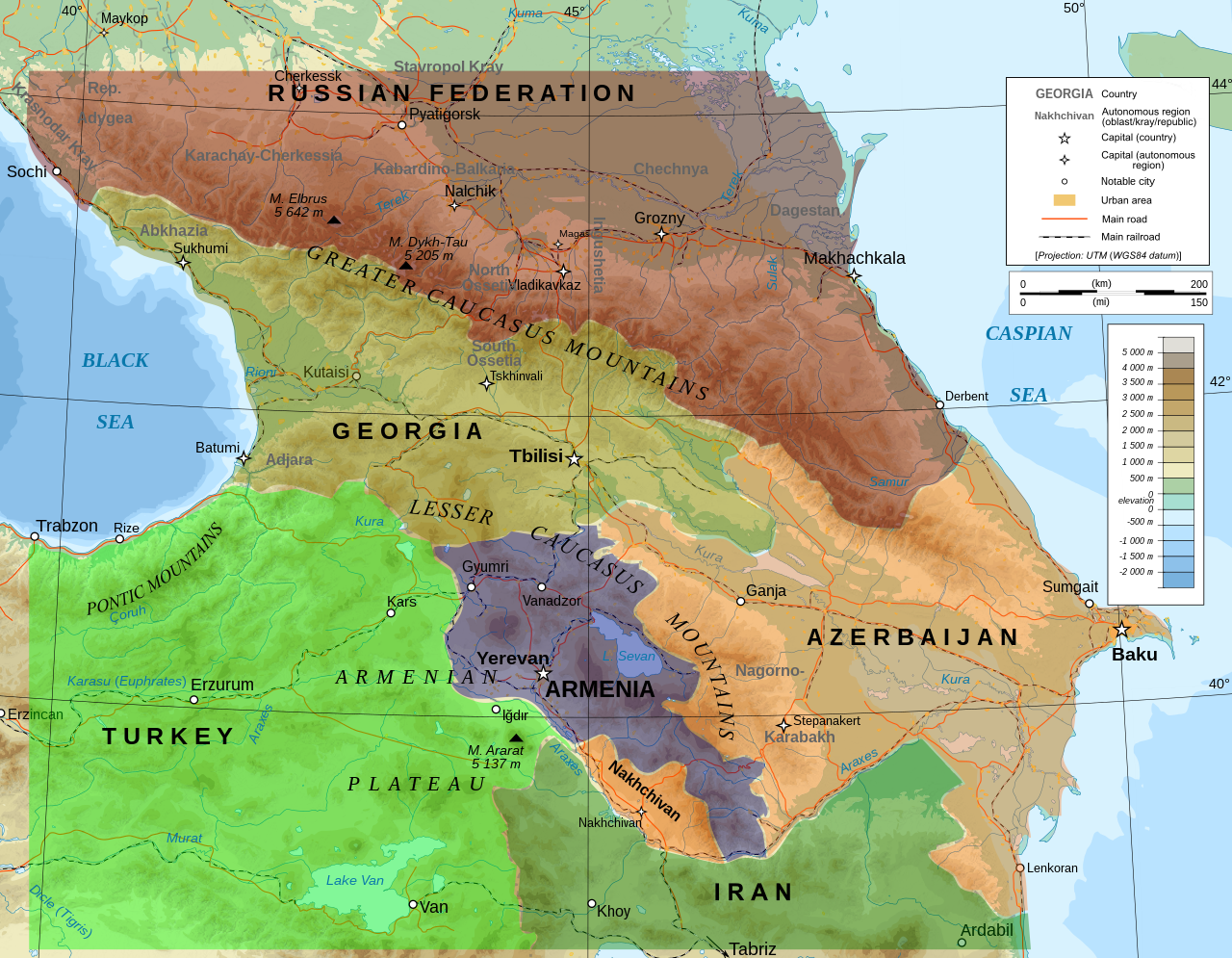
The Caucasus region enters 2026 in a state of profound transformation, characterised by the shift from traditional “frozen conflicts” to a high-stakes competition over transcontinental trade corridors.
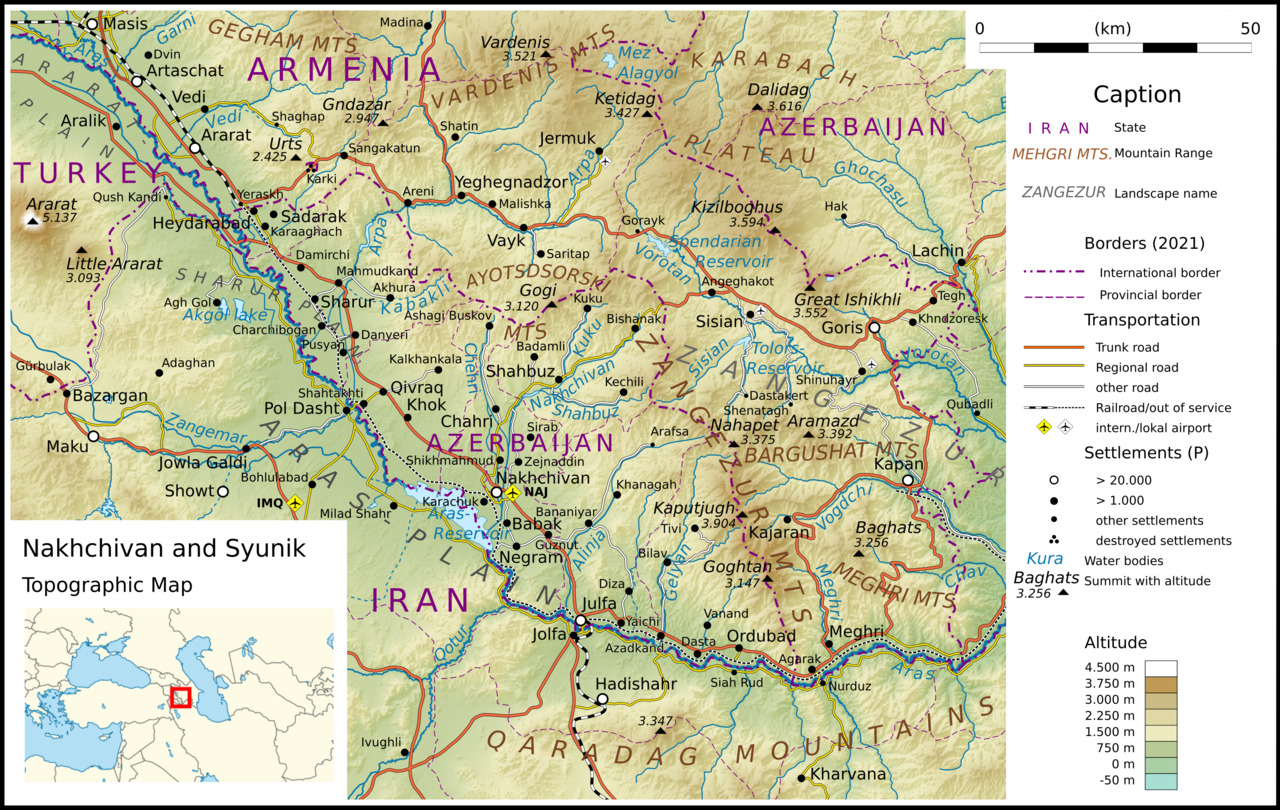
Armenian Prime Minister Nikol Pashinyan has publicly stated that Yerevan is considering granting a 49- or 99-year lease for development rights to the proposed Trump Route (TRIPP), a transit corridor linking mainland Azerbaijan with the Nakhichevan exclave via Armenia’s Syunik Province.
La visita di lavoro del Primo Ministro armeno Nikol Pashinyan a Roma, articolata in incontri presso le sedi diplomatiche armene in Italia e la Santa Sede e nella partecipazione alla cerimonia di canonizzazione dell’arcivescovo Ignazio (Ignatius) Maloyan, presenta un valore simbolico e politico multiplo nel contesto delle relazioni internazionali dell’Armenia.
This report evaluates Armenia’s agreement with China to establish a Confucius University in Yerevan, assessing its economic, political, and strategic consequences.
This report analyses the official visit of Iranian President Masoud Pezeshkian to Armenia, which resulted in the signing of ten memorandums covering political, economic, cultural, and scientific cooperation.
This report investigates the geopolitical and regional outcomes and implications of the joint Armenia–US military exercises, Eagle Partner 2025, focusing on Yerevan’s domestic and external constraints and Russian leverages.
Executive Summary This report examines the peace agreement signed at the White House between Armenia and Azerbaijan, brokered by US President Donald Trump.
This report assesses the recent meeting between the Armenian President and the Iranian Vice-President who focused their attetion on the INSTC and bilateral economic cooperation.
SpecialEurasia ha intervistato il nuovo Ambasciatore della Repubblica d’Armenia in Italia, S.E. Vladimir Karapetyan, per raccogliere considerazioni sulla sua visione e sullo stato attuale delle relazioni estere e delle opportunità interne del Paese.
SpecialEurasia recently interviewed the new Ambassador of the Republic of Armenia to Italy, H.E. Vladimir Karapetyan, to acquire insights into his vision and the current state of Armenia’s foreign relations and domestic opportunities.
Geopolitics in the Caucasus is constantly shifting, showing both division and lasting patterns. Despite pressure and diplomatic confrontation, particularly with Azerbaijan and Armenia, Russia retains influence in the South Caucasus through economic and cultural ties.
This report analyses Moscow’s recent public support for Armenia’s legal system and stability, assesses how Yerevan’s pro-EU policies affect trade and defence cooperation between the two countries.
This report analyses the developing geopolitical dynamics involving the South Caucasus, especially Armenia and Azerbaijan, set against the backdrop of the ongoing Israel-Iran conflict. It explores the threats posed to both Armenia and Iran by Israel’s military cooperation with Baku and examines the broader implications for regional stability.
This report assesses the strategic significance of establishing multiple foreign consular missions in Armenia’s Syunik region and along the prospective corridor. The report examines also the deepening defence cooperation between Yerevan and Paris in the context of renewed Azerbaijani threats to Armenian sovereignty.
This report analyses Italy’s expanding diplomatic, cultural, and economic engagement with Armenia, highlighting recent initiatives that point to a strategic deepening of ties between the two countries.
This report examines Iran’s strategic posture in the South Caucasus following Deputy Foreign Minister Saeed Khatibzadeh’s remarks at the Yerevan Dialogue 2025 forum.
This report presents an assessment of the 2nd Yerevan Dialogue held on 26–27 May 2025, following SpecialEurasia’s official visit to Armenia, participation at the event, and direct engagement with local representatives.
SpecialEurasia concluded an official mission to Armenia to attend the 2nd Yerevan Dialogue held on 26–27 May 2025. The event provided an opportunity to engage with Armenian institutional figures, foreign diplomats stationed in Yerevan, and representatives from the local business sector.
This report analyses Russian Foreign Minister Sergey Lavrov’s recent visit to Yerevan, examining the strategic messaging underpinning Moscow’s diplomatic posture towards Armenia and the broader South Caucasus.
This report examines Armenia’s shifting foreign policy orientation, using recent remarks made by the President of the Armenian Business Association Samvel Karapetyan at a Moscow business forum as an entry point for broader analysis. Karapetyan’s public concerns about the economic fallout of exiting the EAEU come at a critical moment in Yerevan’s recalibration of its strategic posture, with ongoing efforts to align more closely with the EU.
This report focuses on recent developments in the geopolitical dynamics between Russia, Azerbaijan, and Armenia, with a particular emphasis on Moscow’s efforts to reinstate its cultural influence in the South Caucasus. Russia’s waning influence in Armenia and Azerbaijan’s increasing alignment with Western powers provide the context for understanding these actions.
This report examines Azerbaijan’s recent escalation of information dissemination strategies, particularly through the Ministry of Defence’s daily reports of alleged Armenian ceasefire violations. Historically, similar narratives have been employed to shape public perception and create a justification framework for strategic manoeuvres.
Armenia has frozen its participation in the Collective Security Treaty Organisation (CSTO) since February 2024. The country has also ceased financial contributions and engagement in CSTO activities. This report evaluates the geopolitical and security implications of Armenia’s stance and the potential outcomes for regional stability.
This report examines Turkey’s increasing influence in Abkhazia, especially in the context of the upcoming presidential elections scheduled for February 2025. The analysis explores Ankara’s broader geopolitical ambitions in the South Caucasus, where its growing presence challenges Russia’s traditional dominance and exhibits a significant anti-Armenian stance.
The recent phone conversation between Russian President Vladimir Putin and Armenian Prime Minister Nikol Pashinyan reviewed Armenia’s presidency of the Eurasian Economic Union (EAEU) and outline future cooperation within the bloc.
This report assesses Yerevan’s foreign policy toward Washington and Brussels, and Moscow’s potential responses, considering Russia’s diminishing influence in the Caucasian republic after approximately thirty years. In addition, it analyses potential threats to Armenia arising from the expansion of its ties with the West.
This analysis examines how recent regional developments, particularly in security cooperation and economic partnerships, have reshaped Iran-Armenia’s relations amid growing regional challenges.
This report assesses the opening of the Iran Trade Centre in Yerevan, Armenia, on October 1st, 2024. The centre represents Tehran’s largest permanent trade facility abroad, aimed at facilitating economic engagement with the Armenian and Eurasian Economic Union (EAEU) markets.
During our official visit to Yerevan, SpecialEurasia met with Paruyr Hovhannisyan, Vice-Minister of Foreign Affairs of the Republic of Armenia, with whom we discussed Yerevan’s regional and foreign policy.
Silvia Boltuc, Managing Director of SpecialEurasia, recently provided an interview on Radar, a TV programme of Cusano News7, hosted by Flavio Tassotti. The discussion centred on the recent presidential elections in Iran and the political situation in Armenia, offering a comprehensive analysis of these complex geopolitical issues.
Armenia’s strategic location, bridging Europe and Asia, has significantly contributed to its economic resurgence, catching the attention of global observers. SpecialEurasia recently convened with Levon Ohanesyan, CEO of Enterprise Armenia, in Yerevan to evaluate the nation’s investment landscape.
During the official visit to Yerevan, SpecialEurasia discussed the country’s economic performance with the Minster of Economy of the Republic of Armenia, Gevorg Papoyan, with the ultimate goal of assessing local investments and trends and understand future opportunities and challenges for this South Caucasian republic.
From June 8th to June 16th, 2024, SpecialEurasia conducted an official visit to Armenia as part of the research and editorial project, Kavkaz Files ISSN 2975-0474. This visit followed a previous one in October 2022, allowing the team to assess the substantial changes in Armenia’s foreign policy, economy, and societal dynamics.
This report, written during SpecialEurasia’s visit to Yerevan, examines the recent diplomatic engagements between the United States and Armenia, contextualised within the broader geopolitical dynamics of the South Caucasus.
Large-scale demonstrations in Yerevan, Armenia, highlight simmering public discontent with the government’s decision to demarcate the border with Azerbaijan. This report analyses the security risks associated with these events, considering geopolitical implications and domestic stability concerns.
The Parliamentary Assembly of the Council of Europe (PACE) has decided not to ratify the credentials of the Azerbaijani delegation, citing concerns about the country’s failure to fulfil major commitments related to democratic processes, human rights, and the Nagorno-Karabakh situation. Azerbaijan has subsequently suspended its cooperation with PACE.
SpecialEurasia reviewed the book “La Guerra per il Nagorno Karabakh” written by Emanuele Aliprandi. In the book, the author explored the situation in the South Caucasus, especially the last years of conflict/confrontation between Armenia and Azerbaijan over the Nagorno-Karabakh/Artsakh and the Armenian population’s struggle for peace.
This report wants to contextualise the impact and importance for Armenia that cultural events such a photographic exhibition can have in Italy, a country which in the last years has developed a strong commercial partnership and connection with Azerbaijan and has demonstrated less attention and interests to the Yerevan and Stepanakert’s position about the Nagorno-Karabakh while has privileged Baku’s narrative.
In October 2022, during SpecialEurasia’s official visit to Yerevan, we discussed with the representatives of the Armenian National Interest Fund (ANIF) the country’s investment opportunities and economic situation. After a year of monitoring the Armenian economic performance and investment market, in this report, we would like to stress ANIF’s role in promoting FDIs connected to the Armenian economic market and establishing a linking with United Arab Emirates.
The diplomatic meeting held in Tehran stressed that Iran has emerged as a key actor in supporting the peace process regarding confrontation over Nagorno-Karabakh in the South Caucasus. It also indicated a possible shift of geopoltical influence from Europe towards East regarding the region.
Our OSINT report shows that a segment of Azerbaijani society or Azeri Diaspora in the post-Soviet space on different Telegram channels in Russian language exhibits pronounced sentiments of Armenophobia, manifesting in a discernible hostility towards Armenians in occasion of the Nagorno-Karabakh crisis.
Erdogan’s planned visit to Nakhchivan following Baku’s military offensive in Nagorno-Karabakh has raised significant concerns regarding the territorial integrity of Armenia since Azerbaijan and Turkey may actively seek to establish the conditions for a potential military intervention in Armenia’s Syunik Province, with the ultimate aim of securing the Zangezur Corridor.
The Azerbaijani military incursion into the Republic of Nagorno-Karabakh/Artsakh has brought to light Italy’s precarious foreign policy in the South Caucasus. Driven by a web of Rome’s imperatives and constraints, the Italian government finds itself torn between justifying Azerbaijan’s regional strategy and acknowledging the resulting humanitarian crisis and civilian casualties.
The recent military operation conducted by Azerbaijan against the defence forces in the Republic of Nagorno-Karabakh/Artsakh attests to the prevailing instability within the South Caucasus region. This development has sounded alarm bells amongst both international and regional stakeholders, who are now confronted with the prospect of a renewed conflict in this highly sensitive geopolitical theatre.
Nikol Pashinyan’s recent statements on Armenia’s ‘erroneous’ dependence on Russia may reflect a new direction in Yerevan’s foreign policy, signalling a desire to seek alternative solutions, particularly by cultivating stronger relationships with Western nations
Nel contesto geopolitico attuale, caratterizzato dal conflitto ucraino e dallo scontro tra Bruxelles e Mosca, l’incremento dell’export europeo verso l’Armenia ha sollevato dubbi sulla possibilità che questo permetta di aggirare le sanzioni, dilemma che però non coinvolge il vicino Stato azerbaigiano la cui politica estera sfrutta il supporto europeo, ma non tralascia gli accordi commerciali con la Russia.
The Republic of Artsakh, also known as Nagorno-Karabakh, has found itself embroiled in a dire humanitarian crisis because of the Azerbaijan blockade imposed since December 2022.
Il vertice Armenia-Azerbaigian che si è tenuto a Bruxelles permette di concentrare l’attenzione sulla questione dei confini nazionali armeni e azerbaigiani la cui soluzione dovrebbe portare alla stabilità e non creare ulteriori tensioni regionali.
In this paper published in Geopolitical Report ISSN 2532-845X Vol. 2 Year 2023, the author investigated the Iranian position on the second Karabakh war and Tehran’s attempts to stabilise the region and promote its economic and political partnerships.
In the last months, the South Caucasus has again experienced regional turbulence. While there have been protests in Georgia over a controversial draft law that would have required some organisations receiving foreign funding to register as “foreign agents”, Armenia and Azerbaijan might be again on the edge of an escalation involving the CSTO and, therefore, Russia.
Considering the South Caucasus’ current geopolitical scenario, we discussed with Vahagn Khachaturyan, President of the Republic of Armenia, the country’s prospects in the changing world and possible regional developments to assess local stability and security and evaluate Armenia’s potentialities.
After almost three decades on the sidelines of the Nagorno-Karabakh conflict negotiation process, the European Union has now stepped in, positioning itself as a mediator in the Armenian-Azerbaijani conciliation process.
SpecialEurasia met with Sergey Ghazaryan, Permanent Representative of the Republic of Artsakh in Armenia, with whom we discussed how recent regional geopolitical dynamics in the Caucasus had influenced the current situation in Nagorno-Karabakh.
SpecialEurasia met with Paruyr Hovhannisyan, Deputy Minister of Foreign Affairs of the Republic of Armenia, with whom we discussed Yerevan’s regional and foreign policy and Armenia’s strategy to protect its sovereignty and citizens.
SpecialEurasia met with Hripsime Grigorianand Artur Hovhannisyan, members of the National Assembly of the Republic of Armenia, to investigate the Government’s domestic politics and assess the national situation.
SpecialEurasia met Vahan Kerobyan, the Minister of Economy of the Republic of Armenia, to investigate current Armenian economic trends and performance, the main drivers’ sectors, investment opportunities and fiscal policy.
During SpecialEurasia’s official mission to Yerevan, our team met with Armenian female entrepreneurs who founded the brand Udivila, which promotes Armenian culture and attempts to carve out a slide of a market where Armenia has not yet been present.
On October 21st, 2022, SpecialEurasia began its special mission in Yerevan, the capital of Armenia, to analyse the current situation in the country, assess socioeconomic trends and investigate possible future developments.
The Azerbaijani army’s aggression against Armenia raises concerns about the stability of the South Caucasus, an area which plays a fundamental role in the EU Energy Security Strategy.
Against the backdrop of the Ukrainian conflict, several frozen conflicts of the post-Soviet space have witnessed new tensions. Two critical events promoted by Azerbaijan sparked protests in Armenia and might prompt a new escalation over Nagorno-Karabakh.
Nella storia del Caucaso l’eccidio di Sumgait è un evento che ricopre particolare importanza le cui conseguenze sono ancora visibili nelle relazioni tra Armenia e Azerbaigian e nella narrativa che oppone Yerevan a Baku, in special modo a seguito del conflitto del Nagorno-Karabakh.
On January 27th, 2022, SpecialEurasia organised the Webinar “Geopolitica e conflitti nel Caucaso: sfide attuali e sviluppi futuri” to analyse with scholars and experts the current situation of the Caucasus and discuss future developments and challenges in the region.
The Armenian President’s resignation created another political crisis in the Caucasian republic, which, since the Velvet Revolution in 2018, has experienced domestic political instability, the 2020 Nagorno-Karabakh Conflict and its consequent defeat, the parliamentary elections and a new foreign policy marked by a broader approach towards Turkey and Azerbaijan.
The growing tensions between Iran and Azerbaijan (backed by Turkey) might destabilise the Caucasus and create problems for the transit corridors which cross the region. In this context, to counter the Azerbaijani project of the Zangezur transit corridor, Tehran might establish a new transportation route with Armenia.
Le elezioni parlamentari in Armenia hanno decretato la vittoria di Nikol Pashinyan generando scontento in una parte dell’elettorato e in Nagorno-Karabakh e confermando quanto il futuro della repubblica armena possa essere caratterizzato da tensioni sociali.
Kavkaz Files ISSN 2975-0474 Volume 5 Issue 2 Author: Giuliano Bifolchi After the 2018 Velvet Revolution and the 2020 Nagorno-Karabakh Conflict, Armenian is at the crossroad for its future existence because on June 20th, 2021, the Armenians will vote for the third time in five years for the Prime Minister and national government.
L’Armenia si appresta a organizzare le nuove elezioni volute a seguito del conflitto del Nagorno-Karabakh del 2020 in un periodo storico per il paese caucasico caratterizzato da una lenta ripresa economica e una crisi politica interna che fanno da contraltare ai progetti governativi nazionali che mirano a realizzare infrastrutture nel settore energetico per coprire la domanda interna e diversificare le importazioni di energia dai Paesi alleati.
After a long meeting, the leaders of Azerbaijan and Armenia, supervised by Russia, agreed on the ceasefire, which should precede the peace negotiation between Baku and Yerevan on the Nagorno-Karabakh conflict. Although Azerbaijan is claiming its victory in the conflict, the Russian Federation is the real winner in Nagorno-Karabakh.
The Caucasus might become the theatre of a new conflict whose consequences will impact the entire Eurasian region if the international community does not stop the military escalation at the borders of the de-facto Republic of Nagorno-Karabakh and Azerbaijan.
Gli scontri militari tra Armenia ed Azerbaigian lungo la linea di confine registrati il 12 luglio 2020 riportano l’attenzione sul conflitto ‘congelato’ mai risolto o mal gestito del Nagorno-Karabkh che minaccia la stabilità del Caucaso meridionale e gli interessi degli attori regionali e internazionali.