The recent memorandum of understanding of human rights cooperation between Russia and Senegal has marked a significant milestone in their cooperation, highlighting Moscow’s growing interests in the African country.
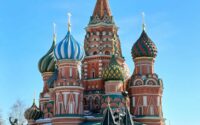
In the heart of Russia’s political fervour, SpecialEurasia embarks on an official visit to Moscow, the epicentre of the Russian Federation. With the pivotal juncture we are currently facing, characterised by the imminent presidential elections, our team is actively involved in a multitude of endeavours that center on comprehending the intricate dynamics of Russia’s domestic and global affairs.
The upcoming Russian presidential elections, scheduled for March 15th-17th, 2024, are a pivotal moment in the nation’s domestic politics. Despite Western claims of irregularities, these elections represent a significant opportunity for Vladimir Putin to reaffirm his leadership and governance.
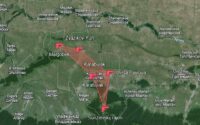
FSB special forces’ counter-terrorism operation in Ingushetia stressed Russia’s readiness and strategy to counter the terrorist threat and jihadist propaganda’s impact in those regions as the North Caucasus mainly inhabited by Muslims.
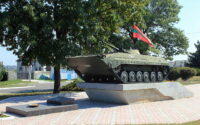
Recent Transnistria’s appeal for protection to Russia has elevated the regional geopolitical risk, underscoring the precarious situation in Moldova. Transnistria, also known as the Pridnestrovian Moldavian Republic (PMR), has sought Moscow’s aid in response to alleged pressure from the Moldovan government.
Dmitry Medvedev’s recent visit to Grozny and meeting with Ramzan Kadyrov and local military officials confirmed the role that Chechnya is plying in supporting Russia in the Ukraine conflict and the North Caucasian republic’s increasing role in regional and state’s dynamics and foreign policy.
The recent suggestion to open an Eurasian Economic Union Trading House in Iran underlined the organisation’s commitment to increase trade and cooperation with the Islamic Republic and the positive and increasing relations between Moscow and Tehran on different issues related to the Eurasian geopolitical chessboard.
The participation of Vladimir Putin and Abdel Fattah al-Sisi in the ceremony for the fourth unit of Egypt’s El Dabaa nuclear power plant underscores the strategic significance of Russo-Egyptian collaboration. The project, led by Rosatom, marks a milestone in Russia’s involvement in Africa, signifying an expanding geopolitical influence.
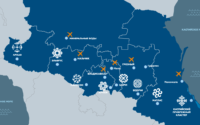
While the North Caucasus Federal District demonstrates resilience, potential risks include external geopolitical influences and the need for sustained economic stability. The region’s dependency on tourism growth demands careful management to avoid overreliance on a single sector. Additionally, monitoring external pressures on the Russian economy remains crucial for sustained development.
Despite its recognition, Diyanet has been embroiled in scandals in Europe, particularly related to illegal intelligence activities and financial transactions. Its active involvement in the post-Soviet space, notably in Central Asia and Russia, reflects its role as a tool of Turkish “soft power” and an avenue for cultural and humanitarian dialogue.
In this paper published in Geopolitical Report ISSN 2532-845X Vol. 4 Year 2023, the author Giuliano Bifolchi delves into the multifaceted approach undertaken by the Russian government in managing the diverse ethnic groups and indigenous people residing in the North Caucasus.
Putin’s visit to Abu Dhabi and Riyadh confirmed Russia’s strategy in the Arab-Muslim world aimed at enhancing economic partnership in energy, logistics, and trade and attracting Gulf monarchies’ investors in Russian infrastructural projects.
The recent arrest of a 23-year-old individual in Ingushetia, implicated in supporting online Imarat Kavkaz, underscores the persistent threat posed by this terrorist organisation in the North Caucasus region. While empirical evidence suggests a strong diminished operational capacity on the ground, the organisation’s propaganda remains a potent force capable of influencing local sentiments.
The upcoming visit to Russia of Qatar Prime Minister accentuates Doha’s role among the Arab and Muslim countries to promote the end of the conflict in the Gaza Strip and Moscow’s desire to become more involved in the Middle Eastern dynamics. Since the Russian Federation has a significant presence of Muslim people in the country and the Kremlin has adopted a foreign policy aimed at strengthening relations and economic cooperation with the Arab-Muslim world, the cooperation with Qatar and other Gulf monarchies might represent an opportunity for Moscow’s strategy in the region.
The Russian ambassador in Dushanbe recently underscored a notable upswing in collaborative efforts between Russia and Tajikistan, specifically in the realms of security and countering drug trafficking, confirming Moscow’s strategy to strengthen its influence in the Central Asian republic.
The Makhachkala Airport protest in the Republic of Dagestan accentuated the impact of the Israeli-Palestinian conflict in the Muslim umma (community) in the Russian Federation and the Kremlin’s necessity to manage potential tensions coming from the coexistence of different religious groups inside the country.
The opening of trading houses between Dagestan and Uzbekistan confirmed Makhachkala’s role in promoting its business in Central Asia and, therefore, supporting the Russian presence in this strategic market. Since the beginning of the Ukraine conflict, the North Caucasus has played a significant role in promoting the Kremlin’s economic and political presence in Russia’s blizhnee zarubezhe.
Emomali Rahmon’s meeting with Vladimir Putin reaffirmed the enduring strategic alliance between Moscow and Dushanbe, underscoring Russia’s deliberate emphasis on fortifying collaborative efforts with Tajikistan, particularly in matters pertaining to defence and security, along with education and societal domains.
The recent capitulation of Nagorno-Karabakh in the face of Azerbaijan’s military offensive has brought to light Russia’s recalibrated strategic approach in the region. This shift focuses on forging a robust alliance with both Baku and Ankara, a move designed to bolster the INSTC and leverage Turkish land as a potential hub for its new energy approach.
The establishment of the Dagestan National Centre in Russia and the Dagestan Volunteer Battalion ‘Imam Shamil’ in Ukraine underscores the reverberations of the Ukraine conflict in the North Caucasus. This development highlights a substantial threat emanating from various movements and organisations, advocating for the destabilisation and fragmentation of the Russian Federation.
Russia’s concerted efforts in Kyrgyzstan, focused on supporting local educational and humanitarian initiatives, represent a significant augmentation of its soft power and cultural influence in the region. The cornerstone of this strategy lies in the establishment of Russian language schools in Kyrgyzstan, a project actively backed by Moscow.
The recent business mission conducted by Stavropol-based companies to Abkhazia signified a noteworthy advancement with extensive ramifications for both Sukhum and Pyatigorsk. This exchange also highlights Pyatigors’ approach to promote foreign business ventures for the Russian Federation.
In the ongoing contest between Russia and Ukraine for endorsement from the Islamic world, the North Caucasus emerges as a critical asset in the Kremlin’s strategic arsenal. It serves as a linchpin for Moscow’s domestic political efforts in managing a diverse, multireligious, and multiethnic society, while also underpinning Russia’s foreign policy activities directed towards the Arab-Muslim world.
The forthcoming CSTO exercises in Belarus serve as a clear demonstration of the organisation’s strategic commitment to safeguarding its member states, focusing particularly on protecting Moscow and Minsk from potential external threats originating from Europe.
The Astrakhan region has historically served as a significant centre of Russian presence in the Caspian region for centuries. Since the late 20th century, following the geopolitical shifts caused by the collapse of the Soviet Union, Astrakhan’s role in Russia’s Caspian policy has acquired considerable prominence.
Chinese Minister of Defence’s visit to Russia and Belarus reflects the cooperation between these countries in the realm of defence and highlights the significance of multilateral discussions in ensuring global stability and security.
Given the significance of the North Caucasus region in the intricate Eurasian geopolitical landscape and the potential role of indigenous communities within Russian society, SpecialEurasia decided to visit the Republic of Karachay-Cherkessia to attend the Forum of Indigenous Peoples of the Russian Federation.
The recent mutiny led by the Private Military Company (PMC) Wagner in the Russian Federation brought forth a critical moment for President Vladimir Putin. During this crisis, Putin garnered the support of the Russian army, regional governors and heads of states, reaffirming his powerful position in the political and military landscape.
The orchestrated military rebellion, led by Evgeny Prigozhin, against the central authority in Russia, presents an opportunity for Ramzan Kadyrov, the Chechen leader, and his military troops to emerge as significant allies and actors in the Kremlin’s domestic and foreign policy landscape.
Recent developments in Russia have brought attention to the involvement of the Wagner Private Military Company (PMC) in an attempted armed rebellion or mutiny. The incident, which unfolded on the evening of June 23rd, 2023, has triggered a series of reactions and measures by key institutions, leaving the country on high alert.
The St. Petersburg International Economic Forum (SPIEF) serves as a significant milestone in Russia’s foreign policy and economic strategy.
This report highlights the reasons the North Caucasus remains important and necessitates ongoing monitoring and provides some future scenarios about the region.
The recent meeting between Russian Foreign Minister Sergei Lavrov and Tajikistan’s President Emomali Rahmon has unveiled the Central Asian republic’s strategic role for Moscow’s foreign policy in the region in defence, security, economy and social sectors.
Dagestan and Tajikistan’s entente on developing cooperation confirms the North Caucasus’s role in promoting relations between Russia and foreign countries, especially those in the blizhnee zarubezhe (near abroad) where the Kremlin wants to confirm its presence and influence.
The KazanForum 2023 and Zelensky’s visit to Jeddah during the Arab League summit underlined how strategic is the Muslim world for Russia and Ukraine.
The KazanForum 2023 and the “China-Central Asia” Summit definitely emphasise Kremlin and Beijing’s strategies in Eurasia and the Islamic world’s strategic areas in time of confrontation with the West.
The CIA video in the Russian language published on YouTube, which invites dissatisfied Russians to provide information to the U.S. Intelligence agency, confirms Washington’s strategy to create a network of assets inside the Russian Federation and put pressure on the Kremlin.
The Kremlin might face a new wave of violent attacks or regional destabilisation due to the establishment of the Ingush Liberation Army, a military branch that the Ingush Independence Committee created to support an independent Ingushetia separated from the Russian Federation.
In the last months, the South Caucasus has again experienced regional turbulence. While there have been protests in Georgia over a controversial draft law that would have required some organisations receiving foreign funding to register as “foreign agents”, Armenia and Azerbaijan might be again on the edge of an escalation involving the CSTO and, therefore, Russia.
Increased Russian investments in Adygea confirm the Kremlin’s strategy to implement the North Caucasus’ socioeconomic development and transform the region into a logistics hub supporting the diversification of Russian exports.
SpecialEurasia discussed with Alexandr Sharov, General Director of the transport company LLC Neftekhimtrans, Group of companies Rusiranexpo, the current geopolitical significance of the INSTC and possible future developments and impact in the Eurasian strategic chessboard.
Russia-Uzbekistan-Kazakhstan’s ‘trilateral gas union’ might represent geopolitical leverage in favour of Moscow and Beijing because it might simultaneously satisfy the Chinese energy market’s needs and support the Russian and Chinese foreign policy in Central Asia.
The presence of the Musul’manskij korpus “Kavkaz” in the Ukraine conflict stressed the significant role that volunteer battalions have in supporting Kyiv and fighting against the Russian Federation, which they consider an imminent threat to the Ukrainian territory and the Muslim umma.
In Russia, the detention of five people connected with the terrorist organisation Hayat Tahrir al-Sham, and a person linked to Katiba al-Tawhid wal-Jihad confirmed FSB’s effort to guarantee regional security and avoid the link between local Russian citizens and terrorist organisations operating in the Middle East.
In the context of the Ukraine conflict and the changing geopolitical scenario in Eurasia, Islamabad denied the ammunition supply to Ukraine to avoid any possible deterioration of the relations with the Russian Federation, which is actively involved in promoting the Pakistani energy and logistic markets.
The Kremlin’s project to evaluate the opportunity to implement Islamic banking in Russia might support the national economy, attract foreign investors from the Arab-Muslim world, and counter the consequences of Western sanctions imposed against Moscow due to the Ukraine conflict.
The Russian invasion of Ukraine has sparked economic sanctions, which are meant to cripple the economy while detracting from Russia’s ability to wage war. This paper will analyse the sanctions’ impact, the war on the Russian economy and possible future implications.
The commercial and political partnership between Dagestan and Azerbaijan might support the increasing relations between Moscow and Baku and implement the Russian foreign policy in the South Caucasus and the Caspian Sea region.
The Russian State Duma’s official visit to Abkhazia confirms the Kremlin’s presence in the South Caucasus and the Abkhaz territory’s strategic role in Russia’s foreign policy. Moscow-Sukhum improving relations stress the Russian desire to confirm its influence in the Caucasus in a challenging time characterised by the Ukraine conflict and the confrontation with the West.
The beginning of the Ukraine conflict drew a line under the development of the geopolitical situation on the Eurasian continent over the past three decades since the beginning of the 1990s.
Stavropol authorities’ desire to open trade offices abroad might underline Russia’s strategic economic goal in the Eurasian geopolitical chessboard, especially in Azerbaijan, Iran, China, and the United Arab Emirates.
The creation of the Turan Battalion confirmed that the Ukraine conflict had become the perfect battleground for international fighters and contractors united by the desire to fight against the Russian Federation and promote their ideologies and goals.
The establishment of an IT Park in Ingushetia named after Adam Khamkhoev, killed in May 2022 in Ukraine, underlined local and central authorities’ desire to promote economic development and support Kremlin’s narrative related to heroism and national unity.
The Stavropol territory welcomed representatives from the Middle East and Africa in the event “North Caucasus in the Changing World”, whose goal was to create a link between the region and potential foreign investors and markets.
The first “Central Asia-Russia” summit in Astana confirmed the Russian importance in the region and the Kremlin’s strategy to increase economic cooperation with Central Asian republics.
Tokayev’s suggestion to create an organisation in the framework of the CIS to promote the Russian language might be interpreted as Kazakhstan’s attempt to normalise relations with Russia, which were downgraded due to the Ukraine conflict and the Western sanctions.
Since the beginning of the Ukraine conflict, the Chechen leader Ramzan Kadyrov has played a decisive and influential role in assisting the Russian military operations on the ground with his kadyrovtsy and Chechen troops and supporting the Kremlin’s ideological confrontation with the West.
Recent arrests of Russian citizens in the Stavropol territory linked with the Islamic State confirmed that jihadist propaganda penetrated the Russian territory by exploiting local problems and influencing the Muslim communities disseminated in the country, especially in the North Caucasus, where the Kremlin has contrasted local militancy and religious extremism.
Due to the Ukraine conflict and the following Western sanctions, Russia and Belarus have increased their economic and trade cooperation by increasing joint projects in different fields.
Russia and the Islamic Emirate of Afghanistan (IEA) signed the most significant deal since the Taliban movement came to power last year, confirming Kremlin’s interests in the country and Moscow’s will to become a key regional actor.
The Embassy of the United Arab Emirates in the Russian Federation organised an event in the city of Makhachkala to promote the national culture and create a link with Dagestan, a strategic North Caucasian republic located on the Caspian Sea.
The possibility that Donbas will soon hold a referendum to join the Russian Federation might significantly influence the Eurasian geopolitical chessboard by exacerbating the confrontation between Moscow and the West and, therefore, impacting regional and international political and socioeconomic dynamics.
In a video message, Russian President Vladimir Putin declared the partial military mobilisation, confirming the difficult situation that the Russian troops are experiencing in the Ukraine conflict due to Kyiv’s counter-offensive to reconquer Donbas and Crimea.
Kremlin’s promotion of Dagestan culture and society in Sochi underlines Moscow’s goal to contrast Kavkazophobia and, simultaneously, improve the link between ethnic Russians and local ethnic Dagestani groups since this North Caucasian republic has a strategic role in the Caspian Sea region.
The Russian Federation’s humanitarian help to Pakistan might strengthen the political and economic relations between Moscow and Islamabad and support the Russian desire to expand its influence and presence in Central and South-East Asia.
Georgian authorities denied that Tbilisi would hold a referendum to open a “second front” against the Russian Federation, destabilising the South Caucasus and threatening the Georgian economy, which is heavily dependent on the Russian market.
In the framework of the Eastern Economic Forum 2022, we met Dr Shoaib Khan to analyse the current state of relations between Russia and India, key areas of cooperation and expectations from the Forum.
The recent phone conversation between the President of Russia and the Crown Prince of Saudi Arabia might be interpreted as the Kremlin’s move to counter the recent U.S. President Joe Biden’s official visit to Riyadh.
In a world of growing polarity, Kazakhstan has been attempting to portray itself as a bridge connecting the East and the West. However, the so-called Russian “special operation” in Ukraine has forced the Central Asian nation to distance itself gradually from Moscow.
Although Russian – Iranian ties date back to the Islamic Revolution, Moscow’s ongoing conflict in Ukraine (or special military operation as the Kremlin has always declared) and Tehran’s nuclear ambitions have strengthened the cooperation and pushed these Western adversaries together.
Kazakh President Kassym-Jomart Tokayev’s official visit to the St. Petersburg International Economic Forum (SPIEF 2022) confirmed the diplomatic, economic and political partnership between Russia and Kazakhstan and the strategic role that Tatarstan and Bashkortostsn play in promoting Moscow-Nursultan relations.
The Russian Federation is not immune to jihadist propaganda and terrorist activities. Arrests in the last months of people connected to Hayat Tahrir al-Sham have demonstrated that this terrorist organisation has created or attempted to create a network in different Russian regions.
The Russian Federation will host international business companies and government representatives at the St. Petersburg International Economic Forum (SPIEF 2022), an event that underlines the Kremlin’s economic strategy and foreign politics in Eurasia and the global arena.
The Russian Federation outlined a programme to deploy the Pacific submarine flotilla as the Kremlin’s response to the growing geopolitical instability in the Northwest Asia-Pacific region. In this area, the Russian Federation identifies the Sea of Japan and the Korean Peninsula as the main geostrategic areas
The war in Ukraine provided Serbia with an opportunity to continue and boost the policy, which was already unfolding even before the war, of replacing Russia with China as Serbia’s primary non-Western partner.
Recent cyber attacks against Italian government websites highlighted the Ukraine conflict’s impact on the cyber landscape and possible future threats to Europe and Russia’s public institutions and private businesses.
Since several Muslim soldiers are fighting in Ukraine among the ranks of the Russian troops, there is considerable debate and propaganda if they can be considered ‘mujahideen’ who fight in ‘the path of Allah’ or ‘disbelievers’.
According to the Russian Defense Ministry, several foreign fighters from different countries are fighting in Ukraine to support Kyiv’s Government. On the other hand, Middle Eastern newspapers reported that Syrian and Iranian fighters might arrive in Ukraine to fight among the Kremlin’s ranks.
Iran will play a primary role in the import-export activities in the Dagestani port of Makhachkala. The recent meeting between Dagestan and Iran’s representatives showed mutual interest in expanding trade cooperation and transit agreement.
The recent Commonwealth of Independent States (CIS) meeting underlined the Kremlin’s strategy to strengthen its influence in Eurasia through military cooperation and diplomacy. In the aftermath of the Ukrainian Crisis and with the increasing influence of China’s Belt and Road Initiative, Russia confirms its desire to be the principal player in Eurasia.
{:en}Il giorno sabato 23 aprile 2022 alle ore 14.00 il team di SpecialEurasia prenderà parte all’evento “Storia di un Conflitto. Dall’Euromaidan ai giorni nostri. La Repubblica di San Marino e i nuovi equilibri geopolitici mondiali” organizzato da Libera.{:}{:it}Il giorno sabato 23 aprile 2022 alle ore 14.00 si svolgerà a San Marino l’evento “Storia di un Conflitto. Dall’Euromaidan ai giorni nostri. La Repubblica di San Marino e i nuovi equilibri geopolitici mondiali” organizzato da Libera a cui prenderà parte del team di SpecialEurasia per illustrare il quadro geopolitico dell’attuale conflitto ucraino, i problemi per la sicurezza e i cambiamenti nei mercati…
In the political-strategic vision of the Russian Federation, the Northwest Asia-Pacific region represents a geo-maritime space of high strategic value for the defence of its national interests
The Western sanctions against Russia caused by the Ukraine conflict have changed the Kremlin’s foreign policy, which currently seems to be more oriented toward the Eurasian market, as the recent Iran-Russia trade conference highlighted.
South Ossetia considers the eventuality to join the Russian Federation through a referendum that will change the geopolitical chessboard of the Caucasus and influence the dynamics between Moscow and Tbilisi.
While the Western world is increasingly moving away from Russian exports, Moscow and Tehran are taking measures to intensify trade and economic cooperation, as evidenced by intensive negotiations between the parties.
The recent military escalation at the Nagorno-Karabakh/Azerbaijan border, which caused victims from both sides, could negatively affect relations between Moscow and Baku and plunge the region into a new geopolitical, security, and socio-political crisis.
Since the beginning of the special military operation of the Russian Armed Forces in Ukraine, political leaders and experts have been seriously concerned about the situation on the world food market. It is possible that a number of countries in North Africa and the Middle East may face a real threat of famine.
Russia and Azerbaijan discussed the “Green Corridor” project, which might become an alternative trade route to counter Western sanctions and strengthen Moscow-Baku relations in the Caucasus and the Caspian Sea region.
Due to the political-military instability in the Korean Peninsula, Moscow and Tokyo have increased their monitoring activities in the Sea of Japan to defend their respective geopolitical and strategic interests.
The Ukraine conflict has highlighted the prominent role that cybercriminals and hackers might play in a contemporary war characterised by the extensive use of tech products, social media and the Internet.
Since the Ukraine conflict has attracted foreign fighters and the Russian Armed Forces have among their soldiers Muslim believers, the leaders of the Russian Muslim organisations released a statement supporting the Kremlin.
During the last few days, Russian companies have shown interest in supporting the TAPI pipeline project and the Taliban in reparing their helicopters and training personnel highlighting the Kremlin’s strategy in Central Asia and Afghanistan.
Ukraine conflict and the Russian military operations highlight that international security can only be mutual, based on relevant contractual obligations and tangible actions that create an atmosphere of mutual trust.
While the Russian military forces are approaching Kyiv, Chechnya is trying to play its diplomatic role in the Gulf Arab countries to support the Russian Federation in the international arena.
E’ stato pubblicato oggi il primo report dal titolo “La diplomazia del nucleare russo nello spazio post-Sovietico” facente parte del progetto “Geopolitics of Nuclear Energy in Eurasia” avviato da SpecialEurasia in partnership con ASRIE Analytica, il CeSEM – Centro Studi Eurasia Mediterraneo e Opinio Juris – Law & Politics Review.
The Moldovan application for EU membership might create another front of the confrontation between Moscow and Brussels in a period of time characterised by European sanctions due to the Russian military invasion in Ukraine.
In the emerging realities of international relations, it seems crucial to develop an understanding of how the Russian-Ukrainian conflict, which escalated in 2022, will affect the situation in various regions of Eurasia, for example, in the Caspian region, which after the collapse of the USSR turned into one of the most important and complex geopolitical problems of international relations.
Until now, the Ukrainian conflict has not changed the situation in the Russian influence areas where regional players mainly preferred to maintain neutrality and avoid any confrontation with Moscow.

Online Course Geopolitical Intelligence Analysis
Saturday, 11 April 2026
Are you interested in understanding geopolitics and learning how to assess geopolitical risk by using intelligence analysis and OSINT tools? Do not miss SpecialEurasia Online Course in Geopolitical Intelligence Analysis organised on Saturday, 11 April 2026!