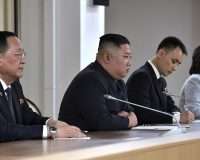
This report presents the core findings concerning Kim Jong-un’s recent comments on North Korea’s nuclear policy, South Korea’s stance on phased arms control, and the potential impact on the United States, China, and overall regional stability.
North Korea has significantly enhanced its economic position through unprecedented military and economic collaboration with the Russian Federation.
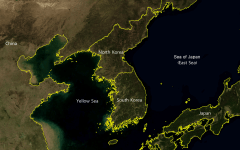
This report assesses the geopolitical and geoeconomic significance of the Korean Peninsula for China, the United States, and Russia within the strategic context of the northern Asia-Pacific.
North Korea has established a new cyber warfare unit, Research Centre 227, under the General Staff Reconnaissance Bureau. The centre develops offensive hacking technology that employs artificial intelligence (AI) for cyber espionage, financial plundering, and network disruption
North Korea’s choice to send troops to support Russia in Ukraine is a significant change in global dynamics that could affect security in Eastern Europe and the Asia-Pacific region.
The recent defence pact established between Russia and North Korea represents a notable escalation in Eurasian geopolitical dynamics, carrying the potential for wide-ranging consequences. Following the signing of this agreement, according to Seoul’s sources, there is the eventuality that Pyongyang will deploy military engineering units to support Russian forces in the Ukrainian conflict.
On June 19th, 2024, Russian President Vladimir Putin made a landmark visit to Pyongyang, marking his first visit to North Korea in almost a quarter-century. This visit signifies a deepening of the already complex and strategic relationship between Moscow and Pyongyang, driven by mutual geopolitical interests and a shared opposition to U.S. influence.
In the backdrop of a three-nation military exercise involving the United States, South Korea, and Japan in the East China Sea, this report delves into the intricate geopolitical landscape surrounding the Korean Peninsula. Analysing the growing relations between China and South Korea, we scrutinise the multifaceted factors influencing Beijing’s strategic calculus.
The current situation in the Korean Peninsula represents a severe threat to economic-strategic stability in the East China Sea geo-maritime space for the United States, the People’s Republic of China, and the Russian Federation.
Nancy Pelosi’s visit to South Korea highlighted Seoul’s role in Washington’s Asia-Pacific strategy to contrast North Korea’s military threat in the Korean Peninsula and, at the regional level, confront the rising Chinese presence.
The Democratic People’s Republic of Korea (DPRK) expanded its atomic arsenal to defend its territory from possible aggression by the Republic of Korea, assisted by Washington and Tokyo. At the same time, North Korea has also faced complicated situations caused by United Nations sanctions eased by Chinese economic and geostrategic interests in the Korean Peninsula.
North Korea stretched its muscle by launching a short-range submarine ballistic missile, which confirmed that Pyongyang is a decisive military actor in Asia-Pacific that might threaten South Korea and contrast the U.S. presence in the region.
The recent North Korean missile test alarmed the Asia-Pacific region and demonstrated that Pyongyang has the military infrastructure and hardware to pose a threat to the U.S. interests and military operations in the region.
The political-strategic priorities of the People’s Republic of China, the Russian Federation and the United States had conferred high geostrategic value to the Korean Peninsula in the North-East Pacific Scenario. In this region, since the totalitarian regime of North Korea hardly coexists with a Western-type State of South Korea, military assets play a fundamental role.