Tag: Nagorno-Karabakh

  • ECO Summit in Stepanakert, Baku’s Strategy and Azerbaijan-Iran Relations

    The 17th Eurasian Cooperation Organisation (ECO) Summit held on 3–4 July 2025 in Stepanakert (Khankendi) stressed Azerbaijan’s domestic and regional strategy and Iran’s attempt to normalise relations with Baku.

  • Security Risk Assessment Report: Protests in Armenia

    Large-scale demonstrations in Yerevan, Armenia, highlight simmering public discontent with the government’s decision to demarcate the border with Azerbaijan. This report analyses the security risks associated with these events, considering geopolitical implications and domestic stability concerns.


  • Ep. 20 – Geopolitical Dynamics in the South Caucasus: A Conversation with Cesare Figari Barberis

    In our latest episode of the Geopolitical Report Podcast, Cesare Figari Barberis shared his nuanced perspectives on recent developments in the South Caucasus. Specifically, he examined the contentious “foreign agent” law in Georgia and the complex relations between Armenia and Azerbaijan.

  • Human Rights and Armenians’ Fate in Nagorno-Karabakh: A Conversation with Maggie Arutyunyan and Narine Vlasyan of CFTJ

    SpecialEurasia had a conversation with Maggie Arutyunyan, Esq., who serves as a member of the Board of Directors at the US-based Center for Truth and Justice (CFTJ), along with Narine Vlasyan, Project Coordinator. The purpose of the discussion is to gain a deeper understanding of the recent events in the Republic of Nagorno-Karabakh/Artsakh and attempt to anticipate potential future developments.

  • Azerbaijan’s Suspended Engagement With PACE: A Geopolitical Scenario

    The Parliamentary Assembly of the Council of Europe (PACE) has decided not to ratify the credentials of the Azerbaijani delegation, citing concerns about the country’s failure to fulfil major commitments related to democratic processes, human rights, and the Nagorno-Karabakh situation. Azerbaijan has subsequently suspended its cooperation with PACE.

  • Review of the book “La Guerra per il Nagorno Karabakh” written by Emanuele Aliprandi

    SpecialEurasia reviewed the book “La Guerra per il Nagorno Karabakh” written by Emanuele Aliprandi. In the book, the author explored the situation in the South Caucasus, especially the last years of conflict/confrontation between Armenia and Azerbaijan over the Nagorno-Karabakh/Artsakh and the Armenian population’s struggle for peace.

  • Nagorno-Karabakh and the Armenian Cultural Diplomacy in Italy

    This report wants to contextualise the impact and importance for Armenia that cultural events such a photographic exhibition can have in Italy, a country which in the last years has developed a strong commercial partnership and connection with Azerbaijan and has demonstrated less attention and interests to the Yerevan and Stepanakert’s position about the Nagorno-Karabakh while has privileged Baku’s narrative.

  • OSINT Report: Nagorno-Karabakh Crisis, Armenophobia and the so-called ‘Azerbaijani Telegram Channels’ in Russian language

    Our OSINT report shows that a segment of Azerbaijani society or Azeri Diaspora in the post-Soviet space on different Telegram channels in Russian language exhibits pronounced sentiments of Armenophobia, manifesting in a discernible hostility towards Armenians in occasion of the Nagorno-Karabakh crisis.

  • Nagorno-Karabakh Crisis and Russia’s Strategy in the Region

    The recent capitulation of Nagorno-Karabakh in the face of Azerbaijan’s military offensive has brought to light Russia’s recalibrated strategic approach in the region. This shift focuses on forging a robust alliance with both Baku and Ankara, a move designed to bolster the INSTC and leverage Turkish land as a potential hub for its new energy approach.

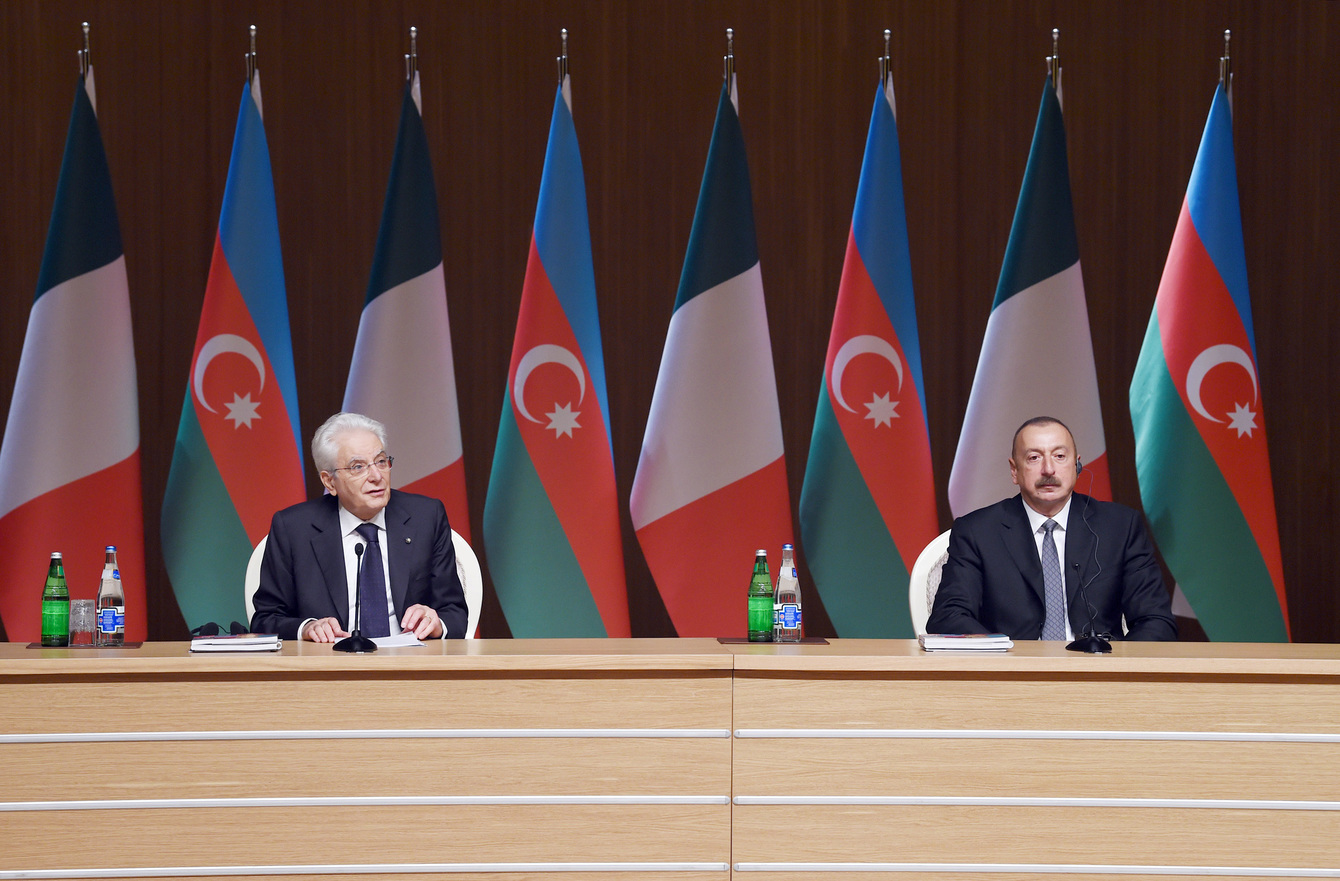
  • Nagorno-Karabakh Crisis Exposed Italy’s Weak Foreign Policy Among Natural Gas and Human Rights

    The Azerbaijani military incursion into the Republic of Nagorno-Karabakh/Artsakh has brought to light Italy’s precarious foreign policy in the South Caucasus. Driven by a web of Rome’s imperatives and constraints, the Italian government finds itself torn between justifying Azerbaijan’s regional strategy and acknowledging the resulting humanitarian crisis and civilian casualties.

  • Azerbaijan’s Military Offensive in Nagorno-Karabakh/Artsakh: A Risk Assessment

    The recent military operation conducted by Azerbaijan against the defence forces in the Republic of Nagorno-Karabakh/Artsakh attests to the prevailing instability within the South Caucasus region. This development has sounded alarm bells amongst both international and regional stakeholders, who are now confronted with the prospect of a renewed conflict in this highly sensitive geopolitical theatre.

  • Geopolitics of the Humanitarian Crisis in the Republic of Artsakh because of the Azerbaijan Blockade

    The Republic of Artsakh, also known as Nagorno-Karabakh, has found itself embroiled in a dire humanitarian crisis because of the Azerbaijan blockade imposed since December 2022.

  • The second Karabakh war and Iran’s interests

    In this paper published in Geopolitical Report ISSN 2532-845X Vol. 2 Year 2023, the author investigated the Iranian position on the second Karabakh war and Tehran’s attempts to stabilise the region and promote its economic and political partnerships.

  • CSTO ready to send a mission on the Armenian-Azerbaijani border

    In the last months, the South Caucasus has again experienced regional turbulence. While there have been protests in Georgia over a controversial draft law that would have required some organisations receiving foreign funding to register as “foreign agents”, Armenia and Azerbaijan might be again on the edge of an escalation involving the CSTO and, therefore, Russia.

  • Miniere, ambiente e politica: la guerra per il Nagorno-Karabakh entra in una nuova fase

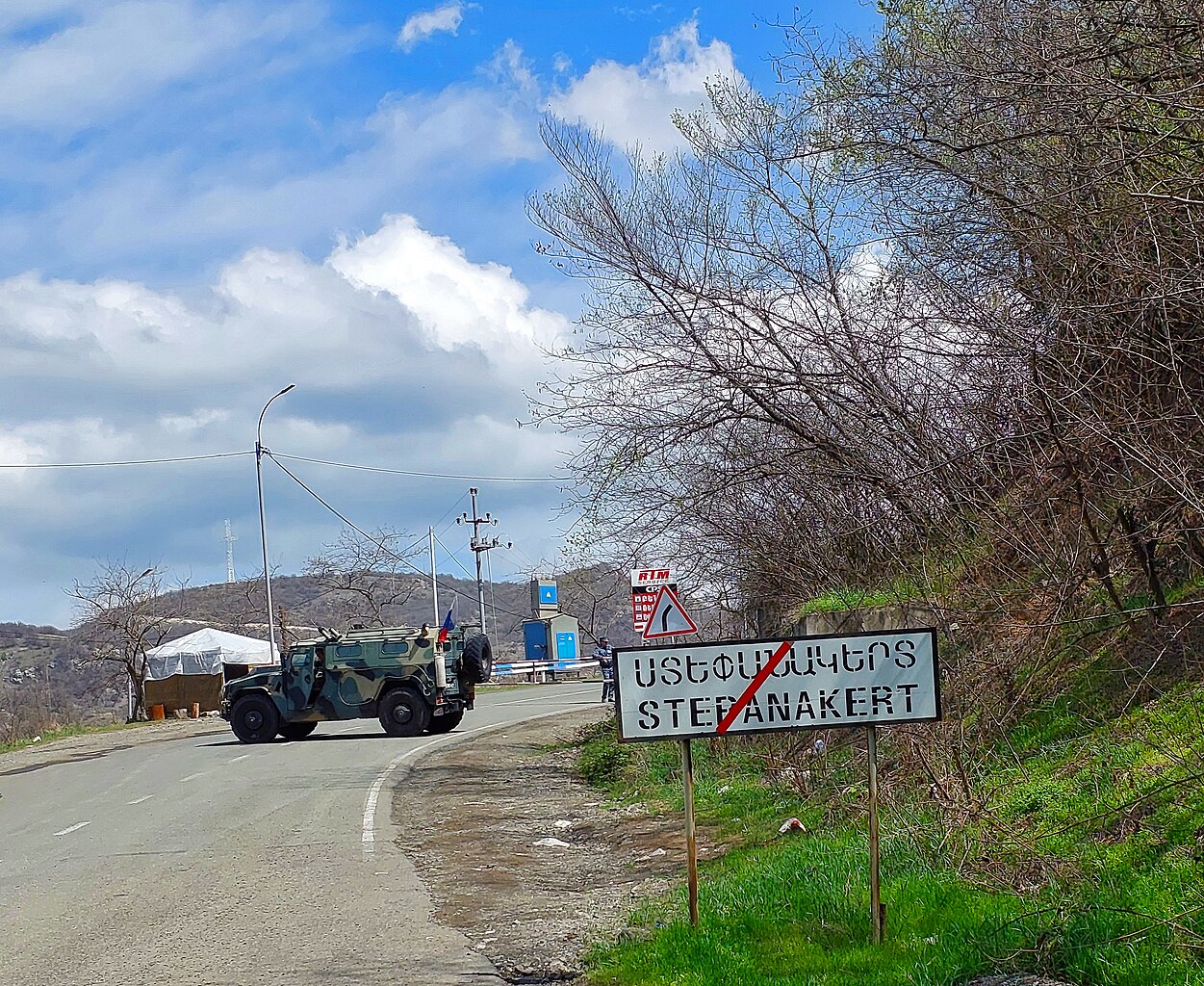
    Geopolitical Report ISSN 2785-2598 Volume 26 Issue 4 – Le manifestazioni ‘ambientaliste’ dei cittadini azeri e il blocco della via di collegamento Goris-Stepanakert che ha isolato il Nagorno-Karabakh celano una strategia di Baku volta a controllare le risorse del territorio, in special modo quelle minerarie.

  • Nagorno-Karabakh/Artsakh: Azerbaijan’s strategy might lead to a humanitarian crisis and a military escalation

    Azerbaijan’s transport and gas supply blockade of the Nagorno-Karabakh/Artsakh might cause a regional humanitarian crisis and evolve into a military escalation capable of destabilising the South Caucasus.

  • Moscow’s involvement in Ukraine allows the European Union to accredit itself as a mediator between Armenia and Azerbaijan

    After almost three decades on the sidelines of the Nagorno-Karabakh conflict negotiation process, the European Union has now stepped in, positioning itself as a mediator in the Armenian-Azerbaijani conciliation process.

  • Geopolitics and security of Armenia: an interview with H.E. Tsovinar Hambardzumyan

    SpecialEurasia interviewed H.E. Tsovinar Hambardzumyan, the Ambassador of the Republic of Armenia in Italy, to discuss the current situation and possible future developments in Armenia and the issues related to the Republic of Artsakh/Nagorno-Karabakh.

  • Nagorno-Karabakh conflict might influence Moscow-Baku relations

    The recent military escalation at the Nagorno-Karabakh/Azerbaijan border, which caused victims from both sides, could negatively affect relations between Moscow and Baku and plunge the region into a new geopolitical, security, and socio-political crisis.

  • Storia del Caucaso: l’eccidio di Sumgait trentaquattro anni dopo

    Nella storia del Caucaso l’eccidio di Sumgait è un evento che ricopre particolare importanza le cui conseguenze sono ancora visibili nelle relazioni tra Armenia e Azerbaigian e nella narrativa che oppone Yerevan a Baku, in special modo a seguito del conflitto del Nagorno-Karabakh.

  • Azerbaijan-Iran crisis and Tehran-Yerevan’s new transit route

    The growing tensions between Iran and Azerbaijan (backed by Turkey) might destabilise the Caucasus and create problems for the transit corridors which cross the region. In this context, to counter the Azerbaijani project of the Zangezur transit corridor, Tehran might establish a new transportation route with Armenia.

  • Armenian parliamentary election: why matters?

    Kavkaz Files ISSN 2975-0474 Volume 5 Issue 2 Author: Giuliano Bifolchi After the 2018 Velvet Revolution and the 2020 Nagorno-Karabakh Conflict, Armenian is at the crossroad for its future existence because on June 20th, 2021, the Armenians will vote for the third time in five years for the Prime Minister and national government.

  • La Repubblica dell’Artsakh dopo la guerra: intervista ad Armine Aleksanyan

    Il conflitto del Nagorno-Karabakh del 2020 ha cambiato lo status geopolitico nel Caucaso meridionale. Per decenni esperti e analisti regionali hanno classificato il Nagorno-Karabakh come un frozen conflict (conflitto congelato) fino a quando lo scorso settembre 2020 le forze armene ed azere si sono scontrate in una guerra di 44 giorni che ha causato vittime civili, sfollati, rifugiati e […]

  • Armenia dopo il conflitto del Nagorno-Karabakh. Intervista all’ambasciatore Tsovinar Hambardzumyan

    Il conflitto del Nagorno-Karabakh del 2020 ha influenzato l’Armenia sia nelle dinamiche di politica interna che in quelle di politica estera. Abbiamo incontrato l’Ambasciatore dell’Armenia in Italia per discutere l’attuale status dell’Armenia e le prospettive future in politica interna ed estera, ma anche a livello economico locale.

  • Nagorno-Karabakh: and the winner is… Russia

    After a long meeting, the leaders of Azerbaijan and Armenia, supervised by Russia, agreed on the ceasefire, which should precede the peace negotiation between Baku and Yerevan on the Nagorno-Karabakh conflict. Although Azerbaijan is claiming its victory in the conflict, the Russian Federation is the real winner in Nagorno-Karabakh.

  • The Nagorno-Karabakh conflict might destabilise the entire Eurasian region

    The Caucasus might become the theatre of a new conflict whose consequences will impact the entire Eurasian region if the international community does not stop the military escalation at the borders of the de-facto Republic of Nagorno-Karabakh and Azerbaijan. 

  • Tensioni Armenia – Azerbaigian, stabilità del Caucaso meridionale e dinamiche geopolitiche

    Gli scontri militari tra Armenia ed Azerbaigian lungo la linea di confine registrati il 12 luglio  2020 riportano l’attenzione sul conflitto ‘congelato’ mai risolto o mal gestito del Nagorno-Karabkh che minaccia la stabilità del Caucaso meridionale e gli interessi degli attori regionali e internazionali.

Online Course "Geopolitical Intelligence Analysis"_November 2025

22 November 2025 – Online Course Geopolitical Intelligene Analysis

This course represents a practical step for professionals aiming to refine their analytical discipline in a rapidly shifting global environment.