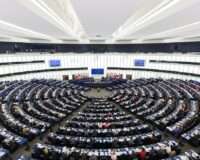
After almost three decades on the sidelines of the Nagorno-Karabakh conflict negotiation process, the European Union has now stepped in, positioning itself as a mediator in the Armenian-Azerbaijani conciliation process.
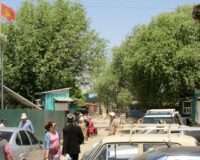
Due to the borders drawn by the former Soviet Union with no regard for ethnic, political, economic, and cultural factors, the Central Asian countries Kyrgyzstan and Tajikistan have faced each other for 31 years, and the recent military escalation highlighted regional instability and geopolitical strategies promoted by Dushanbe and Bishkek.
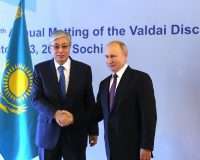
In a world of growing polarity, Kazakhstan has been attempting to portray itself as a bridge connecting the East and the West. However, the so-called Russian “special operation” in Ukraine has forced the Central Asian nation to distance itself gradually from Moscow.
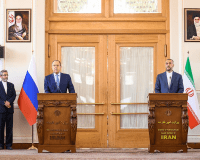
Although Russian – Iranian ties date back to the Islamic Revolution, Moscow’s ongoing conflict in Ukraine (or special military operation as the Kremlin has always declared) and Tehran’s nuclear ambitions have strengthened the cooperation and pushed these Western adversaries together.
The constitutional referendum in Kazakhstan marked a historical event aimed at consolidating the final transition from a super-presidential form of government to a presidential republic with an influential parliament and an accountable government.
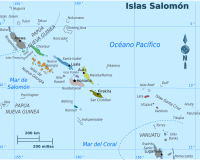
The United States and its allies will watch closer the growing partnership between China and the Solomon Islands monitoring whether Beijing will manage to build a military base in a country that plays a strategic role in the Pacific.
The war in Ukraine provided Serbia with an opportunity to continue and boost the policy, which was already unfolding even before the war, of replacing Russia with China as Serbia’s primary non-Western partner.
Finland and Sweden’s possible membership in the NATO might decisively change the security architecture of Northern Europe and worse relations between these two states and the Russian Federation, elevating the regional geopolitical risk.