Tag: Kavkaz Files ISSN 2975-0474

  • Armenia in the Collective Security Treaty Organisation (CSTO): A Strategic Look

    Armenia has frozen its participation in the Collective Security Treaty Organisation (CSTO) since February 2024. The country has also ceased financial contributions and engagement in CSTO activities. This report evaluates the geopolitical and security implications of Armenia’s stance and the potential outcomes for regional stability.

  • Makhachkala Port and Beyond: How Dagestan Connects Iran and Russia in a Shifting Eurasian Landscape

    The report outlines the strategic relationship between Dagestan and Iran, highlighting recent developments during a delegation’s visit aimed at enhancing trade and economic collaboration

  • Ethnic Alliances and Foreign Influence: The Power Struggle in Abkhazia’s Elections

    This report aims to analyse the key outcomes of the election, the potential shifts in Abkhazia’s foreign and domestic policies, and the broader implications for regional stability. The results were as follows: Gunba 46.38%, Ardzinba 36.92%, Bartstits 4.04%, Arshba 7.53%, and Khurkhumal 0.91%. As no candidate obtained more than 50% of the vote, a second round will be held on March 1st, 2025.

  • From Abkhazia to Nagorno-Karabakh: Turkey’s Anti-Armenian Agenda in the Caucasus

    This report examines Turkey’s increasing influence in Abkhazia, especially in the context of the upcoming presidential elections scheduled for February 2025. The analysis explores Ankara’s broader geopolitical ambitions in the South Caucasus, where its growing presence challenges Russia’s traditional dominance and exhibits a significant anti-Armenian stance.

  • Security and Terrorism in the North Caucasus: Interview with Mark Youngman

    SpecialEurasia met with Mark Youngman to discuss his recent report “Terrorism and counterterrorism in the North Caucasus: 2024 trends”  considering his vast experience as an open-source intelligence (OSINT) analyst and independent researcher.

  • Abkhazia’s Upcoming Presidential Elections: Interview with Kan Taniya

    SpecialEurasia spoke with Kan Taniya, adviser at the Embassy of the Republic of Abkhazia in Russia, to analyse the internal political situation, the candidates, and the regional outlook.

  • 15 Years of the North Caucasus Federal District: An Analysis of Achievements and Challenges

    This report aims at underlining the North Caucasus Federal District’s positive trends and the local challenges which might undermine regional stability and the Kremlin’s efforts to improve the socioeconomic conditions.

  • Putin-Pashinyan’s Phone Conversation Confirmed Russia’s Interest in Armenia and the Caucasus

    The recent phone conversation between Russian President Vladimir Putin and Armenian Prime Minister Nikol Pashinyan reviewed Armenia’s presidency of the Eurasian Economic Union (EAEU) and outline future cooperation within the bloc.

  • Assessment of Armenia’s Foreign Policy Towards U.S., EU and Russia’s Regional Presence

    This report assesses Yerevan’s foreign policy toward Washington and Brussels, and Moscow’s potential responses, considering Russia’s diminishing influence in the Caucasian republic after approximately thirty years. In addition, it analyses potential threats to Armenia arising from the expansion of its ties with the West.

  • Risk Assessment Report: Georgia – Political Unrest and EU Integration Impasse

    This report analyses the ongoing political unrest in Georgia following the suspension of its EU membership negotiations and the contested parliamentary elections of October 27th, 2024.

  • Intel Report: Abkhazia’s Domestic Political Crisis and Regional Implications

    This report investigates recent protests in Abkhazia that reflect a deepening crisis in the republic (linked with Russian interests in the Caucasus), primarily driven by opposition factions demanding President Aslan Bzhania’s resignation and a full political transition.

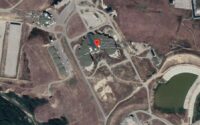
  • Incident Report: UAV Attack on the Russian University of Special Forces in Gudermes, Chechnya

    On October 29th, 2024, a UAV attack targeted the Russian University of Special Forces (RUS) in Gudermes, Chechnya, resulting in a fire on the roof of an unoccupied building.

  • Analysis of Georgia’s Recent Parliamentary Elections and Geopolitical Implications

    The Georgian Dream party has secured a parliamentary majority with approximately 54% of the vote in Georgia’s recent elections. This outcome, disputed by pro-European opposition leaders, has raised concerns over electoral integrity and the future of Georgia’s EU candidacy.

  • Kalmykia: A New Russia Center for the Development of the Caspian Sea’s Regional Cooperation

    This report seeks to outline the historical and socioeconomic features of Kalmykia and examine its potential contribution to Moscow’s logistics strategy in the Caspian Sea region.

  • Azerbaijan: Increasing Saudi Investments Might Boost Economic Diversification

    The recent Azerbaijani-Saudi business forum underlined Baku’s attempt to diversify its economy and Riyadh’s desire to increasing its investment and economic presence in Azerbaijan and, therefore, in the South Caucasus region.

  • North Caucasus: New Geostrategic Opportunities

    This report investigates the upcoming forum “North Caucasus: New Geostrategic Opportunities” scheduled on 4-5 October 2024. The forum aims to examine the strategic potential of the NorthCaucasus in Russia’s global strategy, focusing on infrastructure, regional growth, and human capital.

  • Dagestan Between Kremlin’s Support and Indian Interests

    This report analyses the recent developments in Dagestan, focusing on Moscow’s strategic interests in the republic and the geopolitical significance of the North Caucasus. It highlights the visit of Yuri Chaika, the Russian President’s representative in the North Caucasus, to Dagestan, and assesses the importance of the recent meeting between Dagestani authorities and an Indian delegation.

  • Azerbaijan’s Foreign Policy Amidst the East-West Dichotomy

    This report investigates Azerbaijan’s strategy to differentiate its partnerships, maximise economic opportunities, and maintain strategic autonomy amid shifting geopolitical dynamics characterised by the conflicts in Ukraine and the Middle East and the East-West competition.

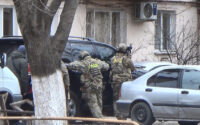
  • Counter-Terrorism Operations in Ingushetia and Adygea: Recent Developments

    The recent counter-terrorism operations in Ingushetia and Adygea underscore the persistent threat of terrorism within Russia and the government’s ongoing efforts to neutralise such threats.

  • Analysing Contemporary North Caucasus with Mairbek Vatchagaev

    SpecialEurasia engaged in a discussion with Mairbek Vatchagaev, a historian and political analyst specialising in the North Caucasus, to acquire deeper insight into the region’s dynamics, the Kremlin’s local strategy, the developing situation, and future risks.

  • Putin’s Visit to the North Caucasus: Why Matters?

    Russian President Vladimir Putin’s recent visit to Kabardino-Balkaria, North Ossetia-Alania, and Chechnya underscores the strategic importance of the North Caucasus in Moscow’s domestic and foreign policy, especially in the ongoing conflict in Ukraine.

  • Putin’s Visit to Baku: Assessing the Geopolitical Implications for the South Caucasus

    This report analyses recent developments in the bilateral relations between Russia and Azerbaijan, focusing on the outcomes of Russian President Vladimir Putin’s official visit to Baku and its implications for regional geopolitics.

  • Sukhum’s Cultural Diplomacy: Promoting Abkhaz Studies and Academic Research

    The Abkhaz Academy of Sciences has introduced a scientific and technical program for 2024-2026 aimed at strengthening the country’s historical narrative and cultural identity. This program is significant for supporting Sukhum’s independence claims and countering Georgian territorial assertions through cultural diplomacy and international academic collaboration.

  • Azerbaijan SWOT Analysis

    Its strategic location, natural resources, and complex history shapes Azerbaijan’s geopolitical landscape. This SWOT analysis provides a comprehensive understanding of Azerbaijan’s current socioeconomic and political environment and guides investors in understanding the country’s potentialities and challenges.

  • Armenia’s Foreign Policy in Contemporary Era: Interview with Paruyr Hovhannisyan

    During our official visit to Yerevan, SpecialEurasia met with Paruyr Hovhannisyan, Vice-Minister of Foreign Affairs of the Republic of Armenia, with whom we discussed Yerevan’s regional and foreign policy.

  • Investment Opportunities and Business Environment in Armenia: A Conversation with Levon Ohanesyan

    Armenia’s strategic location, bridging Europe and Asia, has significantly contributed to its economic resurgence, catching the attention of global observers. SpecialEurasia recently convened with Levon Ohanesyan, CEO of Enterprise Armenia, in Yerevan to evaluate the nation’s investment landscape.

  • Today’s Economy of Armenia: Interview with Gevorg Papoyan

    During the official visit to Yerevan, SpecialEurasia discussed the country’s economic performance with the Minster of Economy of the Republic of Armenia, Gevorg Papoyan, with the ultimate goal of assessing local investments and trends and understand future opportunities and challenges for this South Caucasian republic.

  • Intelligence Brief: Violent Attacks in Makhachkala and Derbent in Dagestan

    The violent attacks which targeted law enforcement and religious sites in Derbent and Makhachkala in the Republic of Dagestan highlight security issues in the North Caucasus and terrorist threats in the Russian Federation.

  • SpecialEurasia’s Official Visit to Armenia: A Summary

    From June 8th to June 16th, 2024, SpecialEurasia conducted an official visit to Armenia as part of the research and editorial project, Kavkaz Files ISSN 2975-0474. This visit followed a previous one in October 2022, allowing the team to assess the substantial changes in Armenia’s foreign policy, economy, and societal dynamics.

  • Georgia: Security Risk Assessment After Islamic State Suspects Arrested in Batumi

    The security landscape of Georgia has experienced notable developments, particularly concerning the threat of terrorism. The recent detention in the city of Batumi of suspected terrorists linked to the Islamic State and the implementation of stringent anti-terrorism measures, highlight the country’s proactive stance.

  • United States-Armenia Relations and Regional Dynamics: Report from Yerevan

    This report, written during SpecialEurasia’s visit to Yerevan, examines the recent diplomatic engagements between the United States and Armenia, contextualised within the broader geopolitical dynamics of the South Caucasus.

  • Georgia: Geopolitical Risk Report

    The adoption of the ‘foreign agents law’ by the government, the unresolved territorial disputes, particularly in Abkhazia and South Ossetia, a contentious relationship with Russia, and the challenging economic conditions have amplified Georgia’s geopolitical risk in recent months.

  • Security Risk Assessment Report: Protests in Armenia

    Large-scale demonstrations in Yerevan, Armenia, highlight simmering public discontent with the government’s decision to demarcate the border with Azerbaijan. This report analyses the security risks associated with these events, considering geopolitical implications and domestic stability concerns.

  • Geopolitical Report: Kavkaz Investment Forum and the Future of the North Caucasus

    The upcoming Kavkaz Investment Forum in Chechnya presents an opportunity to highlight the economic potential of the North Caucasus region. Recent years have seen robust socio-economic growth, but challenges remain, including over-reliance on tourism and external geopolitical pressures.

  • Intelligence Report: The Ingush Jamaat and the Islamic State Wilayat Kavkaz

    The resurgence of Islamist radical activity in the North Caucasus region, particularly attributed to the Ingush Jamaat of the Islamic State Wilayat Kavkaz, poses a significant threat to regional stability and security.

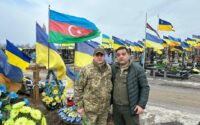
  • Azerbaijani Volunteer Fighters in Ukraine

    The Russian-Ukrainian conflict, which began in 2022, attracted the attention of volunteers from all over the post-Soviet space interested in supporting Kyiv in the fight against Russian forces. Among these volunteers, there are also Azerbaijani fighters who have sided with Ukrainian forces against the Russian armed forces.

  • Counter-Terrorism Operation in Ingushetia: A Risk Assessment

    FSB special forces’ counter-terrorism operation in Ingushetia stressed Russia’s readiness and strategy to counter the terrorist threat and jihadist propaganda’s impact in those regions as the North Caucasus mainly inhabited by Muslims.

  • Chechnya’s Role in Russia’s Military Strategy and Foreign Policy

    Dmitry Medvedev’s recent visit to Grozny and meeting with Ramzan Kadyrov and local military officials confirmed the role that Chechnya is plying in supporting Russia in the Ukraine conflict and the North Caucasian republic’s increasing role in regional and state’s dynamics and foreign policy.

  • Human Rights and Armenians’ Fate in Nagorno-Karabakh: A Conversation with Maggie Arutyunyan and Narine Vlasyan of CFTJ

    SpecialEurasia had a conversation with Maggie Arutyunyan, Esq., who serves as a member of the Board of Directors at the US-based Center for Truth and Justice (CFTJ), along with Narine Vlasyan, Project Coordinator. The purpose of the discussion is to gain a deeper understanding of the recent events in the Republic of Nagorno-Karabakh/Artsakh and attempt to anticipate potential future developments.

  • Azerbaijan’s Suspended Engagement With PACE: A Geopolitical Scenario

    The Parliamentary Assembly of the Council of Europe (PACE) has decided not to ratify the credentials of the Azerbaijani delegation, citing concerns about the country’s failure to fulfil major commitments related to democratic processes, human rights, and the Nagorno-Karabakh situation. Azerbaijan has subsequently suspended its cooperation with PACE.

  • The Geopolitical Implications of UAE-Dagestan Collaboration in Education

    Dagestan State Pedagogical University (DSPU) and Mohammed bin Zayed University of Humanities in the United Arab Emirates (UAE) recently entered into a cooperative agreement, primarily focusing on student and teacher exchanges and collaborations in education. This development underscores Abu Dhabi’s foreign policy interests in the North Caucasus, especially given the Emirati embassy’s cultural initiatives in Dagestan.

  • Kabardino-Balkaria: The Local Tourism Development Confirms Russia’s Regional Economic Strategy

    The tourism sector in Kabardino-Balkaria has experienced substantial growth, contributing significantly to the region’s budget. In 2023, the sector contributed 13 billion rubles, marking a remarkable thirteen-fold increase in the past five years. The discernible upswing in the tourism sector within Kabardino-Balkaria underscores Russia’s committed endeavours towards fostering and augmenting tourist infrastructure in the North Caucasus.

  • North Caucasus’ Economic Performance in 2023: An Overview

    While the North Caucasus Federal District demonstrates resilience, potential risks include external geopolitical influences and the need for sustained economic stability. The region’s dependency on tourism growth demands careful management to avoid overreliance on a single sector. Additionally, monitoring external pressures on the Russian economy remains crucial for sustained development.

  • Islam in Abkhazia: an Interview with Nar Taniya

    The analysis of the role of Islam in Abkhazia thanks to the meeting with Nar Taniya in Sukhum allows the understanding of the country’s modern society and culture and, in addition, relations between Sukhum and the Arab-Muslim world.

  • Imarat Kavkaz’s Supporter Arrested in Ingushetia: Is the Caucasus Emirate Still a Threat in the North Caucasus?

    The recent arrest of a 23-year-old individual in Ingushetia, implicated in supporting online Imarat Kavkaz, underscores the persistent threat posed by this terrorist organisation in the North Caucasus region. While empirical evidence suggests a strong diminished operational capacity on the ground, the organisation’s propaganda remains a potent force capable of influencing local sentiments.

  • Nagorno-Karabakh and the Armenian Cultural Diplomacy in Italy

    This report wants to contextualise the impact and importance for Armenia that cultural events such a photographic exhibition can have in Italy, a country which in the last years has developed a strong commercial partnership and connection with Azerbaijan and has demonstrated less attention and interests to the Yerevan and Stepanakert’s position about the Nagorno-Karabakh while has privileged Baku’s narrative.

  • North Caucasus Today Between Ethnic Minorities, Indigenous People and Economic Development: An Interview with Mussa Ekzekov

    In July 2023 SpecialEurasia delved into the key aspect by visiting Cherkessk in the Republic of Karachay-Cherkessia within the North Caucasus Federal District. The occasion was the Forum of Indigenous Peoples of the Russian Federation, where our team could discuss with Mussa Khabalevich Ekzekov valuable insights into the dynamics of the North Caucasus focusing on ethnic minorities, indigenous people, and local socioeconomic developments.

  • ANIF, Investment Opportunities in Armenia, and the United Arab Emirates

    In October 2022, during SpecialEurasia’s official visit to Yerevan, we discussed with the representatives of the Armenian National Interest Fund (ANIF) the country’s investment opportunities and economic situation. After a year of monitoring the Armenian economic performance and investment market, in this report, we would like to stress ANIF’s role in promoting FDIs connected to the Armenian economic market and establishing a linking with United Arab Emirates.

  • The Makhachkala Airport Protest, the Israeli-Palestinian Conflict, and Russia: Risk Assessment

    The Makhachkala Airport protest in the Republic of Dagestan accentuated the impact of the Israeli-Palestinian conflict in the Muslim umma (community) in the Russian Federation and the Kremlin’s necessity to manage potential tensions coming from the coexistence of different religious groups inside the country.

  • How Dagestan-Uzbekistan Economic Cooperation Might Support Russia’s Presence in Central Asia

    The opening of trading houses between Dagestan and Uzbekistan confirmed Makhachkala’s role in promoting its business in Central Asia and, therefore, supporting the Russian presence in this strategic market. Since the beginning of the Ukraine conflict, the North Caucasus has played a significant role in promoting the Kremlin’s economic and political presence in Russia’s blizhnee zarubezhe.

  • North Caucasian Volunteer Fighters In Ukraine Criticised Kyiv’s Support To Israel

    The presence of North Caucasian volunteer fighters within the international legion in Ukraine presents a complex dynamic with implications for the broader regional and geopolitical landscape. Notably, their vocal expressions of solidarity with Palestine and criticism of Kyiv’s support for Israel underscore a nuanced discord within the Ukrainian conflict theatre

  • Abkhazia Today: A Dialogue with Viacheslav Chirikba

    In August 2023, SpecialEurasia undertook a visit to Abkhazia, engaging in discussions with Viacheslav Chirikba, Director at the Centre for Strategic Studies under the President of Abkhazia, to delve into both the regional geopolitical dynamics and the intricacies of the local socioeconomic landscape.

  • Erdogan-Aliyev’s Meeting in Nakhchivan Alarms Armenia and the Syunik Province

    Erdogan’s planned visit to Nakhchivan following Baku’s military offensive in Nagorno-Karabakh has raised significant concerns regarding the territorial integrity of Armenia since Azerbaijan and Turkey may actively seek to establish the conditions for a potential military intervention in Armenia’s Syunik Province, with the ultimate aim of securing the Zangezur Corridor.

  • Nagorno-Karabakh Crisis and Russia’s Strategy in the Region

    The recent capitulation of Nagorno-Karabakh in the face of Azerbaijan’s military offensive has brought to light Russia’s recalibrated strategic approach in the region. This shift focuses on forging a robust alliance with both Baku and Ankara, a move designed to bolster the INSTC and leverage Turkish land as a potential hub for its new energy approach.

  • Nagorno-Karabakh Crisis Exposed Italy’s Weak Foreign Policy Among Natural Gas and Human Rights

    The Azerbaijani military incursion into the Republic of Nagorno-Karabakh/Artsakh has brought to light Italy’s precarious foreign policy in the South Caucasus. Driven by a web of Rome’s imperatives and constraints, the Italian government finds itself torn between justifying Azerbaijan’s regional strategy and acknowledging the resulting humanitarian crisis and civilian casualties.

  • Azerbaijan’s Military Offensive in Nagorno-Karabakh/Artsakh: A Risk Assessment

    The recent military operation conducted by Azerbaijan against the defence forces in the Republic of Nagorno-Karabakh/Artsakh attests to the prevailing instability within the South Caucasus region. This development has sounded alarm bells amongst both international and regional stakeholders, who are now confronted with the prospect of a renewed conflict in this highly sensitive geopolitical theatre.

  • Geopolitics of the Dagestan National Centre and the Dagestan Battalion ‘Imam Shamil’

    The establishment of the Dagestan National Centre in Russia and the Dagestan Volunteer Battalion ‘Imam Shamil’ in Ukraine underscores the reverberations of the Ukraine conflict in the North Caucasus. This development highlights a substantial threat emanating from various movements and organisations, advocating for the destabilisation and fragmentation of the Russian Federation.

  • Stavropol Companies’ Business Mission to Abkhazia: Implications and Opportunities

    The recent business mission conducted by Stavropol-based companies to Abkhazia signified a noteworthy advancement with extensive ramifications for both Sukhum and Pyatigorsk. This exchange also highlights Pyatigors’ approach to promote foreign business ventures for the Russian Federation.

  • North Caucasus’Role in the Competition Between Russia and Ukraine Over the Islamic World

    In the ongoing contest between Russia and Ukraine for endorsement from the Islamic world, the North Caucasus emerges as a critical asset in the Kremlin’s strategic arsenal. It serves as a linchpin for Moscow’s domestic political efforts in managing a diverse, multireligious, and multiethnic society, while also underpinning Russia’s foreign policy activities directed towards the Arab-Muslim world.

  • Jewish Heritage Preservation in the Caucasus: Azerbaijan’s Cultural Diplomacy to Strengthen Relations with Israel

    The conference held in Baku on the Jewish community of the Caucasus underscored the positive state of relations between Azerbaijan and Israel. Notably, it shed light on Baku’s strategic use of cultural diplomacy to foster stronger ties with Tel Aviv and garner support from the global Jewish community.

  • Pashinyan’s Complain About Russia Underlined Armenian Swinging Foreign Policy

    Nikol Pashinyan’s recent statements on Armenia’s ‘erroneous’ dependence on Russia may reflect a new direction in Yerevan’s foreign policy, signalling a desire to seek alternative solutions, particularly by cultivating stronger relationships with Western nations

  • Chechen Leader Ramzan Kadyrov: A Key Ally in Putin’s Fight Against Prigozhin and Wagner PMC

    The orchestrated military rebellion, led by Evgeny Prigozhin, against the central authority in Russia, presents an opportunity for Ramzan Kadyrov, the Chechen leader, and his military troops to emerge as significant allies and actors in the Kremlin’s domestic and foreign policy landscape.

  • Bridging Nations: Promoting Cooperation between North Caucasus and Iraq through Education and Research

    The recent visit of the North Caucasian Federal University (NCFU) delegation to Iraq marked a significant step towards fostering cooperation between the Russian North Caucasus and the Middle Eastern country.

  • Beyond the Headlines: Understanding the Ongoing Relevance of the North Caucasus

    This report highlights the reasons the North Caucasus remains important and necessitates ongoing monitoring and provides some future scenarios about the region.

  • Dagestan and Tajikistan discussed expanding cooperation in different fields, especially the halal industry

    Dagestan and Tajikistan’s entente on developing cooperation confirms the North Caucasus’s role in promoting relations between Russia and foreign countries, especially those in the blizhnee zarubezhe (near abroad) where the Kremlin wants to confirm its presence and influence.

  • Il vertice Armenia-Azerbaigian di Bruxelles e la questione dei confini nazionali

    Il vertice Armenia-Azerbaigian che si è tenuto a Bruxelles permette di concentrare l’attenzione sulla questione dei confini nazionali armeni e azerbaigiani la cui soluzione dovrebbe portare alla stabilità e non creare ulteriori tensioni regionali.

  • Nagorno-Karabakh/Artsakh: Azerbaijan’s strategy might lead to a humanitarian crisis and a military escalation

    Azerbaijan’s transport and gas supply blockade of the Nagorno-Karabakh/Artsakh might cause a regional humanitarian crisis and evolve into a military escalation capable of destabilising the South Caucasus.

  • Dagestan – Azerbaijan cooperation in transport and logistics supports Russian regional strategy

    The commercial and political partnership between Dagestan and Azerbaijan might support the increasing relations between Moscow and Baku and implement the Russian foreign policy in the South Caucasus and the Caspian Sea region.

  • Ingushetia: IT Park “Adam Khamkhoev” between economic development and social promotion

    The establishment of an IT Park in Ingushetia named after Adam Khamkhoev, killed in May 2022 in Ukraine, underlined local and central authorities’ desire to promote economic development and support Kremlin’s narrative related to heroism and national unity.

  • Makhachkala port plays a decisive role in the Iran-Dagestan grain trade

    Iran and Dagestan have increased their trade exchange through the Makhachkala Commercial Port, where the Kremlin has invested financial funds to transform this infrastructure into a logistic hub in the Caspian Sea, which might undermine the role of the close port of Baku in Azerbaijan.

  • Cultural/fashion diplomacy and economy in Armenia: the story behind Udivila

    During SpecialEurasia’s official mission to Yerevan, our team met with Armenian female entrepreneurs who founded the brand Udivila, which promotes Armenian culture and attempts to carve out a slide of a market where Armenia has not yet been present.

  • Islamic State cell arrested in Russian Stavropol territory

    Recent arrests of Russian citizens in the Stavropol territory linked with the Islamic State confirmed that jihadist propaganda penetrated the Russian territory by exploiting local problems and influencing the Muslim communities disseminated in the country, especially in the North Caucasus, where the Kremlin has contrasted local militancy and religious extremism.

  • United Arab Emirates cultural diplomacy in Dagestan

    The Embassy of the United Arab Emirates in the Russian Federation organised an event in the city of Makhachkala to promote the national culture and create a link with Dagestan, a strategic North Caucasian republic located on the Caspian Sea.

  • Russian domestic politics: promoting Dagestan culture among the ethnic Russians

    Kremlin’s promotion of Dagestan culture and society in Sochi underlines Moscow’s goal to contrast Kavkazophobia and, simultaneously, improve the link between ethnic Russians and local ethnic Dagestani groups since this North Caucasian republic has a strategic role in the Caspian Sea region.

  • Will Georgia open a “second front” against Russia?

    Georgian authorities denied that Tbilisi would hold a referendum to open a “second front” against the Russian Federation, destabilising the South Caucasus and threatening the Georgian economy, which is heavily dependent on the Russian market.

  • Iran seeks cooperation with the Dagestani port of Makhachkala

    Iran will play a primary role in the import-export activities in the Dagestani port of Makhachkala. The recent meeting between Dagestan and Iran’s representatives showed mutual interest in expanding trade cooperation and transit agreement.

  • Geopolitics of South Ossetia’s possible annexation to Russia

    South Ossetia considers the eventuality to join the Russian Federation through a referendum that will change the geopolitical chessboard of the Caucasus and influence the dynamics between Moscow and Tbilisi.

  • Geopolitics and security of Armenia: an interview with H.E. Tsovinar Hambardzumyan

    SpecialEurasia interviewed H.E. Tsovinar Hambardzumyan, the Ambassador of the Republic of Armenia in Italy, to discuss the current situation and possible future developments in Armenia and the issues related to the Republic of Artsakh/Nagorno-Karabakh.

  • Nagorno-Karabakh conflict might influence Moscow-Baku relations

    The recent military escalation at the Nagorno-Karabakh/Azerbaijan border, which caused victims from both sides, could negatively affect relations between Moscow and Baku and plunge the region into a new geopolitical, security, and socio-political crisis.

  • Russia and Azerbaijan discussed the “Green Corridor”

    Russia and Azerbaijan discussed the “Green Corridor” project, which might become an alternative trade route to counter Western sanctions and strengthen Moscow-Baku relations in the Caucasus and the Caspian Sea region.

  • Ukraine conflict, the North Caucasus, and Russian Muslim leaders’ support to the Kremlin

    Since the Ukraine conflict has attracted foreign fighters and the Russian Armed Forces have among their soldiers Muslim believers, the leaders of the Russian Muslim organisations released a statement supporting the Kremlin.

  • Ukraine conflict, Chechnya and the Gulf Arab countries

    While the Russian military forces are approaching Kyiv, Chechnya is trying to play its diplomatic role in the Gulf Arab countries to support the Russian Federation in the international arena.

  • Ukraine conflict, kadyrovtsy and Chechnya

    The Chechen kadyrovtsy might have been deployed in Ukraine to support the Russian troops. This news caused the reaction of the Caucasus Emirate and underlined the important role that Chechnya plays in the Kremlin’s foreign policy and military strategy.

  • Geopolitics of the Armenian President’s resignation

    The Armenian President’s resignation created another political crisis in the Caucasian republic, which, since the Velvet Revolution in 2018, has experienced domestic political instability, the 2020 Nagorno-Karabakh Conflict and its consequent defeat, the parliamentary elections and a new foreign policy marked by a broader approach towards Turkey and Azerbaijan.

  • Armenian parliamentary election: why matters?

    Kavkaz Files ISSN 2975-0474 Volume 5 Issue 2 Author: Giuliano Bifolchi After the 2018 Velvet Revolution and the 2020 Nagorno-Karabakh Conflict, Armenian is at the crossroad for its future existence because on June 20th, 2021, the Armenians will vote for the third time in five years for the Prime Minister and national government.

  • Il mercato energetico in Armenia tra ristrutturazioni e interessi esteri. Intervista con Hakob Varanyan

    L’Armenia si appresta a organizzare le nuove elezioni volute a seguito del conflitto del Nagorno-Karabakh del 2020 in un periodo storico per il paese caucasico caratterizzato da una lenta ripresa economica e una crisi politica interna che fanno da contraltare ai progetti governativi nazionali che mirano a realizzare infrastrutture nel settore energetico per coprire la domanda interna e diversificare le importazioni di energia dai Paesi alleati.

  • Nagorno-Karabakh: and the winner is… Russia

    After a long meeting, the leaders of Azerbaijan and Armenia, supervised by Russia, agreed on the ceasefire, which should precede the peace negotiation between Baku and Yerevan on the Nagorno-Karabakh conflict. Although Azerbaijan is claiming its victory in the conflict, the Russian Federation is the real winner in Nagorno-Karabakh.

  • Terrorist attack in France and the Chechen diaspora in Europe

    The recent terrorist attack in France highlights the security problem and the impact of jihadist propaganda in the Russian language inside the European Union. In fact, Islamic State ideologies and the presence of the North Caucasian diaspora in Europe might threaten EU security.

  • The Nagorno-Karabakh conflict might destabilise the entire Eurasian region

    The Caucasus might become the theatre of a new conflict whose consequences will impact the entire Eurasian region if the international community does not stop the military escalation at the borders of the de-facto Republic of Nagorno-Karabakh and Azerbaijan. 

  • Russia wants to upgrade the port of Makhachkala

    Russia plans to develop the infrastructure of the port of Makhachkala to transform the Dagestani capital into a logistic hub in the Caspian Sea and the Caucasus region and boost socio-economic development.  Moscow’s desire to upgrade Makhachkala’s seaport and airport challenges the city of Baku, and the Azerbaijani aim to become the Caspian interconnection.

Online Course "Geopolitical Intelligence Analysis"_November 2025

22 November 2025 – Online Course Geopolitical Intelligene Analysis

This course represents a practical step for professionals aiming to refine their analytical discipline in a rapidly shifting global environment.