This assessment analyses how renewed United States tariffs on countries trading with Tehran, combined with internal instability in Iran, affect Armenia’s economic resilience and strategic posture.
The Caucasus region enters 2026 in a state of profound transformation, characterised by the shift from traditional “frozen conflicts” to a high-stakes competition over transcontinental trade corridors.
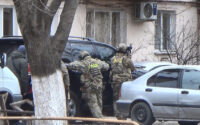
Executive Summary This report assesses the recent disruption of a terrorist plot in Maikop, Republic of Adygea, by the Federal Security Service (FSB).
Armenian Prime Minister Nikol Pashinyan has publicly stated that Yerevan is considering granting a 49- or 99-year lease for development rights to the proposed Trump Route (TRIPP), a transit corridor linking mainland Azerbaijan with the Nakhichevan exclave via Armenia’s Syunik Province.
The visit of President Ilham Aliyev to Astana on October 20-21, 2025, strengthened the strategic partnership between Azerbaijan and Kazakhstan.
The EU Cross-Regional Connectivity Agenda has increased its commitment to the Black Sea, South Caucasus, and Central Asia with the purpose of improving trade, energy, and digital infrastructures and boosting security and resilience.
The State Security Service of Georgia (SSG) detained three Georgian nationals in Adjara on 13 October 2025 for alleged affiliation with the so-called “Takbirist Jamaat”, a group ideologically aligned with the Islamic State.
This report investigates the Republic of Abkhazia’s strengths, weaknesses, opportunities and threats to inform policymakers and analysts on short- to medium-term geopolitical and economic risk.
The International Forum on “Sustainable Development of Mountain Territories,” convened in Makhachkala on 1–3 October 2025, constitutes a significant demonstration of Moscow’s intent to promote Dagestan’s economy and integrate the North Caucasian republic into multilateral Eurasian frameworks.
This report assesses Iran’s developing strategic posture amid renewed geopolitical encirclement, with a focus on the implications of a potential US return to Bagram airbase, regional infrastructure realignments, and shifting alliances in South and Central Asia.
This report evaluates Armenia’s agreement with China to establish a Confucius University in Yerevan, assessing its economic, political, and strategic consequences.
This report analyses the official visit of Iranian President Masoud Pezeshkian to Armenia, which resulted in the signing of ten memorandums covering political, economic, cultural, and scientific cooperation.
This report investigates the geopolitical and regional outcomes and implications of the joint Armenia–US military exercises, Eagle Partner 2025, focusing on Yerevan’s domestic and external constraints and Russian leverages.
Executive Summary This report examines the peace agreement signed at the White House between Armenia and Azerbaijan, brokered by US President Donald Trump.
This report assesses the recent meeting between the Armenian President and the Iranian Vice-President who focused their attetion on the INSTC and bilateral economic cooperation.
This report examines how gas transit through Turkey, Azerbaijan, and Syria currently aids Damascus’ energy needs and economic growth, Baku’s export diversification efforts, and Ankara’s Middle East ambitions.
SpecialEurasia recently interviewed the new Ambassador of the Republic of Armenia to Italy, H.E. Vladimir Karapetyan, to acquire insights into his vision and the current state of Armenia’s foreign relations and domestic opportunities.
This report assesses the strategic credibility, practical feasibility, and geopolitical implications of the planned Chinese investment trip to Chechnya in July 2025.
Geopolitics in the Caucasus is constantly shifting, showing both division and lasting patterns. Despite pressure and diplomatic confrontation, particularly with Azerbaijan and Armenia, Russia retains influence in the South Caucasus through economic and cultural ties.
This report examines the geopolitical effects of Sukhum Airport’s reopening and modernisation on Abkhazia, the Caucasian dynamics, and the Russian regional interests.
Georgian Prime Minister Irakli Kobakhidze recently highlighted a two-pronged economic strategy that uses Georgia’s location to become a key transit route between Europe and Asia.
The 17th Eurasian Cooperation Organisation (ECO) Summit held on 3–4 July 2025 in Stepanakert (Khankendi) stressed Azerbaijan’s domestic and regional strategy and Iran’s attempt to normalise relations with Baku.
This report examines recent developments in Dagestan, focusing on security operations, public policy initiatives, and strategic infrastructure projects.
This report analyses Moscow’s recent public support for Armenia’s legal system and stability, assesses how Yerevan’s pro-EU policies affect trade and defence cooperation between the two countries.
This June 2025 report on geopolitical risks in the Middle East, Central Asia, and the Caucasus focuses on rising tensions, key factors, and future predictions. This helps stakeholders understand emerging threats, thus informing policy, security, and investment decisions.
This report analyses the developing geopolitical dynamics involving the South Caucasus, especially Armenia and Azerbaijan, set against the backdrop of the ongoing Israel-Iran conflict. It explores the threats posed to both Armenia and Iran by Israel’s military cooperation with Baku and examines the broader implications for regional stability.
This report assesses the strategic significance of establishing multiple foreign consular missions in Armenia’s Syunik region and along the prospective corridor. The report examines also the deepening defence cooperation between Yerevan and Paris in the context of renewed Azerbaijani threats to Armenian sovereignty.
This report analyses the Iranian corporation Shasta’s involvement and interests in the Makhachkala Sea Trade Port in the Republic of Dagestan. The report also outlines potential benefits and challenges tied to these efforts.
This report analyses Italy’s expanding diplomatic, cultural, and economic engagement with Armenia, highlighting recent initiatives that point to a strategic deepening of ties between the two countries.
This report examines Iran’s strategic posture in the South Caucasus following Deputy Foreign Minister Saeed Khatibzadeh’s remarks at the Yerevan Dialogue 2025 forum.
This report presents an assessment of the 2nd Yerevan Dialogue held on 26–27 May 2025, following SpecialEurasia’s official visit to Armenia, participation at the event, and direct engagement with local representatives.
SpecialEurasia concluded an official mission to Armenia to attend the 2nd Yerevan Dialogue held on 26–27 May 2025. The event provided an opportunity to engage with Armenian institutional figures, foreign diplomats stationed in Yerevan, and representatives from the local business sector.
This report provides an analytical assessment of the North Caucasus Federal District (NCFD) based on developments presented at the Kavkaz Investment Forum 2025, recent macroeconomic data, and ongoing geopolitical dynamics.
This report analyses Russian Foreign Minister Sergey Lavrov’s recent visit to Yerevan, examining the strategic messaging underpinning Moscow’s diplomatic posture towards Armenia and the broader South Caucasus.
SpecialEurasia has interviewed Khibla Amichba, the Plenipotentiary Representative of the Ministry of Foreign Affairs of the Republic of Abkhazia in Germany, to discuss the role of the Abkhaz diaspora in Europe, cultural diplomacy, enduring relationship with the homeland and the challenges of representation abroad.
This report evaluates the recent armed attack in Makhachkala within the broader context of persistent terrorist activity in the Republic of Dagestan. It assesses the tactical and strategic implications of recent violence targeting security forces and the state’s response capacity.
Iranian President Masoud Pezeshkian’s official visit to Azerbaijan is a significant step towards restoring bilateral relations between Tehran and Baku after years of tensions. Several cooperation agreements signal a cautious but realignment of Iranian-Azerbaijani relations in a highly competitive geopolitical landscape.
This report assesses the geopolitical implications of President Ilham Aliyev’s state visit to China from April 22 to 24, 2025, within the broader context of Azerbaijan’s developing foreign policy. The growing economic interdependence with China, however, poses complex strategic implications for Azerbaijan’s geopolitical balancing act.
This report examines Armenia’s shifting foreign policy orientation, using recent remarks made by the President of the Armenian Business Association Samvel Karapetyan at a Moscow business forum as an entry point for broader analysis. Karapetyan’s public concerns about the economic fallout of exiting the EAEU come at a critical moment in Yerevan’s recalibration of its strategic posture, with ongoing efforts to align more closely with the EU.
This report focuses on recent developments in the geopolitical dynamics between Russia, Azerbaijan, and Armenia, with a particular emphasis on Moscow’s efforts to reinstate its cultural influence in the South Caucasus. Russia’s waning influence in Armenia and Azerbaijan’s increasing alignment with Western powers provide the context for understanding these actions.
This report examines the strategic importance of the North Caucasus region for Russia, focusing on its role as a critical energy transit hub and local energy production area. Following the Ukraine conflict and the rising energy demands, the enhancement of energy infrastructure, including both local and transnational oil and gas pipelines, has become a key focus of the Kremlin policy.
This report examines Azerbaijan’s recent escalation of information dissemination strategies, particularly through the Ministry of Defence’s daily reports of alleged Armenian ceasefire violations. Historically, similar narratives have been employed to shape public perception and create a justification framework for strategic manoeuvres.
Armenia has frozen its participation in the Collective Security Treaty Organisation (CSTO) since February 2024. The country has also ceased financial contributions and engagement in CSTO activities. This report evaluates the geopolitical and security implications of Armenia’s stance and the potential outcomes for regional stability.
The report outlines the strategic relationship between Dagestan and Iran, highlighting recent developments during a delegation’s visit aimed at enhancing trade and economic collaboration
This report aims to analyse the key outcomes of the election, the potential shifts in Abkhazia’s foreign and domestic policies, and the broader implications for regional stability. The results were as follows: Gunba 46.38%, Ardzinba 36.92%, Bartstits 4.04%, Arshba 7.53%, and Khurkhumal 0.91%. As no candidate obtained more than 50% of the vote, a second round will be held on March 1st, 2025.
This report examines Turkey’s increasing influence in Abkhazia, especially in the context of the upcoming presidential elections scheduled for February 2025. The analysis explores Ankara’s broader geopolitical ambitions in the South Caucasus, where its growing presence challenges Russia’s traditional dominance and exhibits a significant anti-Armenian stance.
SpecialEurasia met with Mark Youngman to discuss his recent report “Terrorism and counterterrorism in the North Caucasus: 2024 trends” considering his vast experience as an open-source intelligence (OSINT) analyst and independent researcher.
This report examines the outcomes of the second trilateral meeting Turkey-Azerbaijan-Uzbekistan held in Ankara on January 29th, 2025. The meeting focused on advancing cooperation in trade, investment, and transport, with particular attention to the development of the Middle Corridor as a vital trade route between Asia and Europe.
SpecialEurasia spoke with Kan Taniya, adviser at the Embassy of the Republic of Abkhazia in Russia, to analyse the internal political situation, the candidates, and the regional outlook.
This report aims at underlining the North Caucasus Federal District’s positive trends and the local challenges which might undermine regional stability and the Kremlin’s efforts to improve the socioeconomic conditions.
The recent phone conversation between Russian President Vladimir Putin and Armenian Prime Minister Nikol Pashinyan reviewed Armenia’s presidency of the Eurasian Economic Union (EAEU) and outline future cooperation within the bloc.
This report assesses Yerevan’s foreign policy toward Washington and Brussels, and Moscow’s potential responses, considering Russia’s diminishing influence in the Caucasian republic after approximately thirty years. In addition, it analyses potential threats to Armenia arising from the expansion of its ties with the West.
This analysis examines how recent regional developments, particularly in security cooperation and economic partnerships, have reshaped Iran-Armenia’s relations amid growing regional challenges.
This report analyses the ongoing political unrest in Georgia following the suspension of its EU membership negotiations and the contested parliamentary elections of October 27th, 2024.
This report investigates recent protests in Abkhazia that reflect a deepening crisis in the republic (linked with Russian interests in the Caucasus), primarily driven by opposition factions demanding President Aslan Bzhania’s resignation and a full political transition.
The Georgian Dream party has secured a parliamentary majority with approximately 54% of the vote in Georgia’s recent elections. This outcome, disputed by pro-European opposition leaders, has raised concerns over electoral integrity and the future of Georgia’s EU candidacy.
This report seeks to outline the historical and socioeconomic features of Kalmykia and examine its potential contribution to Moscow’s logistics strategy in the Caspian Sea region.
The recent Azerbaijani-Saudi business forum underlined Baku’s attempt to diversify its economy and Riyadh’s desire to increasing its investment and economic presence in Azerbaijan and, therefore, in the South Caucasus region.
This report assesses the opening of the Iran Trade Centre in Yerevan, Armenia, on October 1st, 2024. The centre represents Tehran’s largest permanent trade facility abroad, aimed at facilitating economic engagement with the Armenian and Eurasian Economic Union (EAEU) markets.
This report investigates the upcoming forum “North Caucasus: New Geostrategic Opportunities” scheduled on 4-5 October 2024. The forum aims to examine the strategic potential of the NorthCaucasus in Russia’s global strategy, focusing on infrastructure, regional growth, and human capital.
This report analyses the recent developments in Dagestan, focusing on Moscow’s strategic interests in the republic and the geopolitical significance of the North Caucasus. It highlights the visit of Yuri Chaika, the Russian President’s representative in the North Caucasus, to Dagestan, and assesses the importance of the recent meeting between Dagestani authorities and an Indian delegation.
This report investigates Azerbaijan’s strategy to differentiate its partnerships, maximise economic opportunities, and maintain strategic autonomy amid shifting geopolitical dynamics characterised by the conflicts in Ukraine and the Middle East and the East-West competition.
The recent counter-terrorism operations in Ingushetia and Adygea underscore the persistent threat of terrorism within Russia and the government’s ongoing efforts to neutralise such threats.
SpecialEurasia engaged in a discussion with Mairbek Vatchagaev, a historian and political analyst specialising in the North Caucasus, to acquire deeper insight into the region’s dynamics, the Kremlin’s local strategy, the developing situation, and future risks.
This report analyses recent developments in the bilateral relations between Russia and Azerbaijan, focusing on the outcomes of Russian President Vladimir Putin’s official visit to Baku and its implications for regional geopolitics.
The Abkhaz Academy of Sciences has introduced a scientific and technical program for 2024-2026 aimed at strengthening the country’s historical narrative and cultural identity. This program is significant for supporting Sukhum’s independence claims and countering Georgian territorial assertions through cultural diplomacy and international academic collaboration.
Its strategic location, natural resources, and complex history shapes Azerbaijan’s geopolitical landscape. This SWOT analysis provides a comprehensive understanding of Azerbaijan’s current socioeconomic and political environment and guides investors in understanding the country’s potentialities and challenges.
During our official visit to Yerevan, SpecialEurasia met with Paruyr Hovhannisyan, Vice-Minister of Foreign Affairs of the Republic of Armenia, with whom we discussed Yerevan’s regional and foreign policy.
Armenia’s strategic location, bridging Europe and Asia, has significantly contributed to its economic resurgence, catching the attention of global observers. SpecialEurasia recently convened with Levon Ohanesyan, CEO of Enterprise Armenia, in Yerevan to evaluate the nation’s investment landscape.
The latest episode of the SpecialEurasia Geopolitical Report Podcast delves into the recent coordinated terrorist attacks that took place in the cities of Makhachkala and Derbent in Dagestan.
During the official visit to Yerevan, SpecialEurasia discussed the country’s economic performance with the Minster of Economy of the Republic of Armenia, Gevorg Papoyan, with the ultimate goal of assessing local investments and trends and understand future opportunities and challenges for this South Caucasian republic.
From June 8th to June 16th, 2024, SpecialEurasia conducted an official visit to Armenia as part of the research and editorial project, Kavkaz Files ISSN 2975-0474. This visit followed a previous one in October 2022, allowing the team to assess the substantial changes in Armenia’s foreign policy, economy, and societal dynamics.
This report, written during SpecialEurasia’s visit to Yerevan, examines the recent diplomatic engagements between the United States and Armenia, contextualised within the broader geopolitical dynamics of the South Caucasus.
The adoption of the ‘foreign agents law’ by the government, the unresolved territorial disputes, particularly in Abkhazia and South Ossetia, a contentious relationship with Russia, and the challenging economic conditions have amplified Georgia’s geopolitical risk in recent months.
Large-scale demonstrations in Yerevan, Armenia, highlight simmering public discontent with the government’s decision to demarcate the border with Azerbaijan. This report analyses the security risks associated with these events, considering geopolitical implications and domestic stability concerns.
The upcoming Kavkaz Investment Forum in Chechnya presents an opportunity to highlight the economic potential of the North Caucasus region. Recent years have seen robust socio-economic growth, but challenges remain, including over-reliance on tourism and external geopolitical pressures.
In our recent Geopolitical Report Podcast, we delved into Azerbaijan’s ongoing economic diversification efforts and Baku’s foreign policy initiatives in the Caspian Sea region and Central Asia with Simona Scotti, a Senior Researcher at the Topchubashov Centre of Baku
The resurgence of Islamist radical activity in the North Caucasus region, particularly attributed to the Ingush Jamaat of the Islamic State Wilayat Kavkaz, poses a significant threat to regional stability and security.
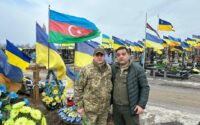
The Russian-Ukrainian conflict, which began in 2022, attracted the attention of volunteers from all over the post-Soviet space interested in supporting Kyiv in the fight against Russian forces. Among these volunteers, there are also Azerbaijani fighters who have sided with Ukrainian forces against the Russian armed forces.
In our recent podcast episode, we delved into the intricacies of security and terrorism in the North Caucasus, explaining the geopolitical significance this region holds for Russia and its broader role on the Eurasian geopolitical chessboard.
Dmitry Medvedev’s recent visit to Grozny and meeting with Ramzan Kadyrov and local military officials confirmed the role that Chechnya is plying in supporting Russia in the Ukraine conflict and the North Caucasian republic’s increasing role in regional and state’s dynamics and foreign policy.
In the first episode of SpecialEurasia podcast – Geopolitical Report, we discussed recent Azerbaijani presidential elections, Russian support and friendship with Abkhazia and South Ossetia, and Putin’s accusation against the United States of supporting terrorism in the North Caucasus in the past.
The Parliamentary Assembly of the Council of Europe (PACE) has decided not to ratify the credentials of the Azerbaijani delegation, citing concerns about the country’s failure to fulfil major commitments related to democratic processes, human rights, and the Nagorno-Karabakh situation. Azerbaijan has subsequently suspended its cooperation with PACE.
Dagestan State Pedagogical University (DSPU) and Mohammed bin Zayed University of Humanities in the United Arab Emirates (UAE) recently entered into a cooperative agreement, primarily focusing on student and teacher exchanges and collaborations in education. This development underscores Abu Dhabi’s foreign policy interests in the North Caucasus, especially given the Emirati embassy’s cultural initiatives in Dagestan.
While the North Caucasus Federal District demonstrates resilience, potential risks include external geopolitical influences and the need for sustained economic stability. The region’s dependency on tourism growth demands careful management to avoid overreliance on a single sector. Additionally, monitoring external pressures on the Russian economy remains crucial for sustained development.
In this paper published in Geopolitical Report ISSN 2532-845X Vol. 4 Year 2023, the author Giuliano Bifolchi delves into the multifaceted approach undertaken by the Russian government in managing the diverse ethnic groups and indigenous people residing in the North Caucasus.
The analysis of the role of Islam in Abkhazia thanks to the meeting with Nar Taniya in Sukhum allows the understanding of the country’s modern society and culture and, in addition, relations between Sukhum and the Arab-Muslim world.
SpecialEurasia reviewed the book “La Guerra per il Nagorno Karabakh” written by Emanuele Aliprandi. In the book, the author explored the situation in the South Caucasus, especially the last years of conflict/confrontation between Armenia and Azerbaijan over the Nagorno-Karabakh/Artsakh and the Armenian population’s struggle for peace.
The recent arrest of a 23-year-old individual in Ingushetia, implicated in supporting online Imarat Kavkaz, underscores the persistent threat posed by this terrorist organisation in the North Caucasus region. While empirical evidence suggests a strong diminished operational capacity on the ground, the organisation’s propaganda remains a potent force capable of influencing local sentiments.
This report wants to contextualise the impact and importance for Armenia that cultural events such a photographic exhibition can have in Italy, a country which in the last years has developed a strong commercial partnership and connection with Azerbaijan and has demonstrated less attention and interests to the Yerevan and Stepanakert’s position about the Nagorno-Karabakh while has privileged Baku’s narrative.
In July 2023 SpecialEurasia delved into the key aspect by visiting Cherkessk in the Republic of Karachay-Cherkessia within the North Caucasus Federal District. The occasion was the Forum of Indigenous Peoples of the Russian Federation, where our team could discuss with Mussa Khabalevich Ekzekov valuable insights into the dynamics of the North Caucasus focusing on ethnic minorities, indigenous people, and local socioeconomic developments.
The opening of trading houses between Dagestan and Uzbekistan confirmed Makhachkala’s role in promoting its business in Central Asia and, therefore, supporting the Russian presence in this strategic market. Since the beginning of the Ukraine conflict, the North Caucasus has played a significant role in promoting the Kremlin’s economic and political presence in Russia’s blizhnee zarubezhe.
The diplomatic meeting held in Tehran stressed that Iran has emerged as a key actor in supporting the peace process regarding confrontation over Nagorno-Karabakh in the South Caucasus. It also indicated a possible shift of geopoltical influence from Europe towards East regarding the region.
On October 11th, 2023, SpecialEurasia, in collaboration with Mondo Internazionale ASP and MInter Group srl, organised the webinar in the Italian language titled “Geopolitical and Social Dynamics in the Caucasus: current challenges and future developments.” The primary objective of this event was to delve into the intricate situation prevailing in the Caucasus region.
Azerbaijan-Iran recent bilateral agreement to initiate a collaborative rail project signifies a pivotal development in the geopolitical landscape of the South Caucasus. This strategic infrastructure venture holds the potential to bring about a measure of stability to the region.
In August 2023, SpecialEurasia undertook a visit to Abkhazia, engaging in discussions with Viacheslav Chirikba, Director at the Centre for Strategic Studies under the President of Abkhazia, to delve into both the regional geopolitical dynamics and the intricacies of the local socioeconomic landscape.
The recent Azerbaijani military offensive against Nagorno-Karabakh, culminating in the capitulation of Stepanakert, coupled with the subsequent meeting between Ilham Aliyev and Recep Tayyip Erdogan in Nakhchivan, has engendered heightened concerns within the international community, notably within Iran.