This report provides an analytical overview of the upcoming official visit of the President of Finland, Alexander Stubb, to the Republic of Uzbekistan, scheduled for October 30–31, 2025.
Turkmenistan’s President Serdar Berdimuhamedov arrived in Rome on October 24, 2025, for a state visit that involves a meeting with Italian leaders, attendance at a business forum, and the opening of an archaeological exhibition at the Musei Capitolini.
The current phase of negotiations on Iran’s nuclear program is marked by heightened European pressure, Iranian mistrust, and competing political objectives within Tehran.
SpeciaEurasia met with Michele Muratori, Chairman of the Foreign Affairs Commission of the Parliament of San Marino and Representative of the Republic of San Marino at the OSCE, recently visited Cyprus in the framework of parliamentary cooperation among small European states.
Georgian Prime Minister Irakli Kobakhidze recently highlighted a two-pronged economic strategy that uses Georgia’s location to become a key transit route between Europe and Asia.
This report assesses the strategic significance of establishing multiple foreign consular missions in Armenia’s Syunik region and along the prospective corridor. The report examines also the deepening defence cooperation between Yerevan and Paris in the context of renewed Azerbaijani threats to Armenian sovereignty.
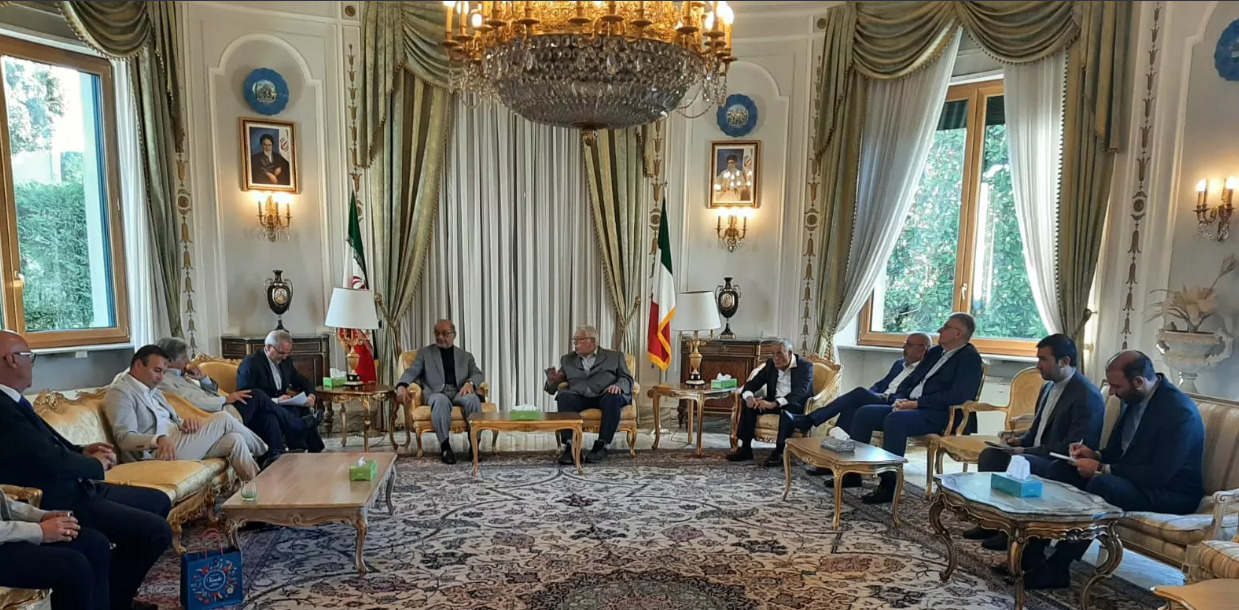
This report offers an analytical overview of the official visit by the Italian delegation to Iran for the fifth round of bilateral political consultations, highlighting a desire to advance the bilateral partnership amid a complex geopolitical landscape.
This report analyses Italy’s expanding diplomatic, cultural, and economic engagement with Armenia, highlighting recent initiatives that point to a strategic deepening of ties between the two countries.
This report assesses Italian Prime Minister Giorgia Meloni’s official visit to Kazakhstan and Uzbekistan in May 2025 and its participation in the first “Central Asia + Italy” summit as well as imperative and constraints of Rome’s engagement in the region.
This report examines President Emmanuel Macron’s proposal to extend France’s nuclear deterrence to EU allies, assessing its strategic advantages for European security. It also identifies the legal, political, and operational challenges that could complicate the realisation of this initiative.
This report provides an analytical overview of the official visit by Italian Prime Minister Giorgia Meloni to Uzbekistan, which marks a significant advancement in the strategic partnership between the two nations.
SpecialEurasia has interviewed Khibla Amichba, the Plenipotentiary Representative of the Ministry of Foreign Affairs of the Republic of Abkhazia in Germany, to discuss the role of the Abkhaz diaspora in Europe, cultural diplomacy, enduring relationship with the homeland and the challenges of representation abroad.
Kazakhstan and the United Kingdom are intensifying their collaboration in infrastructure development, aiming to modernize Astana’s extensive energy, transport, water, and digital systems. This partnership leverages the UK’s engineering expertise and financial acumen to support Kazakhstan’s ambitious National Infrastructure Plan through 2029.
Italy’s TRAMITE Group will launch a tomato processing operation in Kazakhstan, capitalising on the country’s agricultural potential and government incentives. The $100 million project aligns with Astana’s strategy to boost agricultural exports and attract foreign investment.
The recent EU-Central Asia ministerial meeting in Ashgabat and the upcoming EU-Central Asia Summit in Samarkand highlight Brussels’ strategic engagement with the region. Discussions focused on regional stability, economic cooperation, and the enforcement of sanctions against Russia.
The European robotics sector has experienced significant growth, with industrial robot installations reaching approximately 72,000 units in 2022, marking a 6% increase from the previous year. While Europe’s position is strong, the continent faces increasing pressure from global competitors, highlighting the need for strategic investment and innovation.
This report examines the emerging partnership between France and Uzbekistan, focusing on its implications for economic growth, regional stability, and cultural exchange. With both countries working together, the report focuses on key cooperative efforts in trade, infrastructure, and education.
The recent visit of Italian President Sergio Mattarella to Kazakhstan reinforces the developing relationship between Italy and Central Asia. His meeting with Kazakh President Kassym-Jomart Tokayev in Astana follows a series of bilateral agreements signed in 2024, strengthening economic, energy, and diplomatic cooperation between the two nations.
The report, based on local sources and meetings held during our visit to Baden-Württemberg, aims to analyse Germany’s political landscape after the elections , assessing the impact of the results, party dynamics, and potential implications for governance and stability.
SpecialEurasia, reporting directly from Germany, is closely monitoring developments on the ground to assess their implications for governance, economic policies, and foreign relations. The elections will determine the next Bundestag composition and government leadership, shaping Germany’s fiscal policies, security strategies, and diplomatic posture.
This report examines how Kazakhstan’s strategic move in Bulgaria’s energy market affects the regional geopolitical balance, considering Russia’s local influence and political developments.
In the town of Handlová, Slovakia, Prime Minister Robert Fico was shot and injured in an assassination attempt. The incident occurred following a government meeting, with several shots reportedly fired at the 59-year-old leader as he greeted residents.
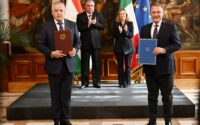
President Emomali Rahmon’s recent official visit to Italy signifies a significant step forward in Tajikistan’s diplomatic relations, underlining the nation’s strategic engagement with Italy across various domains, including political, economic, trade, cultural, humanitarian, and security spheres.
The visit of David Cameron, the British Foreign Minister, to Central Asia, marks a significant development in relations between the UK and the region. With a focus on the geopolitical implications, this report examines Cameron’s visit and offers insights into the potential risks and opportunities it presents for both the UK and the Central Asian states.
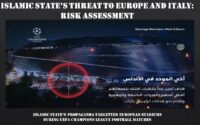
The resurgence of the Islamic State poses a significant threat to Italy and Europe, leveraging geopolitical events to bolster propaganda and recruitment efforts. The evolving landscape of terrorism, characterised by decentralised online radicalisation, presents challenges in surveillance and counteraction.
The recent arrests of teenagers linked to the Islamic State in both Germany and Switzerland serve as a stark reminder of the persistent threat posed by jihadist propaganda and terrorist organisations in Europe.
The arrest of a jihadist network in Spain underscores the persistent threat posed by Islamic State affiliates within the country. Through effective inter-agency collaboration, the Spanish police successfully dismantled a significant terrorist network and confiscated cryptocurrency channels employed for financing extremist activities.
President Kassym-Jomart Tokayev’s official visit to Italy marks a pivotal moment in bilateral relations, emphasising shared interests in energy diversification, technology, and infrastructure. The visit resulted in significant progress, with seven intergovernmental agreements, and 16 commercial memoranda signed. Key projects, including a joint venture between Eni and KazMunayGas for a hybrid power plant, underscore the expanding economic ties.
The report elucidates the potential that emerges from implementing this format for Greece-Central Asia relations, highlighting the mutual benefits and exploring the various topics and projects that can be undertaken within this framework.
The Germany – Central Asia summit held in Berlin serves as a tangible testament to the European Union’s concerted efforts to forge closer ties with the Central Asian republics while strategically safeguarding against the growing influences of Russia and China.
The recent meeting between the Iranian ambassador in Rome and the managers of selected Italian companies underscores a significant potential for economic cooperation between the two parties. Tehran’s keen interest in attracting foreign investors and companies, particularly those from Italy, is palpable.
The recent meeting between the Turkmen ambassador to Italy and the Italian Trade Agency’s representatives highlighted business potentialities between the two countries, Rome’s desire to increase its presence in the Turkmen and Central Asia markets, and Ashgabat’s strategy to diversify its commercial partners.
Italy recently discussed further cooperation with Uzbekistan, showing Rome’s attempt to play a more influential role in Central Asia by being engaged in a strategic market where Italian companies might export their know-how and products while the Italian authorities might diversify trade and energy imports.
Finland and Sweden’s possible membership in the NATO might decisively change the security architecture of Northern Europe and worse relations between these two states and the Russian Federation, elevating the regional geopolitical risk.
Geopolitical Report ISSN 2785-2598 Volume 18 Issue 2 – Recently, representatives of Italy held a series of meetings with colleagues in Kazakhstan and Turkmenistan, dedicated to the issues of enhancing cultural cooperation, confirming Rome’s interests in Central Asia.
Today’s European Union is characterised by many crises entwining one another, resulting in politicisation and polarisation around issues and challenges of the EU itself. At the same time, the concept of the EU has progressively become an object of politicisation and polarisation.
Brexit was a capital event in recent European history and among many consequences, helped to bring up an identity as a political issue. Brexit impacted both negatively and positively in terms of European identity.
The recent visit of the Kyrgyz Foreign Affairs Minister to Italy and his meetings with the Italian counterpart highlighted the Italian attempt to become more involved in the Central Asian market and dynamics and Bishkek’s desire to expand its diplomatic and economic relations to diversify its portfolio of partners and decrease the influence of Russia and China in the country.
The recent EU-China Comprehensive Agreement on Investment can mark the beginning of a new phase for Brussels-Washington relations, cause consequences on the geopolitical Eurasian chessboard, and give birth to the renewed French-German leadership/confrontation in Europe.
In questi giorni in tutta l’Europa è accresciuto l’interesse per la politica interna tedesca, perché si sono svolte le elezioni per decretare il successore di Angela Merkel alla guida della CDU, evento fondamentale visto che la Germania ricopre un ruolo primario nell’Unione Europea ed è considerata spesso come il motore economico del continente.
The German Minister of Internal Affairs called the event that occurred in Hanau an act of terrorism perpetrated by a man related to the far-right movements. Recent events have underlined the rise of Islamophobia and xenophobia in Germany, especially against Turks, Kurds and Arab migrants.