Executive Intelligence Snapshot
A group of Turkish parliamentarians from seven political parties wants to establish a parliamentary friendship group with Abkhazia, advocating recognition of Abkhaz passports, direct transport links and the removal of Sukhum’s isolation.
The initiative has prompted opposition from Georgian organisations in Turkey, which argue that such measures undermine Tbilisi’s territorial integrity.
The development highlights competing interests around Abkhazia, where Turkish outreach intersects with Russian influence and wider geopolitical competition in the Black Sea and South Caucasus.
Context
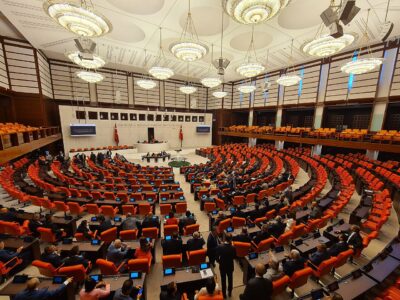
On 17 November 2026, a founding meeting of a Turkish parliamentary friendship group with Abkhazia was organised in Ankara. The initiative involves deputies from seven political parties and is linked to the public campaign “End the Isolation of Abkhazia”.
According to organisers and members of the Abkhaz delegation, the group’s priorities include recognition of Abkhaz passports as travel documents, the opening of direct passenger and freight connections between Turkey and Abkhazia, and the lifting of economic restrictions affecting the region.
Supporters of the initiative present these measures as humanitarian. Turkish parliamentarians previously called on Ankara to facilitate travel, family reunification, access to education and medical services for people connected to Abkhazia. Abkhaz representatives have argued that acceptance of Abkhaz passports would follow practices applied by some states towards other partially recognised entities and would improve mobility for residents of Abkhazia.
The initiative has generated opposition from Georgian organisations operating in Turkey. In a joint statement, they stressed that Abkhazia remains within Georgia’s internationally recognised borders and argued that efforts to address Sukhum’s isolation cannot be separated from Russian control over the territory. They called on Turkey to uphold international law, support Georgia’s territorial integrity and protect the rights of displaced persons. At the same time, they stated that support for the cultural rights of Abkhazians and the Abkhaz diaspora should not be used to justify political measures affecting Georgia’s sovereignty.
Official Turkish policy remains unchanged. Ankara recognises Georgia’s territorial integrity and does not recognise Abkhazia as an independent state. The current initiative originates from individual opposition political forces and does not represent a change in state policy.
Why Does It Matter?
The initiative reflects an attempt by Turkish political actors and Abkhaz representatives to create channels of engagement that fall short of formal recognition but could increase Abkhazia’s international connectivity. Recognition of passports and the establishment of direct transport links would carry political significance because they would provide practical forms of engagement with Abkhazia without altering Turkey’s official position on sovereignty.
For Georgia, the issue centres on territorial integrity and the status of Abkhazia. Georgian organisations view the proposed measures as potentially legitimising Sukhum’s separate institutions and weakening international support for Tbilisi’ position. Their response indicates concern that humanitarian arguments could be used to advance political objectives.
For Abkhaz representatives, reducing isolation appears to be the primary objective. The delegation frames passport recognition, transport access and economic links as humanitarian matters affecting daily life. The establishment of a parliamentary friendship group creates an additional political platform through which these objectives can be promoted inside Turkey.
The issue also carries a security dimension linked to regional influence. Abkhazia remains closely associated with Russian interests in the Black Sea and South Caucasus. Growing Turkish engagement introduces another external actor into a space traditionally viewed as strategically important by Moscow.
Outlook
The creation of a parliamentary friendship group would demonstrate continued interest among sections of the Turkish political sphere in expanding engagement with Sukhum, although there are no changes in Ankara’s regional policy and stance related to Abkhazia’s independence and Georgia’s territorial integrity, suggesting that any immediate impact is likely to remain at the parliamentary and advocacy level.
The passport issue and proposals for direct transport links are likely to remain the central points of discussion. Opposition from Georgian organisations is expected to continue, given their stated concerns regarding sovereignty and Russian control of the territory.
The development also highlights broader competition for influence in the Black Sea and South Caucasus, where Turkish engagement with Abkhazia intersects with established Russian interests and local political sensitivities.
