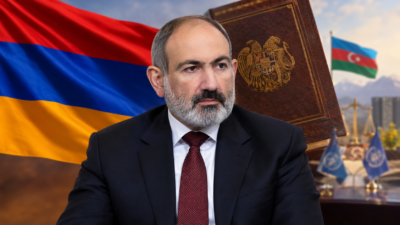
Executive Intelligence Snapshot
Prime Minister Nikol Pashinyan has framed Armenia’s proposed constitutional reform as a matter of domestic political choice and long-term state resilience, rejecting external interference while acknowledging Azerbaijan’s position on the issue in the context of bilateral peace negotiations.
The government intends to secure opposition support for the reform; however, failure to reach a political consensus could prompt consideration of early parliamentary elections, increasing the importance of domestic political dynamics for the reform process and potentially affecting the wider peace agenda.
Context
On 22 October 2026, Armenian Prime Minister Nikol Pashinyan stated that the authorities intend to publish a draft of the new Constitution in the near future and begin public discussions. However, he did not rule out holding early elections if the opposition fails to reach an agreement, and also admitted that his political mission could be exhausted if the people do not support his proposed agenda.
Following the June 2026 parliamentary elections, Prime Minister Nikol Pashinyan’s Civil Contract party secured 49.75% of the vote, enabling it to form a government independently. The result provides a parliamentary basis for pursuing the government’s agenda, although the ruling party does not hold the two-thirds majority required to initiate a constitutional referendum.
The constitutional reform debate therefore remains politically significant, particularly given the opposition’s objections and the need to secure the necessary parliamentary support. The constitutional issue intersects with the Armenia–Azerbaijan normalisation process. At the Washington summit on 8 August 2025, the two countries initialled the text of a peace agreement and committed to further steps towards its signature and ratification. The accompanying declaration also established a framework for developing the Trump Route for International Peace and Prosperity (TRIPP), a connectivity project through Armenian territory linking Azerbaijan with its Nakhchivan Autonomous Republic. Subsequent US–Armenian arrangements have advanced the project’s implementation framework.
Baku has linked the constitutional issue to its position on a lasting peace settlement, while Pashinyan maintains that constitutional reform is a sovereign Armenian decision. This creates a political tension between Yerevan’s assertion of domestic ownership and the regional diplomatic context.
Opposition claims that reform would amount to capitulation to Azerbaijani demands should be presented as an attributed political position, rather than an established consequence of the proposed changes.
Drivers
- Political and security drivers. Pashinyan’s government presents constitutional reform as part of a wider effort to secure Armenia’s long-term state resilience and advance normalisation with Azerbaijan. Regional security concerns and the prospect of improved relations with Turkey form part of the broader strategic environment.
- Economic drivers. Reaching a deal with neighbouring Azerbaijan and restoring relations with Turkey might improve regional connectivity and reduce Armenia’s economic isolation, expand trade opportunities and attract investment. The US-backed TRIPP initiative is relevant because its proposed transport links could create economic opportunities while raising questions about sovereignty, jurisdiction and implementation. These benefits remain contingent on practical implementation and sustained regional stability.
- Societal drivers. Public debate over sovereignty, territorial integrity, the peace settlement and the treatment of displaced Armenians from Nagorno-Karabakh may constrain the government’s room for manoeuvre.
Risk and Strategic Implications
The primary risk is that failure to secure sufficient political support for constitutional reform could intensify domestic polarisation, weaken the government’s capacity to implement its political agenda and complicate progress towards normalisation with Azerbaijan.
Pashinyan’s reference to possible early parliamentary elections introduces an additional source of uncertainty.
A deterioration in bilateral relations or a slowdown in the peace process is a plausible second-order consequence, particularly if either government treats the constitutional dispute as an obstacle to further negotiations.
Successful constitutional reform could enable Pashinyan to advance his state-building agenda and reinforce his political narrative that normalisation with Azerbaijan is necessary for Armenia’s long-term security and prosperity. For Baku, constitutional change would address a central stated condition for signing the initialled peace agreement, although it would not by itself guarantee the agreement’s signature, ratification or implementation.
Conversely, failure to secure the required support could provide opposition parties with an opportunity to challenge the government’s approach to peace and constitutional reform, particularly if early parliamentary elections follow. Parties advocating closer relations with Russia could gain political visibility from such a setback; however, any resulting shift in Armenia’s external alignment would depend on electoral outcomes, coalition dynamics and subsequent policy decisions, rather than follow automatically from a failed reform process.
Conclusion
Pashinyan is likely to continue presenting constitutional reform as a component of Yerevan’s long-term state resilience and regional normalisation agenda. The government may seek to build political and public support through consultations and engagement with opposition representatives, while retaining early elections as a possible alternative if consensus proves unattainable.
Azerbaijan is likely to maintain its stated position on constitutional change as part of the peace process, while monitoring developments in Armenia’s domestic political debate.
Opposition parties may continue challenging the government’s approach and arguing that constitutional reform entails unacceptable concessions to Baku. The immediate trajectory will depend on whether the government publishes the draft Constitution, initiates consultations and secures meaningful parliamentary engagement.
